
What Is Marketing Analytics?
Marketing analytics is the process of collecting data from your marketing activities, connecting it to business results, and using it to make better decisions. It covers everything from ad platform metrics and website behavior to calls, leads, sales, and revenue.
It’s broader than website analytics. Website analytics tells you what happens on your site. Marketing analytics ties together every channel, including paid ads, organic search, email, social, offline media, and sales outcomes, to show which efforts actually grow the business.
Why Marketing Analytics Matters
Without analytics, marketing decisions rely on gut feeling and platform-reported numbers that each claim credit for the same sale. Good marketing analytics helps you:
- Prove return on investment: Show what revenue marketing produced, not just how many clicks it got.
- Reallocate budget: Move money from channels that underperform to ones that drive profitable results.
- Spot problems early: Catch rising costs, tracking failures, or falling conversion rates before they waste significant budget.
- Understand customers: Learn which messages, offers, and audiences resonate.
How Marketing Analytics Works
A solid marketing analytics setup typically includes several layers:
- Tracking: Conversion tracking on websites and apps, call tracking, UTM codes on links, and pixels or server-side events for ad platforms.
- Data collection: Pulling data from ad platforms, analytics tools, CRMs, and point-of-sale or dealer management systems.
- Integration: Connecting leads to outcomes, so you can see which campaign produced a lead and whether that lead became a sale.
- Attribution: Assigning credit for conversions across touchpoints using an attribution model.
- Reporting and analysis: Dashboards and regular reviews that turn data into decisions.
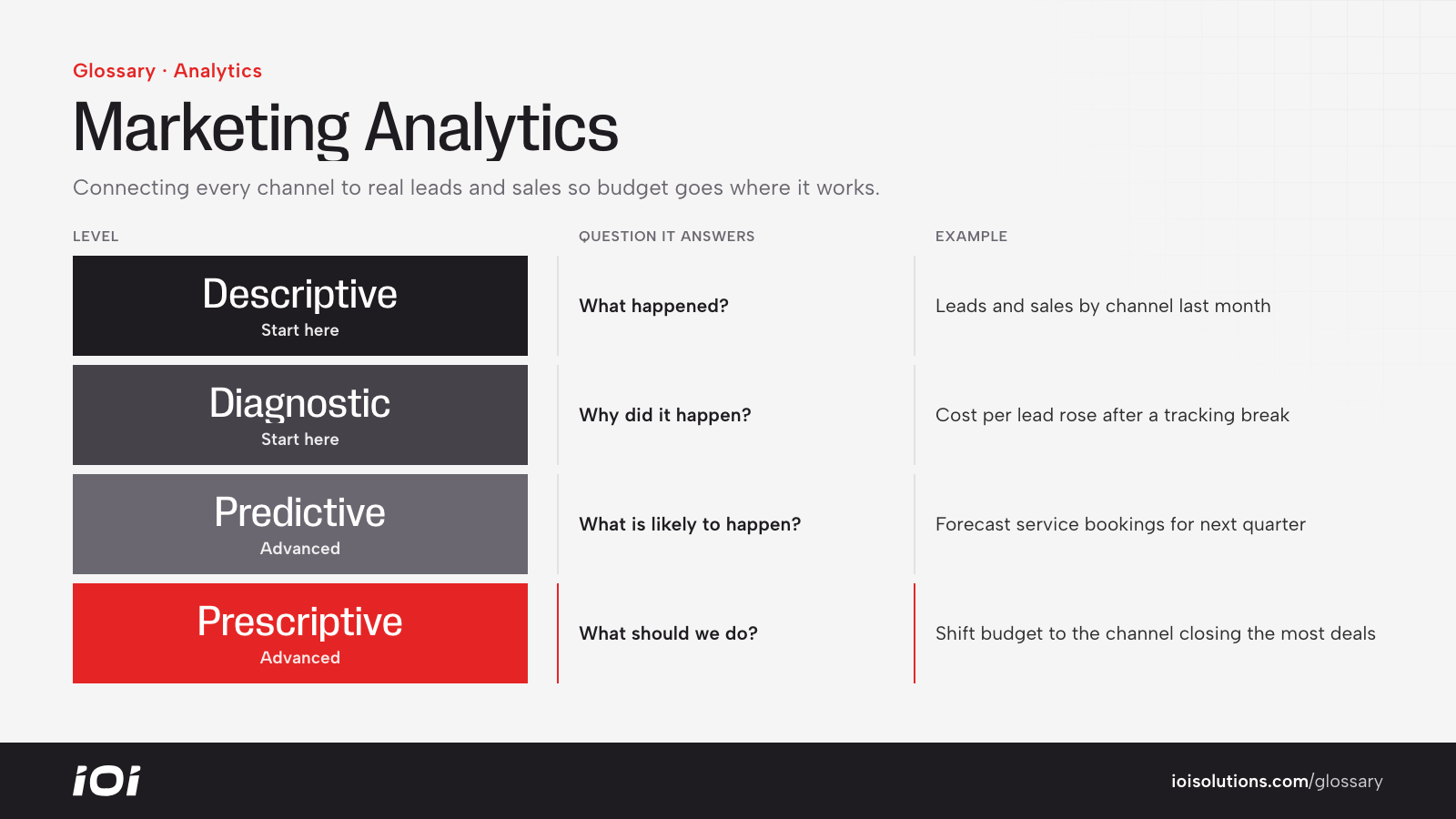
Analytics can be descriptive (what happened), diagnostic (why it happened), predictive (what’s likely to happen), or prescriptive (what you should do). Most businesses get the most value from nailing the first two before moving on. Predictive models and advanced forecasting are only as good as the tracking and data underneath them.
Marketing Analytics in Automotive Marketing
Automotive businesses face particular analytics challenges, because many conversions happen offline or over the phone:
- Dealerships: A shopper may browse online for weeks, submit a form, call, and then buy in person. Matching sales records from the DMS back to leads and campaigns is essential to see true cost per sale.
- Collision and repair shops: Most leads arrive by phone. Call tracking with recording and source attribution shows which campaigns generate real repair orders.
- Parts and accessories ecommerce: Purchase data is easier to track, but returns, repeat purchases, and cross-device behavior still need careful analysis.
- Automotive SaaS: Long sales cycles mean connecting early marketing touches to closed deals and recurring revenue in the CRM.
Privacy changes, browser restrictions, and consent rules have made tracking less complete over time, so many teams combine platform data, first-party CRM data, and periodic incrementality or holdout tests.
Best Practices
- Start with business goals. Define the outcomes that matter, like sales, repair orders, or revenue, before building reports.
- Track calls and offline conversions. In automotive, ignoring calls and in-store sales hides much of your marketing’s impact.
- Use one source of truth. Reconcile platform-reported conversions with CRM or sales data instead of adding them up.
- Standardize naming. Consistent campaign names and UTM conventions make analysis faster and cleaner.
- Audit tracking regularly. Website updates often break tags. Check conversion tracking after every major change.
- Act on insights. Reports only matter if they lead to changes in budget, targeting, creative, or process.