
What Is Website Analytics?
Website analytics is the practice of collecting, measuring and interpreting data about how people find and use a website. It answers questions like: How many people visit? Where do they come from? What do they look at? Which pages lead to calls, forms or purchases? Where do they leave?
Tools such as Google Analytics 4, along with platform-specific dashboards, call tracking systems and ecommerce reports, gather this data through tracking code on each page. Website analytics is one part of broader marketing analytics, which also covers ad platforms, CRM data and offline sales.
Why Website Analytics Matters
Your website is where most digital marketing ends up. Without analytics, you cannot tell which campaigns send valuable visitors, which pages persuade them, or where the experience breaks down.
- It shows which channels and campaigns produce leads and sales, not just traffic.
- It highlights pages with high exits or weak conversion so you can fix them.
- It supports smarter budget decisions by connecting spend to outcomes.
- It provides the conversion signals that ad platforms use for automated bidding.
How Website Analytics Works
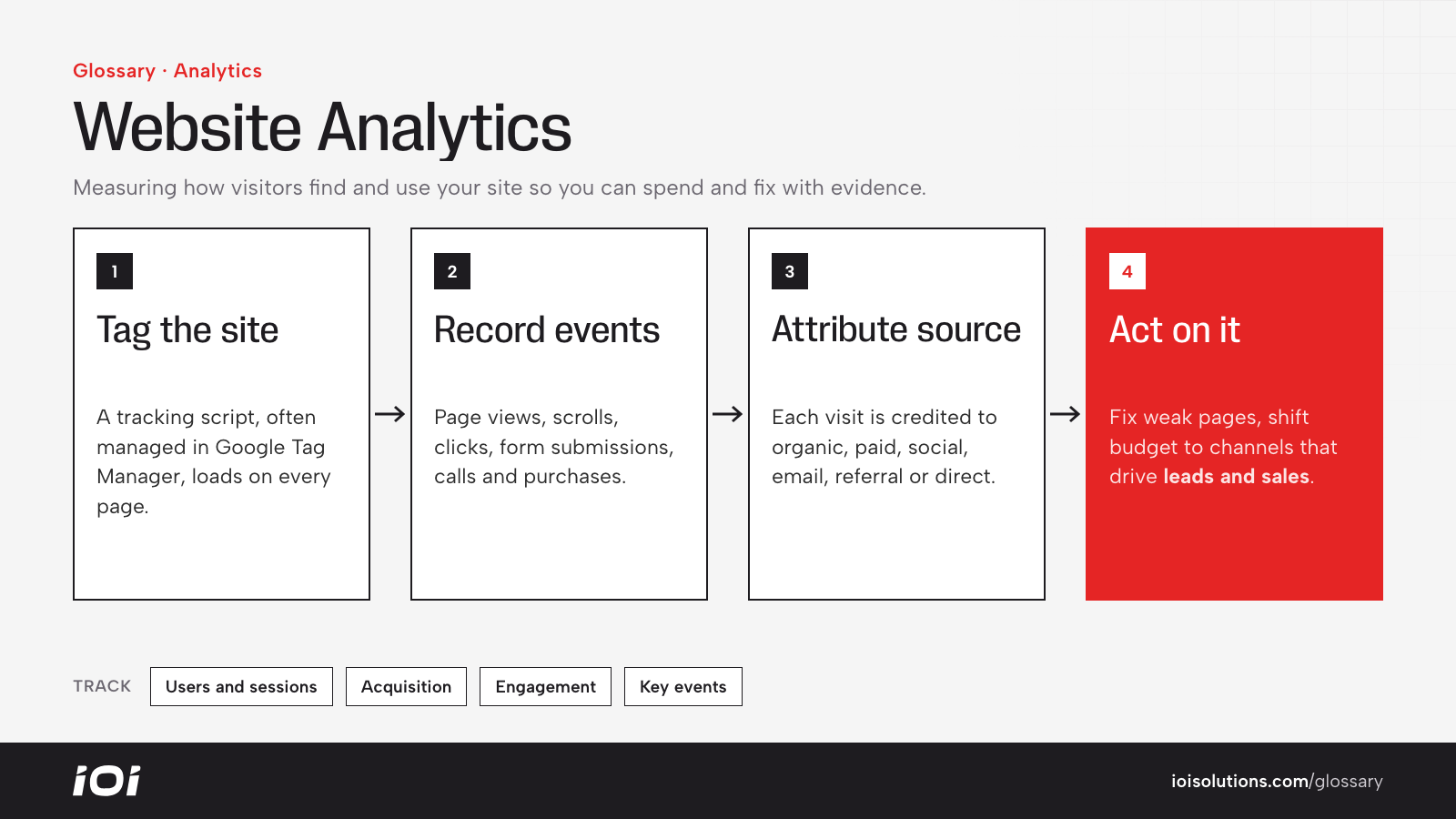
A tracking script loads with each page and records events, such as page views, scrolls, clicks, form submissions and purchases. Each visit is attributed to a source: organic search, paid ads, social, email, referral or direct. Many teams manage these scripts through Google Tag Manager so tracking can be updated without editing site code.
Common metrics and reports include:
- Users and sessions: How many people visit and how often.
- Acquisition: Which sources, mediums and campaigns bring them in, often identified with UTM codes.
- Engagement: Engaged sessions, time on page, scroll depth and pages per session.
- Conversions (key events): Actions you define as valuable, such as lead forms, calls, chats, bookings and purchases.
- Paths and funnels: The sequence of pages people take before converting or leaving.
Privacy rules and consent banners mean some visits go untracked or are modeled, and browsers increasingly limit cookies. Analytics data is directional, not perfect, so it works best combined with CRM and sales data.
Website Analytics in Automotive Marketing
Automotive buyers often research online and finish offline, which makes setup especially important.
- Dealerships should track vehicle detail page views, lead forms, chat, click-to-call, trade-in tools, credit applications and directions requests. Comparing these by source shows which campaigns drive shoppers who engage with inventory, not just homepage visits.
- Collision and repair shops rely heavily on phone calls. Dynamic call tracking numbers tie calls back to the campaign or keyword that produced them.
- Parts ecommerce brands need full ecommerce tracking: product views, add-to-cart, checkout steps and revenue, ideally by vehicle fitment.
- Multi-location groups benefit from consistent tracking across sites so stores can be compared fairly.
For example, a body shop might see plenty of traffic to its estimate page but few submissions. Analytics could reveal that most visitors drop off at a required photo upload step on mobile, pointing to a clear fix.
Best Practices
- Define your key conversions first, then build tracking around them.
- Track calls, chats and form fills, not just page views; in automotive, phone calls are often the main lead source.
- Use consistent UTM tagging on every paid, email and social link.
- Exclude internal traffic and test tracking after every site change.
- Connect analytics to your CRM or DMS where possible to follow leads through to sales.
- Review a short list of KPIs on a regular schedule rather than drowning in every available report.