
What Is Return on Investment (ROI)?
Return on investment, or ROI, is a measure of profitability. It compares the net gain from an investment with what the investment cost. In marketing, ROI tells you whether a campaign, channel or program produced more profit than it consumed.
ROI is usually expressed as a percentage. A positive ROI means the investment made money; a negative ROI means it lost money. Unlike some marketing metrics, ROI speaks the language of business owners and finance teams, which makes it essential for budget conversations.
Why ROI Matters
Marketing competes with every other use of a company’s money. ROI shows whether marketing deserves its share.
- It justifies budget increases with evidence.
- It compares very different investments, such as SEO, paid ads, events and software, on one scale.
- It reveals programs that look busy but are not profitable.
- It keeps teams focused on profit rather than vanity metrics like clicks or followers.
How to Calculate ROI
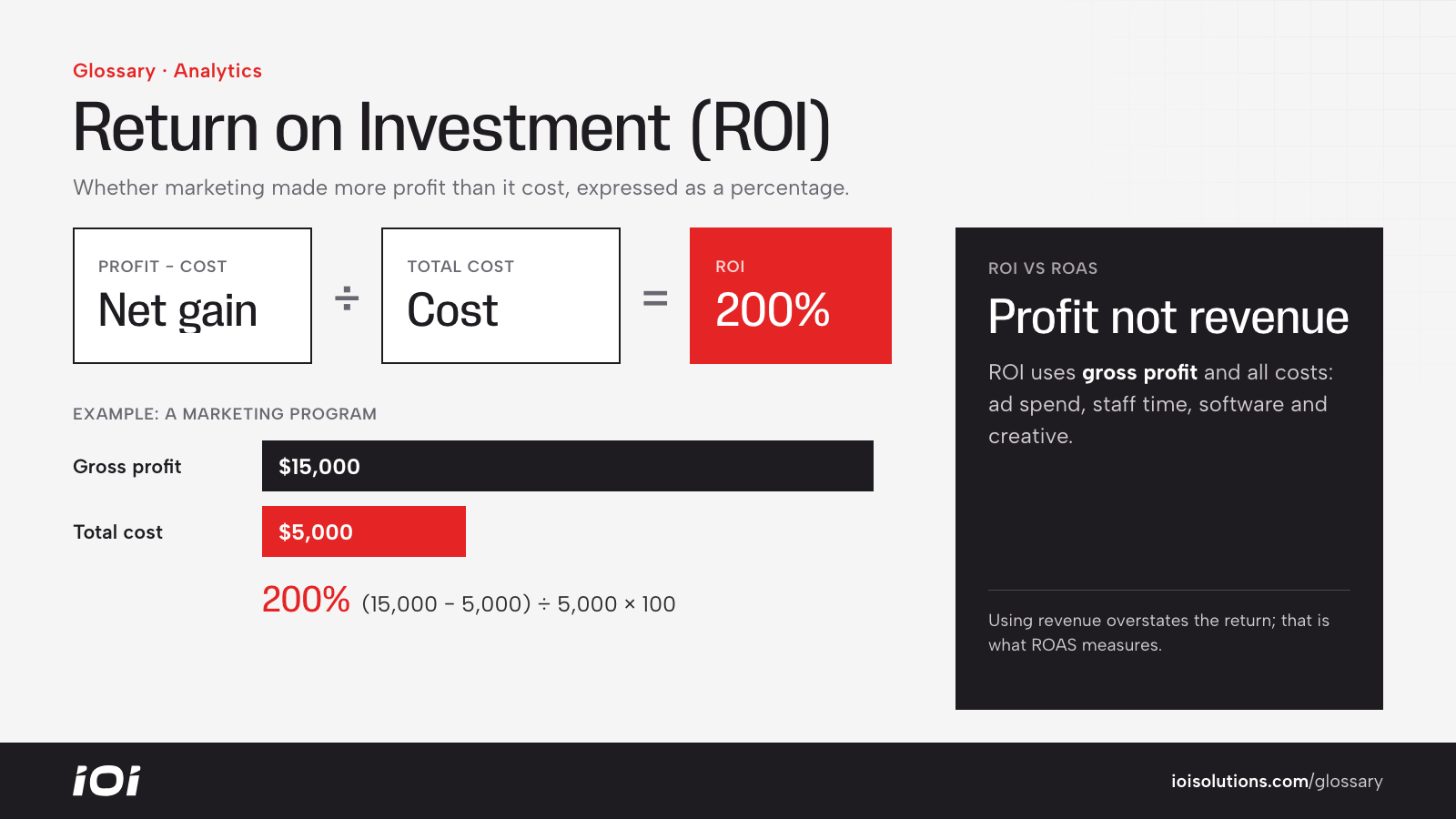
ROI = (Net profit from the investment − Cost of the investment) ÷ Cost of the investment × 100
For example, suppose a marketing program costs $5,000 in total and the sales it generated produced $15,000 in gross profit. ROI = (15,000 − 5,000) ÷ 5,000 × 100 = 200%.
Use Profit, Not Revenue
Marketing ROI should use gross profit (revenue minus the cost of goods or service delivered), not total revenue. Using revenue overstates returns, which is the key difference between ROI and ROAS.
Include All Costs
Count ad spend, agency or staff time, software, creative production, discounts and any other costs tied to the effort.
Consider Lifetime Value
If customers come back repeatedly, measuring only the first purchase understates ROI. Factoring in lifetime value gives a fuller picture, especially for service businesses.
ROI in Automotive Marketing
- Dealerships: A campaign’s ROI should include front-end gross, F&I income and, where possible, the value of future service visits. A campaign that sells fewer cars but attracts buyers who also service with the dealer may deliver better long-term ROI.
- Collision shops: ROI depends on the gross profit of repair orders, which vary by repair severity. Marketing that brings in larger insurance or customer-pay jobs can show higher ROI than one bringing many small cosmetic repairs.
- Repair and tire shops: A new customer’s first oil change may barely break even, but ongoing maintenance and repairs over several years drive the real return.
- Aftermarket brands: ROI must account for product cost, shipping, returns and payment fees, which can make an apparently strong ROAS much less profitable.
- Automotive SaaS: ROI is often measured against subscription revenue over the expected customer lifetime, compared with customer acquisition cost.
For example, a repair shop could compare the ROI of a local SEO investment and a direct mail campaign by tracking new customers from each over a full year, including their repeat visits.
What Is a Good ROI?
Any positive ROI means the investment returned more than it cost, but what counts as “good” depends on your margins, risk, payback period and alternative uses of the money. Expectations vary considerably by industry and channel. To improve and measure it well:
- Agree on a definition. Decide with leadership which costs and profits are included before reporting.
- Track sales to source. Connect leads to closed sales in your CRM so ROI is based on real outcomes.
- Measure over the right timeframe. SEO and brand efforts take longer to pay back than search ads.
- Factor in repeat business. Use lifetime value where customers buy more than once.
- Use consistent marketing analytics. Compare channels using the same attribution and reporting rules.
- Reinvest in winners. Shift budget toward programs with proven returns and test new ones in small amounts.