
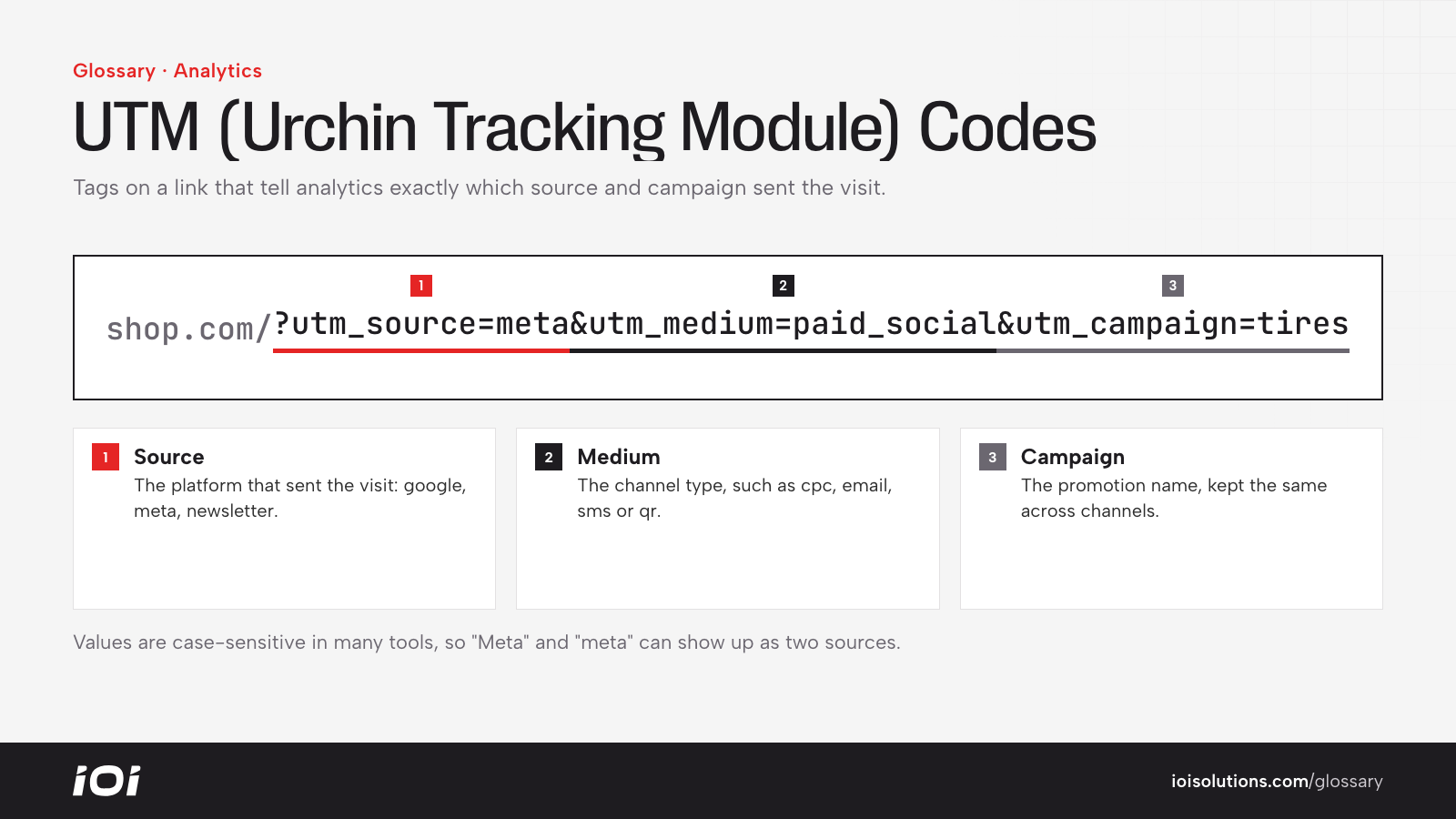
What Are UTM (Urchin Tracking Module) Codes?
UTM codes are short text parameters added to the end of a URL so analytics tools can identify where a visitor came from. The name comes from Urchin, an analytics company Google acquired, whose software became the foundation of Google Analytics.
A tagged link looks like this: https://www.exampleshop.com/brakes/?utm_source=facebook&utm_medium=paid_social&utm_campaign=spring_brake_special. The page is the same, but analytics now knows the visit came from a specific Facebook ad campaign.
Why UTM Codes Matter
Without UTMs, many visits get lumped into vague buckets like “direct” or “referral,” especially traffic from email, social, text messages, QR codes and some ad platforms. That makes it hard to see which efforts actually work.
- They let you compare campaigns, ads and channels inside one website analytics tool.
- They support better attribution by recording the true source of a session.
- They give clean data for reporting to owners, managers and clients.
- They can be passed into CRM records via hidden form fields, connecting leads and sales to campaigns.
How UTM Codes Work
There are five standard UTM parameters:
- utm_source: The specific site or platform sending traffic, such as google, facebook, newsletter or mailer.
- utm_medium: The type of channel, such as cpc, paid_social, email, sms, display or qr.
- utm_campaign: The campaign name or promotion, such as july_tire_sale.
- utm_term: Optional; often used for the keyword or audience.
- utm_content: Optional; distinguishes ad versions or link placements, such as video_a or header_button.
When someone clicks a tagged link, the analytics tool reads these values and stores them with the session. Parameters are case-sensitive in many tools, so “Facebook” and “facebook” can show up as two different sources. Google Ads can tag clicks automatically with its own click ID, but manual UTMs remain useful for most other channels.
UTM Codes in Automotive Marketing
Automotive businesses run campaigns across many channels at once, often with vendors and agencies in the mix. UTMs keep the data organized.
- Dealerships can tag links from OEM co-op campaigns, third-party listing sites (where allowed), email blasts, text campaigns and social ads, then compare which sources drive VDP views and leads.
- Repair shops can put QR codes with UTMs on service reminder postcards and window stickers to measure how many customers book online from them.
- Collision shops can tag links shared with insurance agents or referral partners to see how much traffic each relationship sends.
- Car shows and events can tag links in each promoter’s posts, sponsor emails and ads to measure ticket sales by source.
- Parts brands can separate influencer links with utm_content so each creator’s traffic and revenue is visible.
For example, a tire shop running the same offer on Meta, in an email and on a printed mailer can use utm_source and utm_medium to see which channel drove the most online appointment bookings.
Best Practices
- Create a naming convention and a shared spreadsheet or builder so everyone tags links the same way.
- Use lowercase consistently and avoid spaces; use underscores or hyphens.
- Never use UTMs on internal links within your own site, as they overwrite the original source and break attribution.
- Shorten long tagged URLs for print, SMS and social, ideally with a branded short link.
- Capture UTM values in hidden form fields so lead source flows into your CRM.
- Audit campaign reports monthly to catch typos and untagged traffic.
- Document which vendors and partners tag their own links, so their traffic is not double-tagged or mislabeled.