
What Is OEM Certification?
OEM certification is a credential that an automaker grants to a collision or repair facility after confirming the shop meets its standards. Requirements typically include specific technician training, approved equipment (such as particular welders, frame measuring systems or riveting tools), facility standards, the use of factory repair procedures and often a commitment to use genuine OEM parts.
Certification is most common in collision repair, where modern vehicles use high-strength steels, aluminum, carbon fiber and complex driver assistance sensors that require specialized repair methods. Many automakers run their own programs, and some programs are administered through third-party networks. Certification usually needs to be renewed regularly, with ongoing training and audits.
Why OEM Certification Matters
For shops, certification is a significant investment that can pay off in several ways:
- Access to higher-value work. Certain repairs, particularly on aluminum-intensive or luxury vehicles, may be restricted to certified facilities.
- Referrals from automakers and dealers. Many OEMs list certified shops in locator tools on their websites, and franchise dealers often send collision work to certified partners.
- Trust with customers and insurers. Certification signals that the shop follows factory procedures, which matters to owners of newer vehicles.
- Safety and liability. Following OEM procedures, including ADAS calibration, reduces the risk of improper repairs.
How OEM Certification Works
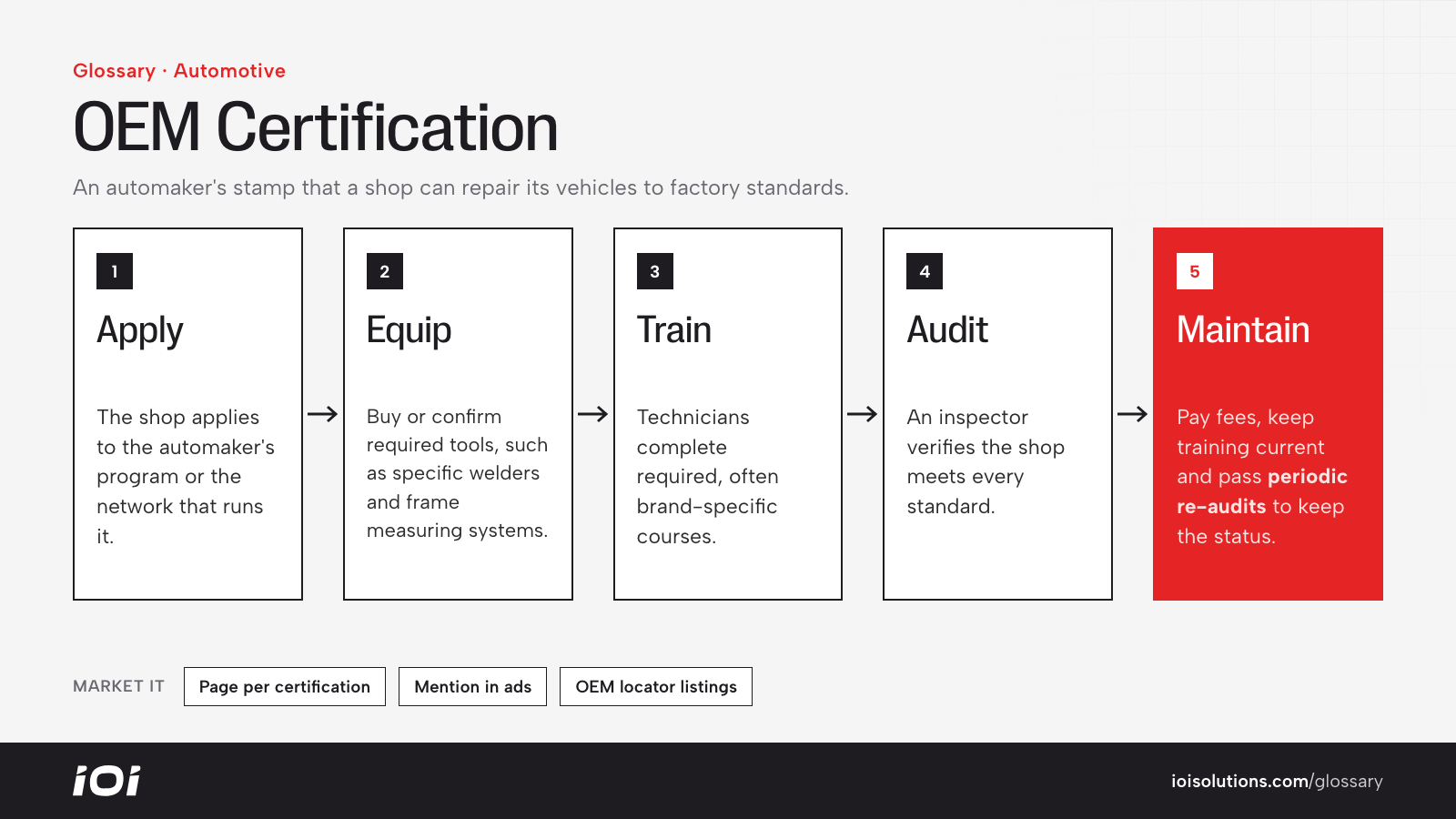
While each program differs, the process often looks like this:
- Application: the shop applies to the automaker’s program or an administering network.
- Equipment and facility review: the shop purchases or confirms required tools, equipment and work areas.
- Training: technicians complete required courses, which may be brand-specific.
- Audit: an inspector verifies the shop meets every standard.
- Ongoing compliance: the shop pays program fees, maintains training and passes periodic re-audits to keep its status.
Some shops hold several certifications; others focus on brands that are common in their market.
How OEM Certification Affects Marketing
Certification is one of the strongest differentiators a collision shop can promote, but only if customers understand it:
- Create a page for each certification. A page such as “Certified Ford collision repair in [city]” can rank for brand-specific searches and explain what certification means for the owner.
- Use it in ads. Search ads and Local Services listings can mention certified repair to stand out from generic shops, as long as program rules on logos and wording are followed.
- Highlight it on your listings. Add certifications to your Google Business Profile description, photos and posts.
- Target owners of certified brands. Owners of newer vehicles from those automakers are the most likely to value certified repair.
- Build dealer relationships. Certification makes it easier to become the go-to shop for a local franchise dealer’s collision referrals.
- Explain why it matters. Content on structural repairs, sensors and factory procedures helps customers see the value, which also supports conversations with insurers about repair methods.
For example, a shop certified for an aluminum-bodied truck line can build a landing page about aluminum repair, show its dedicated clean room and run local search campaigns for that model’s owners.
Best Practices
- Follow each program’s brand rules for logos, badges and claim wording.
- Keep certifications current and remove any lapsed credentials from your website and ads immediately.
- Show proof: photos of equipment, trained technicians and certificates build credibility.
- Get listed in OEM locators and confirm your details there are accurate.
- Track certified work separately to see which certifications deliver enough revenue to justify their cost.