
What Is an OEM (Original Equipment Manufacturer)?
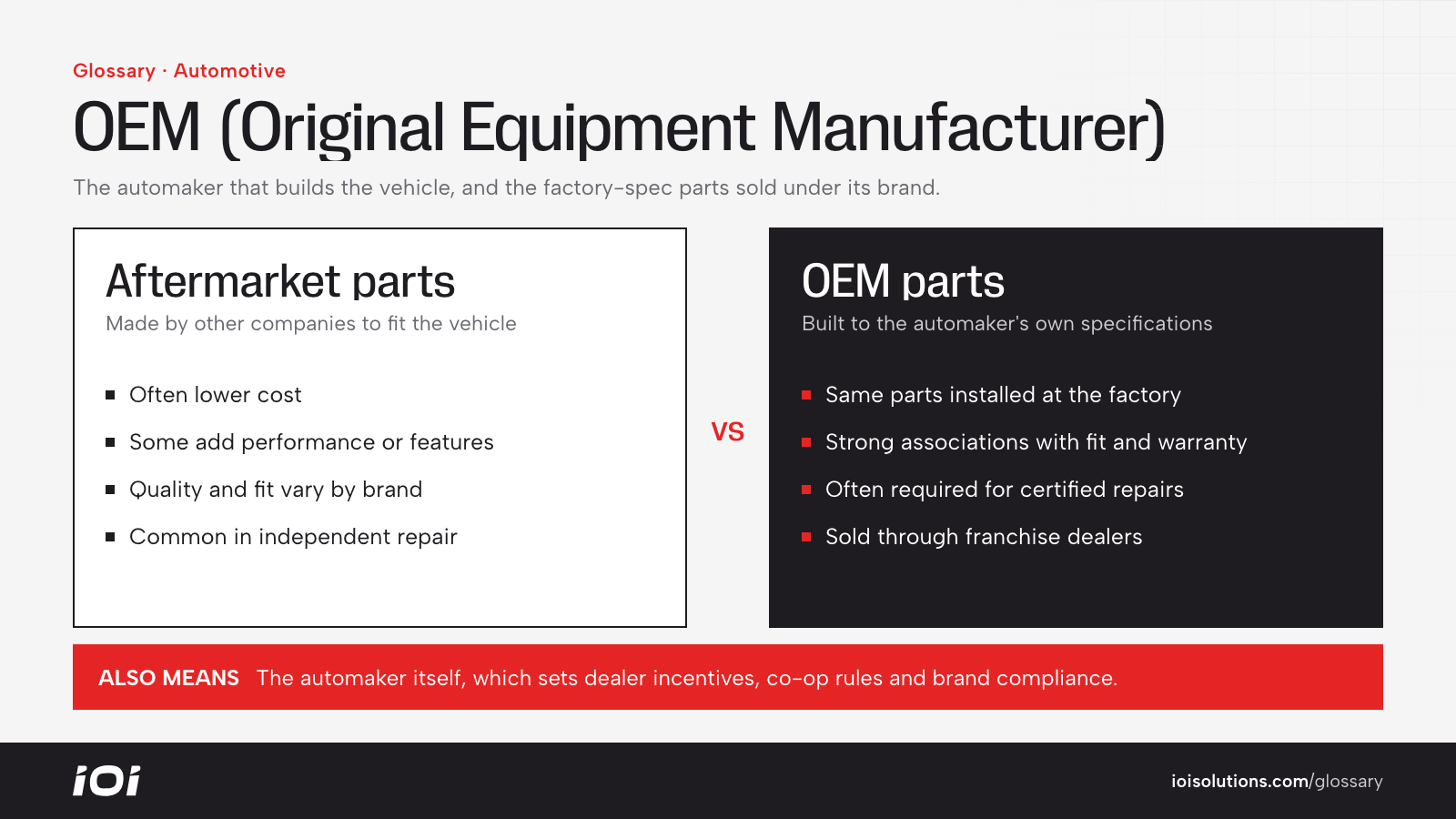
In the automotive world, an OEM, or original equipment manufacturer, usually refers to the automaker itself, such as Ford, Toyota, BMW or Hyundai. The term also describes parts made to the automaker’s specifications and sold under its brand, often called OEM parts or genuine parts. These are the same parts installed on the vehicle at the factory, or their official replacements.
The industry uses OEM in a few related ways:
- The automaker: “The OEM sets the incentive programs for this quarter.”
- Factory parts: “We only use OEM bumpers and sensors on this repair.”
- OEM suppliers: companies that manufacture components for automakers, sometimes also selling similar parts under their own brand in the aftermarket.
OEM parts are contrasted with aftermarket parts, made by other companies to fit the vehicle, and with used or recycled parts taken from salvage vehicles.
Why OEMs Matter
OEMs shape almost every part of the automotive business:
- Franchise dealers operate under agreements with OEMs that govern branding, facilities, sales targets, warranty work and advertising rules.
- Collision and repair shops follow OEM repair procedures, especially for structural repairs and advanced driver assistance systems.
- Parts businesses compete with, distribute or complement OEM parts.
- Consumers often associate OEM parts with fit, quality and warranty protection, while aftermarket parts may offer lower cost or added performance.
How OEM Relationships Work
Different automotive businesses interact with OEMs in different ways:
- Dealers buy new vehicles and parts from the OEM, receive manufacturer incentives and holdback, perform warranty repairs reimbursed by the OEM and may receive co-op advertising funds.
- Collision shops can pursue OEM certification, which requires specific training, tools and equipment, and they often must use OEM parts for certified repairs.
- Insurers may specify whether OEM, aftermarket or recycled parts are used depending on the policy and state regulations.
- Parts sellers list OEM part numbers and interchange data so buyers can find the right replacement.
How OEMs Affect Marketing
OEMs influence what you can say, where you can say it and how you fund it:
- Brand compliance: franchise dealers must follow OEM rules on logo use, pricing disclosures, offer wording and sometimes approved vendors. Breaking those rules can affect co-op advertising reimbursement.
- Trademark limits: independent shops and parts sellers can usually describe the vehicles they service (“Honda repair specialists”) but should avoid implying an official affiliation they do not have. Ad platforms also have trademark policies to respect.
- Trust messaging: collision shops that use OEM parts and procedures can highlight that as a quality and safety benefit.
- Product data: parts brands need accurate OEM cross-reference numbers so customers searching by factory part number can find equivalents.
For example, an independent European repair shop might target searches like “BMW service near me” and explain it uses OEM or OE-equivalent parts, while making clear it is not a BMW dealer.
Best Practices
- Know your OEM agreements before launching campaigns, especially offer wording and logo use.
- Be precise in claims. Only say “OEM parts” or “factory certified” when it is literally true.
- Explain the difference between OEM, aftermarket and used parts in plain language for customers.
- Include part numbers and cross-references on parts pages to capture high-intent searches.
- Document compliance so co-op claims and audits go smoothly.
- Use OEM programs as a starting point, not a ceiling. Manufacturer-provided creative and website templates are often generic; add local proof, staff, reviews and inventory specifics to stand out from other dealers of the same brand.