
What Is an Insurance Referral?
An insurance referral is a collision repair job that reaches a body shop because an insurance company recommended it. When a driver files a claim, the insurer often suggests one or more shops in its network. Most of those referrals come through a direct repair program (DRP), an agreement in which the shop accepts the insurer’s rules on pricing, processes, and reporting in exchange for being recommended.
Referrals can also come from agents, claims call centers, and insurer apps that list preferred shops near the customer.
Why Insurance Referrals Matter
For many collision shops, insurance referrals make up a large share of total work. They matter because:
- Volume. A steady referral flow can keep bays full without heavy consumer advertising.
- Predictability. Insurers that like a shop’s performance tend to send more work, which helps planning and staffing.
- Trust transfer. Customers often assume an insurer-recommended shop is safe and approved, which lowers the effort to win them.
There are trade-offs. DRP terms can include labor rate limits, parts requirements, and strict performance targets. A shop that depends too heavily on a few insurers is exposed if one of them changes its program or drops the shop.
How Insurance Referrals Work
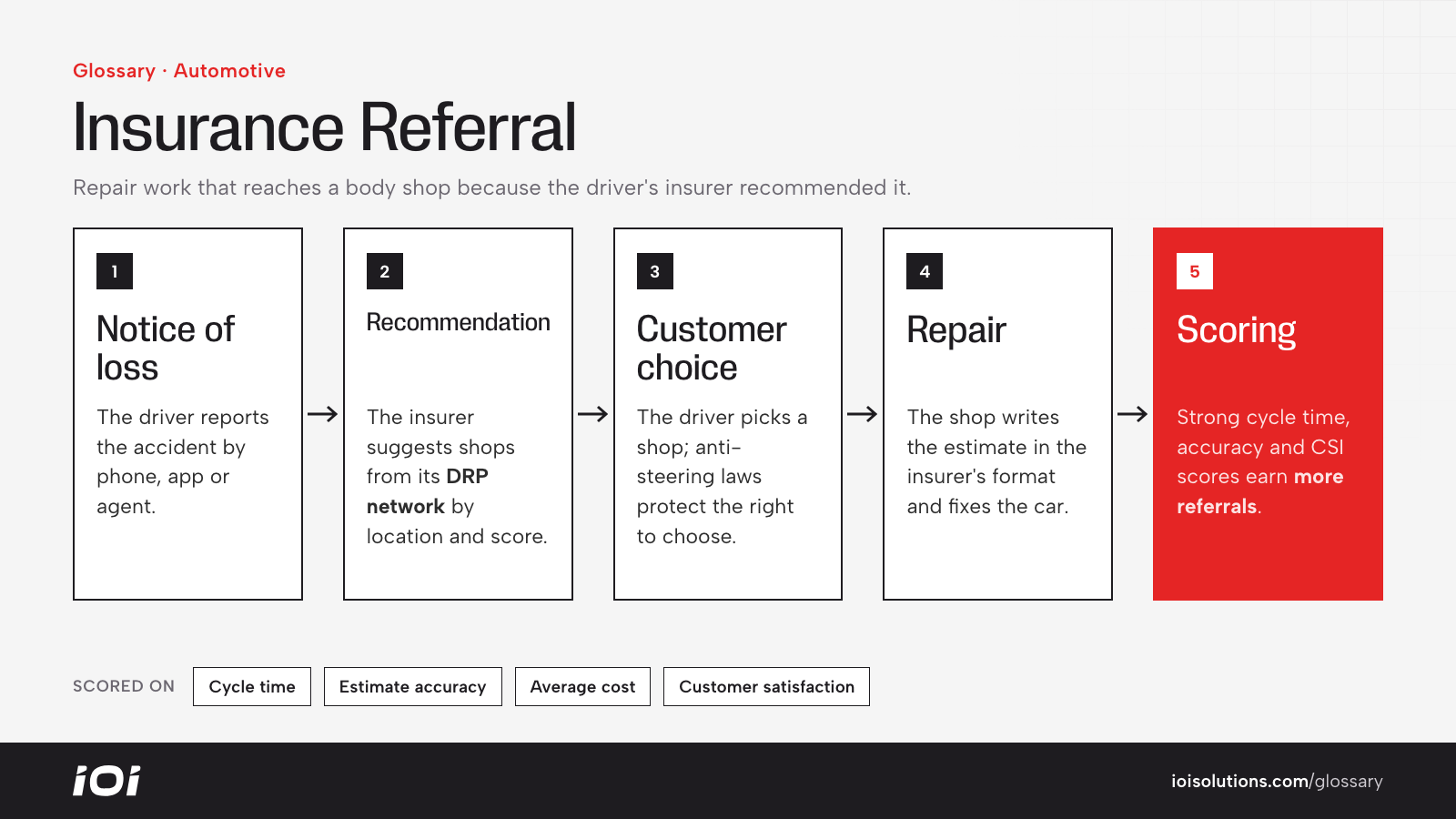
The typical flow looks like this:
- First notice of loss. The driver reports the accident to the insurer by phone, app, or agent.
- Shop recommendation. The insurer suggests shops, usually from its DRP network, ranked by location and performance.
- Customer choice. The driver picks a shop. Many states have anti-steering laws that protect the right to choose any repair facility, and insurers generally must acknowledge that right.
- Estimate and repair. The shop writes the estimate, often in the insurer’s required software and format, and completes the repair.
- Scoring. The insurer tracks metrics such as cycle time, estimate accuracy, average cost, and customer satisfaction. Strong scores generally lead to more referrals.
How Insurance Referrals Affect Marketing
Insurance referrals change the marketing job for a collision shop. Instead of only competing for consumers, the shop is also competing for the insurer’s recommendation, and that competition is decided by operational performance.
That makes the shop’s own marketing a balancing act. A shop that depends on referrals still needs a strong consumer presence, because many drivers search for a shop before or after calling their insurer, and because the right to choose means a driver can override the insurer’s suggestion.
For example, a shop might emphasize its OEM certifications and lifetime warranty on its website and in search ads so that drivers who prefer a certified repair choose it regardless of insurer recommendation. Strong reviews on its Google Business Profile help win customers who check reviews after hearing the insurer’s list.
Messaging can also explain the customer’s rights. Content that tells drivers they can choose their own shop, and that the shop works with all insurers, captures people who are unsure whether they have to use the insurer’s pick.
Shops should track the source of every job: DRP referral, customer choice, dealer referral, or tow-in. That reveals how dependent the business is on insurers and whether consumer marketing is building independent demand.
Best Practices
- Diversify your sources. Build consumer demand, dealer partnerships, and fleet work so no single insurer controls your volume.
- Protect your scores. Cycle time, accuracy, and satisfaction drive referrals, so treat them as marketing metrics.
- Say “we work with all insurers.” Make it clear on your site, ads, and phone scripts.
- Explain customer rights accurately. Describe the right to choose a shop in plain language without overstating the law in your state.
- Ask every referred customer for a review. Referral jobs are a great source of reviews that win future direct customers.