
What Is a Direct Repair Program (DRP)?
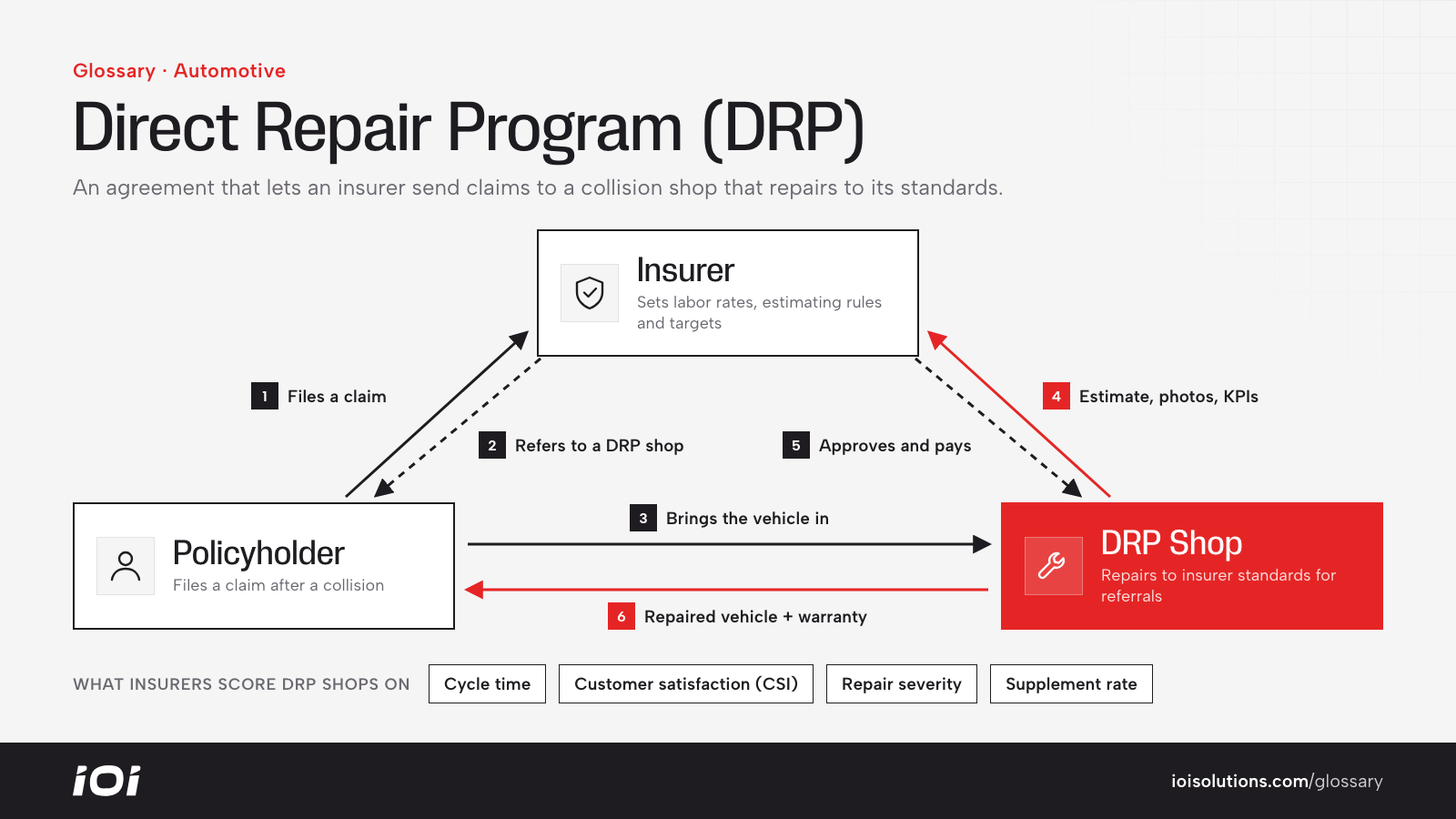
A Direct Repair Program (DRP) is a contractual relationship between an auto insurance company and a collision repair shop. The shop agrees to meet the insurer’s requirements on things like labor rates, estimating guidelines, cycle time, customer satisfaction scores and repair warranties. In return, the insurer may recommend the shop to its policyholders when they file a claim.
DRP shops often handle more of the claims process themselves. Depending on the program, they may write the estimate, take photos and submit them for approval without waiting for a field adjuster to inspect the vehicle. Insurers benefit from faster, more predictable claims handling; shops gain a steady stream of referred work.
Policyholders generally have the right to choose their own repair shop. Insurers can recommend DRP shops, but in most US states they cannot require customers to use one.
Why DRP Relationships Matter
For many collision shops, DRPs are a major source of volume. They matter because:
- They provide predictable work through insurance referrals, especially for shops in competitive markets.
- They shape the economics of the business. DRP agreements often include negotiated labor rates, parts usage rules and discounts that affect margins.
- They come with performance scorecards. Insurers track metrics such as cycle time, estimate accuracy, severity and customer satisfaction, and can reduce referrals or end the relationship if scores slip.
- They influence independence. Shops heavily dependent on a few insurers can lose a large share of revenue if a program changes.
How a DRP Works
A typical DRP claim follows these steps:
- A policyholder reports a claim, and the insurer suggests nearby program shops.
- The customer brings the vehicle to the DRP shop, which inspects it and writes an estimate in the insurer’s preferred collision estimating software.
- The shop submits the estimate and photos for review; the insurer approves or adjusts it.
- Repairs begin. If hidden damage is found, the shop submits a supplement for approval.
- After repairs, the shop delivers the vehicle and the insurer pays according to the agreement, minus any deductible owed by the customer.
- The insurer tracks results, often via customer surveys and data from the estimate, to update the shop’s scorecard.
How DRP Affects Marketing
DRP status changes how a collision shop should approach marketing:
- Balance referral and direct demand. Shops that rely only on DRP referrals are exposed to program changes. Building direct, customer-pay and non-DRP insurance volume through search, local SEO and reviews creates resilience.
- Market customer choice. Many drivers do not know they can choose their own shop. Content that explains this right clearly, without misrepresenting any insurer, can attract customers who would otherwise go where they are directed.
- Use certifications and quality signals. OEM certifications, warranties and repair photos help a shop stand out whether or not it is on a given insurer’s program.
- Protect reviews and CSI. Customer experience drives both DRP scorecards and online reputation, so communication improvements pay off twice.
- Track source accurately. Separate DRP referrals from marketing-driven jobs so you can judge true marketing return.
For example, a shop on two DRPs might run search campaigns for “collision repair near me” and “body shop that works with all insurance” to grow work beyond its programs.
Best Practices
- Know each agreement’s terms and how they affect margin before chasing more DRP volume.
- Monitor scorecard metrics weekly, especially cycle time and customer satisfaction.
- Diversify your work mix so no single insurer controls a dangerous share of revenue.
- Communicate proactively with customers through texts and photo updates during repairs.
- Build a direct brand through reviews, local search and community presence that does not depend on referrals.