
What Is Bounce Rate?
Bounce rate is the percentage of visits to a website or page that end without meaningful engagement. Traditionally, a “bounce” meant a single-page session where the visitor left without interacting further. Definitions now vary by analytics tool, so it’s important to know which one you’re looking at.
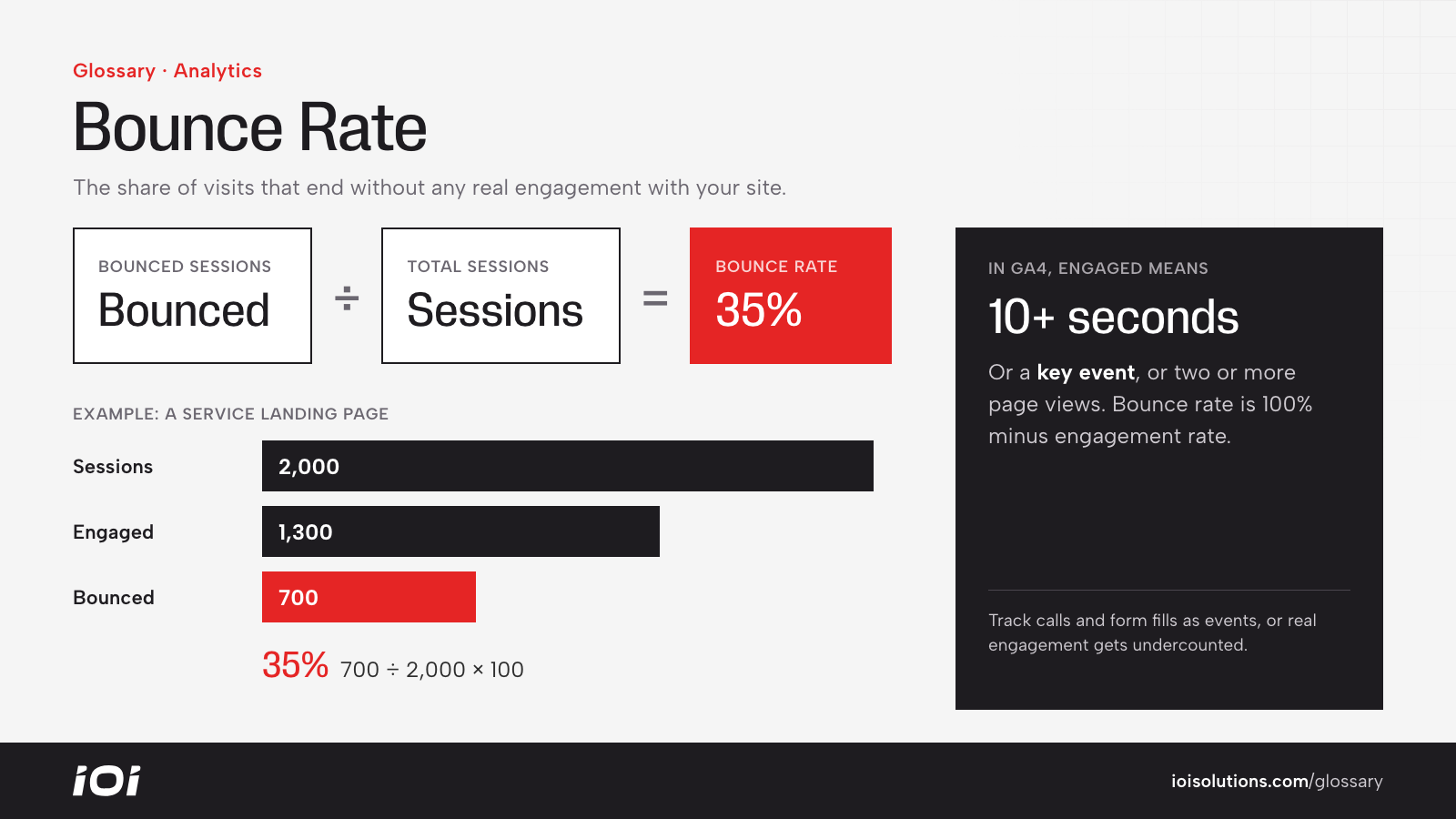
In Google Analytics 4, bounce rate is the opposite of engagement rate. A session counts as engaged if it lasts longer than 10 seconds, includes a key event (conversion), or includes two or more page or screen views. Any session that doesn’t meet those conditions is a bounce. Older Universal Analytics counted any single-page session as a bounce, even if the person read the page for several minutes.
Why Bounce Rate Matters
Bounce rate is a quick signal of whether a page meets visitor expectations. A high bounce rate can point to:
- A mismatch between the ad or search result and the landing page content.
- Slow loading, especially on mobile.
- Confusing design, intrusive pop-ups or a weak first screen.
- Low-quality traffic from irrelevant keywords, placements or bots.
It’s a diagnostic metric, not a goal on its own. A page that gives someone a phone number they tap immediately might count as a bounce in some setups even though it produced a customer, which is why proper event tracking matters.
How to Calculate Bounce Rate
Bounce rate = (Bounced sessions ÷ Total sessions) × 100
In GA4 terms, that’s the same as 100% minus the engagement rate. For example, if a landing page had 2,000 sessions and 1,300 were engaged, 700 sessions bounced, giving a bounce rate of 35%.
To make the number meaningful, track the actions that matter, such as calls, form submissions, chat starts, booking clicks and direction requests, as events. Otherwise you may undercount real engagement.
Bounce Rate in Automotive Marketing
- Dealerships: Paid traffic that lands on a generic homepage instead of the specific model or offer usually bounces more. Sending ad clicks to the relevant search results page or vehicle detail page tends to help.
- Collision and repair shops: Many visitors call right away. If calls from the site aren’t tracked as events, bounce rate will look worse than the page’s real performance.
- Parts ecommerce: High bounce on product pages can signal unclear fitment, missing prices or slow image loading.
- Display and social campaigns: Placements in mobile apps and games often bring accidental clicks with very high bounce rates, which may justify excluding them.
For example, if a tire shop’s “winter tire special” ads send traffic to a page about all services, visitors hunting for the deal may leave quickly. A dedicated landing page for the offer usually holds attention far better.
What Is a Good Bounce Rate?
There’s no single good number. Bounce rate varies widely by industry, traffic source, device, page type and analytics definition. A blog post or contact page naturally bounces more than a multi-step shopping experience. Compare similar pages and traffic sources over time rather than chasing an outside benchmark.
- Align message and page. Make sure the headline and offer match the ad or search that brought the visitor.
- Speed up load times. Compress images and remove unnecessary scripts, then test with PageSpeed Insights.
- Track real conversions. Set up call, form, chat and booking events so engaged visits aren’t counted as bounces.
- Clean up traffic sources. Exclude irrelevant keywords and low-quality placements.
- Improve the first screen. Make the value and next step clear without scrolling.
- Segment before judging. Look at bounce rate by device, channel and page before drawing conclusions.