
What Is the Product Life Cycle (PLC)?
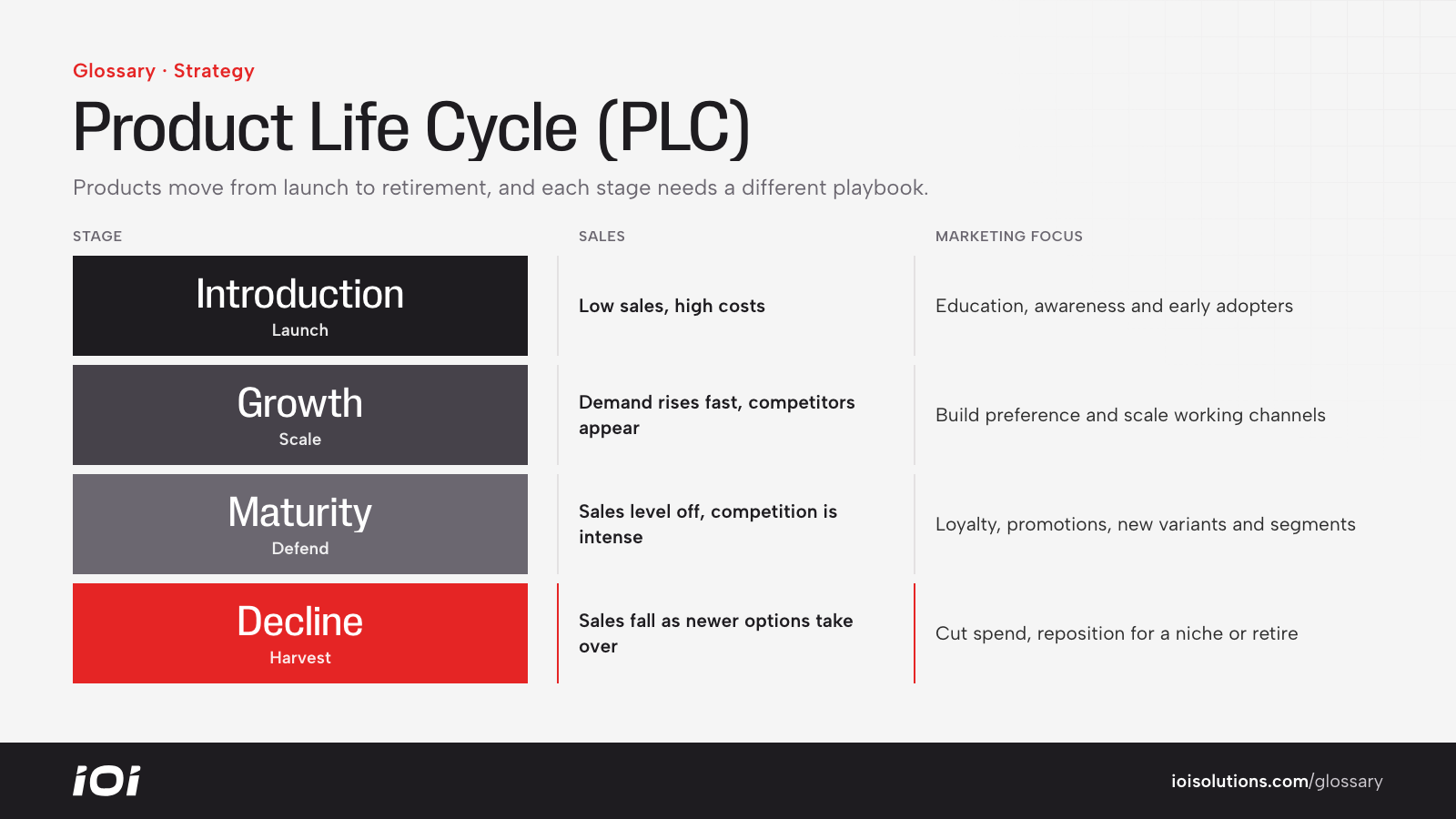
The product life cycle (PLC) is a model describing how a product’s sales and profits change over time, from the day it launches until it is retired. The classic version has four stages: introduction, growth, maturity and decline. Some versions add a development stage before launch.
The PLC is a simplification. Not every product follows a smooth curve, and some stay in maturity for decades. Still, the model is a practical way to think about where a product stands and what kind of marketing it needs right now.
Why the Product Life Cycle Matters
A product in its first months needs very different marketing from one that has been on the shelf for ten years. Applying the wrong playbook wastes money. Heavy awareness spending on a declining product rarely pays off, while profit-focused cost cutting during the growth stage can hand the market to competitors.
- It guides budget allocation across a product portfolio.
- It shapes pricing, messaging and channel choices.
- It helps with forecasting inventory and revenue.
- It signals when to refresh, reposition or retire a product.
Stages of the Product Life Cycle
Introduction
The product is new. Sales are low, costs are high and many buyers do not yet understand why they need it. Marketing focuses on education, awareness and getting early adopters to try it. A clear go-to-market strategy is critical here.
Growth
Demand picks up quickly, word of mouth spreads and competitors start to appear. Marketing shifts toward building preference, expanding distribution and scaling the channels that are working.
Maturity
Sales level off because most of the potential market has already bought. Competition is intense and differentiation matters most. Marketing focuses on defending share, loyalty programs, promotions, new variants and finding new segments or uses.
Decline
Sales fall as tastes change or newer alternatives take over. Companies may reduce spending and harvest remaining profit, reposition the product for a niche, or discontinue it.
Product Life Cycle in Automotive Marketing
The automotive industry shows the PLC clearly.
- Vehicle models: A newly launched or redesigned model gets heavy manufacturer advertising focused on awareness. Mid-cycle, incentives and trim updates keep it competitive. Near the end of a generation, dealers often see larger incentives to clear inventory before the next redesign arrives.
- Vehicle technology: Electric vehicles, advanced driver assistance systems and connected-car features move through the cycle at different speeds in different markets, which affects how dealers and service departments message them.
- Aftermarket products: A part designed for a new truck platform starts in introduction, grows as that platform becomes popular, matures as competitors release similar parts, and declines as the vehicle ages out of the enthusiast market.
- Service offerings: For a repair shop, demand for certain services tracks the vehicles on the road. As ADAS-equipped cars become common, calibration services move from introduction into growth.
For example, a wheel brand might pour budget into influencer content when it launches a fitment for a new model, then shift to bundle offers and email retention once that line matures.
Best Practices
- Identify the stage honestly. Look at sales trends, competitor activity and search interest rather than assumptions.
- Match goals to the stage. Use awareness metrics early, share and efficiency metrics in maturity, and profit metrics in decline.
- Plan the next product before decline. Introduce replacements while current products still generate cash.
- Extend maturity creatively. New variants, bundles, segments and use cases can stretch the most profitable stage.
- Coordinate with product marketing. Positioning and messaging should evolve as the product moves through stages.
- Watch inventory. Late-stage products can tie up cash; plan clearance before it becomes urgent.