
What Is Demand Generation?
Demand generation is the work of making more people want what you sell. It focuses on creating awareness, building trust and shaping preferences before someone is actively shopping, so that when the need arises, your brand is the one they think of first.
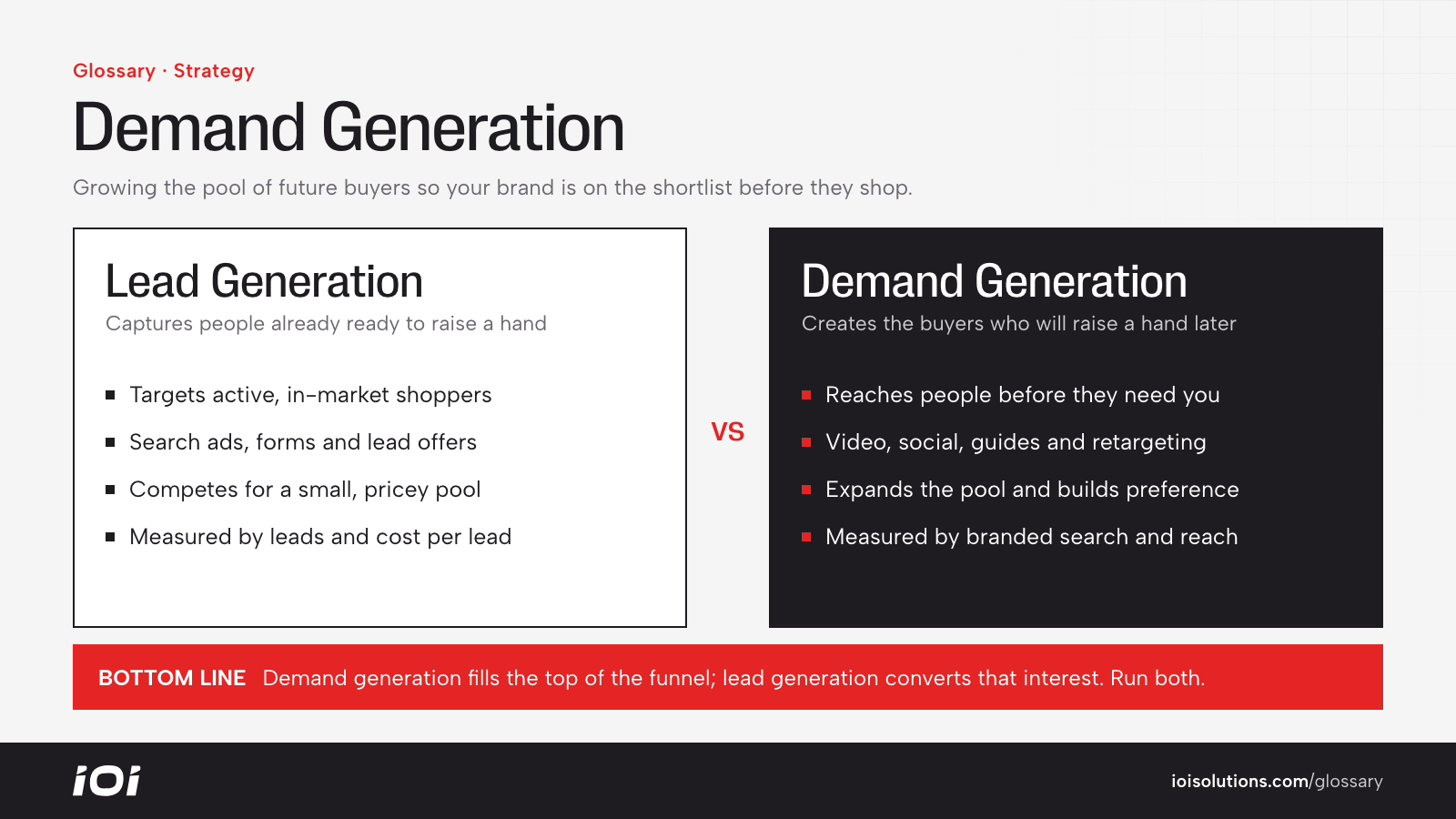
It is often confused with lead generation. Lead generation captures contact details from people who are ready to raise their hand. Demand generation is broader: it grows the pool of people who will eventually raise their hand. Good programs do both, with demand generation feeding the top of the funnel and lead generation converting that interest into conversations.
Why Demand Generation Matters
Only a small portion of any market is ready to buy at a given moment. If your marketing only targets people already searching, you compete for the same limited pool as every competitor, often in expensive auctions. Demand generation expands the pool.
- It lowers future acquisition costs. People who already know and trust your brand tend to convert more easily and search for you by name.
- It creates preference. When buyers start shopping with you already on their shortlist, you win more often.
- It reduces dependence on bottom-funnel channels. You are less exposed when search competition or costs spike.
How Demand Generation Works
Demand generation combines content, media and messaging aimed at a defined target audience:
- Define who you want to reach. Clarify the buyers, their problems and the triggers that put them in the market.
- Create useful, memorable content. Video, social posts, guides, comparisons and educational material that address real questions.
- Distribute it broadly. Use paid social, online video, connected TV, display, email, partnerships and organic channels to put that content in front of the right people repeatedly.
- Capture engaged audiences. Build retargeting lists from video viewers, site visitors and social engagers.
- Convert when ready. Hand engaged prospects to lead capture offers, search campaigns and sales follow-up.
Measurement is harder than for lead generation because the payoff is delayed. Useful signals include growth in branded search, direct traffic, engaged audience size, share of voice and the conversion rates of people who were exposed to awareness campaigns.
Demand Generation in Automotive Marketing
Vehicles, repairs and upgrades are often considered purchases with a long lead time, which makes demand generation especially relevant.
For example, a dealership might run short video walkarounds of new models on social and YouTube months before a buyer’s lease ends, then retarget viewers with inventory and offers when they show shopping signals. A wrap shop might post before-and-after transformations that make vehicle owners want a wrap they had never considered, building a following that converts into quote requests over time.
Aftermarket parts brands use creator content, build videos and enthusiast community involvement to make their products the default choice when someone finally decides to upgrade. Automotive software companies run educational webinars and industry content so dealers and shop owners recognize the brand before a demo request ever happens.
Even collision repair, which is driven by unplanned events, benefits: a body shop that has built local awareness through community presence and reviews is more likely to be the shop a driver remembers and asks their insurer about.
Best Practices
- Lead with value, not just offers. Educational and entertaining content earns attention that discounts alone cannot.
- Stay consistent. Demand builds through repeated exposure, so plan for sustained activity rather than one-off bursts.
- Build audiences you can reuse. Capture video viewers and engagers for remarketing.
- Track leading indicators. Watch branded search, direct traffic and engaged audience growth, not just immediate leads.
- Align with sales. Make sure offers and follow-up are ready when demand turns into inquiries.
- Balance the budget. Fund both demand creation and demand capture so the pipeline does not run dry.