
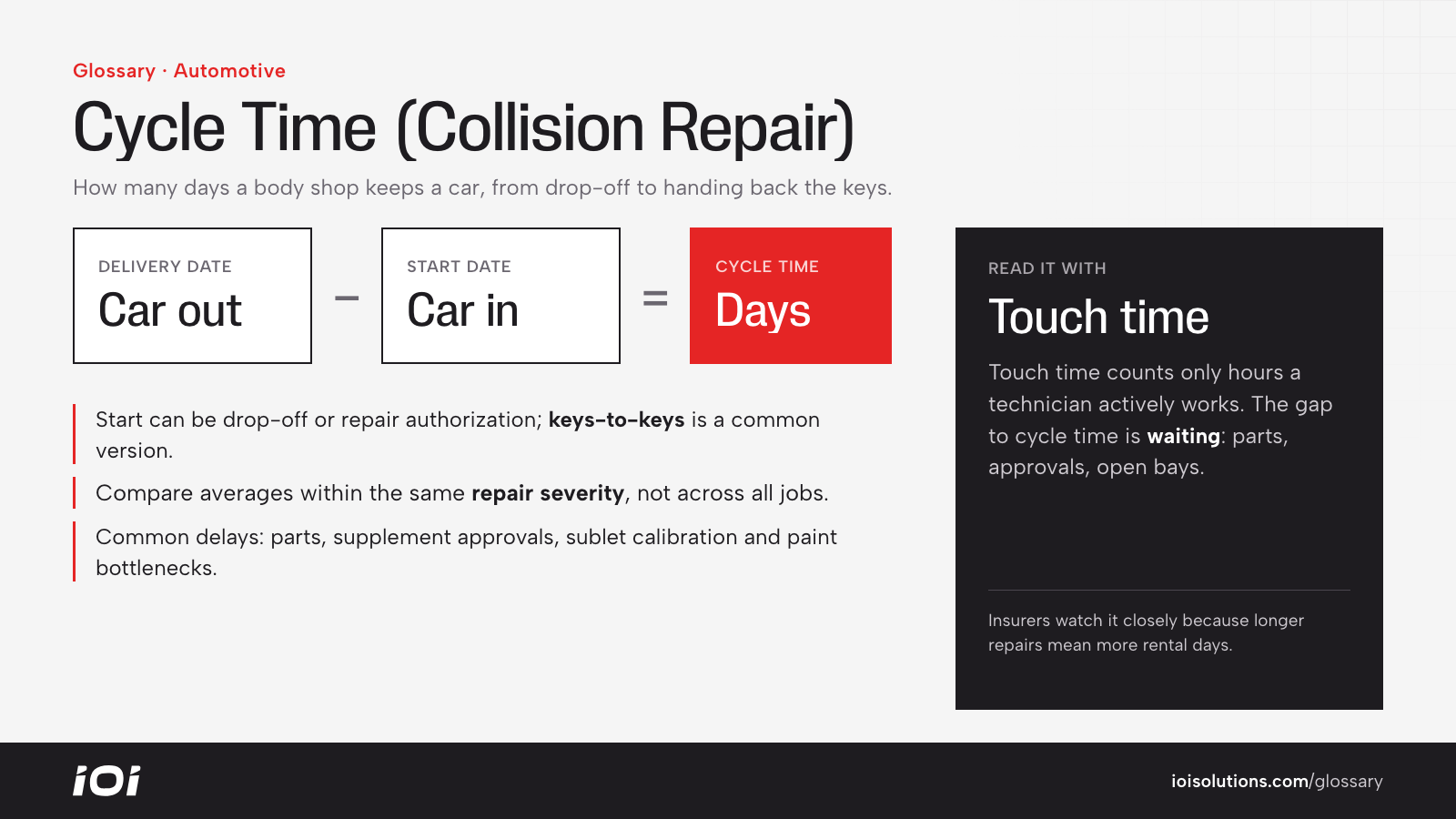
What Is Cycle Time (Collision Repair)?
Cycle time in collision repair is the total time it takes a body shop to repair a vehicle, measured from a starting point such as vehicle drop-off or repair authorization to the point the car is delivered back to the owner. It is usually expressed in calendar days, and many shops also track “keys-to-keys” time from when the shop receives the keys to when the customer gets them back.
Shops and insurers also track a closely related measure called touch time, which counts only the hours a technician is actively working on the car. The gap between touch time and cycle time shows how much time vehicles spend waiting for parts, approvals or available technicians.
Why Cycle Time Matters
Cycle time is one of the most watched metrics in the collision industry because it affects nearly everyone involved in a claim.
- Insurers: longer repairs mean more rental car days and higher claim costs, so carriers track cycle time closely for shops in their direct repair programs.
- Customers: owners want their car back quickly and judge the shop heavily on speed and communication.
- Shop capacity: faster cycle times free up bays and let a shop handle more repairs without adding space.
- Referrals: strong cycle time performance can help a shop earn and keep insurer referral relationships.
How Cycle Time Works
Cycle Time = Delivery Date – Start Date (vehicle in or repair authorized)
Shops often report average cycle time across all repairs and segment it by repair severity, since a light bumper repair and a major structural repair should not be held to the same standard. Common causes of long cycle times include:
- Parts delays and back-ordered components.
- Supplements that require additional insurer approval after hidden damage is found.
- Waiting on estimates or adjuster inspections.
- Sublet work such as ADAS calibration or mechanical repairs.
- Bottlenecks in paint or body departments.
Shops reduce cycle time through thorough upfront teardowns, blueprinting repairs before starting, parts pre-ordering and production scheduling systems.
How Cycle Time Affects Marketing
For body shop marketers, cycle time is both a selling point and a reality check.
- Use it as a differentiator when it is genuinely good. A shop that consistently returns cars quickly can feature that in ads, reviews and on its website. Make claims you can back up with your own data.
- Set expectations honestly. Overpromising speed leads to poor reviews when parts delays happen. Messaging about clear communication and status updates often lands better than speed alone.
- Match marketing to capacity. If the shop is backed up and cycle times are climbing, pushing more paid lead volume can hurt reviews. Shift budget toward higher-value work or reduce spend until capacity frees up.
- Feature updates in the customer experience. Text-based repair status updates reduce calls and improve perceived speed.
For example, a shop that tightened its parts process and cut average cycle time could highlight shorter repair times in its Google Business Profile posts and request reviews at delivery, when customers are most pleased with the turnaround.
Best Practices
- Track cycle time by repair size so you compare like with like.
- Communicate proactively with customers about delays such as parts back-orders and supplements.
- Coordinate paid marketing budgets with shop capacity to avoid overwhelming production.
- Ask for reviews at delivery, when the speed and quality of the repair are fresh.
- Recognize that typical cycle times vary by market, repair mix and parts availability, so benchmark against your own history and insurer partner expectations.