
What Is Service Lane Marketing?
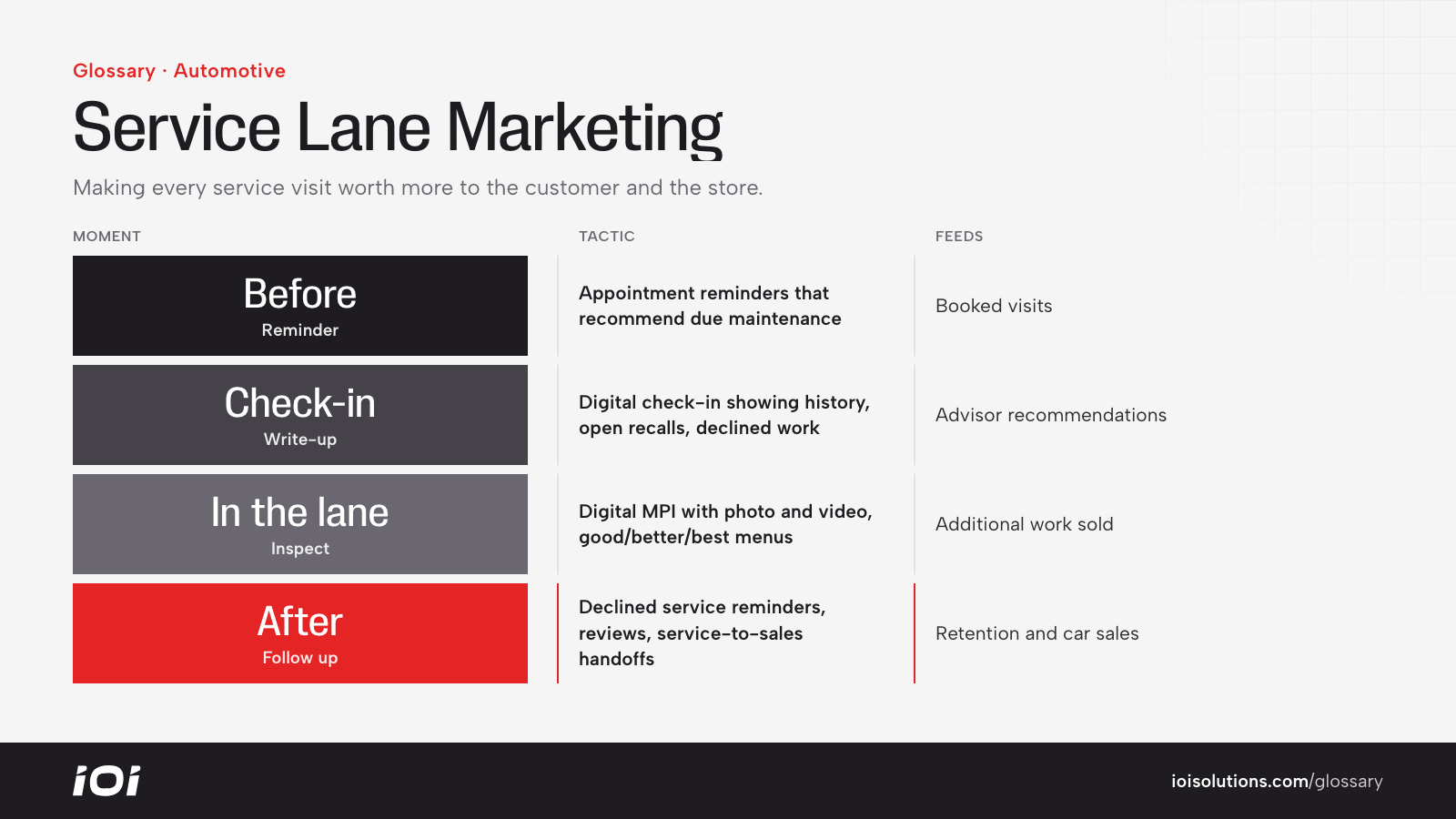
Service lane marketing covers everything a dealership does to engage customers while their vehicles are in the service department. That includes the greeting and write-up, inspection results, recommendations for additional work, follow-up on declined services, and in many stores, introducing customers to the sales department when an upgrade makes sense.
Unlike most marketing, it happens with a customer who is already on site. The goal is to turn an existing visit into more value for the customer and the store.
Why Service Lane Marketing Matters
The service drive is often the busiest customer touchpoint in a dealership.
- Fixed operations profit. Fixed operations are a major and steady source of dealership gross profit, and the service lane is where that revenue begins.
- Retention. A good service experience keeps customers coming back and makes them more likely to buy their next car from the same store.
- Sales opportunities. Service customers already trust the store and may be ready to upgrade, especially if their vehicle has high mileage or significant repair needs.
- Used inventory. Customers who trade in from the service lane supply the store with known, well-maintained cars.
How Service Lane Marketing Works
Common tactics include:
- Appointment reminders and pre-visit messages that set expectations and recommend due maintenance.
- Digital check-in with vehicle history, open recalls, and declined work shown on the advisor’s tablet.
- Digital multi-point inspections with photos and video sent by text so customers can see what the technician sees.
- Menu selling that presents maintenance options in good, better, best tiers.
- Declined service follow-up through email and text after the visit.
- Service-to-sales handoffs when data shows a customer is in a strong position to upgrade, often driven by equity mining.
- Post-visit surveys and review requests.
Results are tracked on the repair order: hours per RO, additional work sold, and customer pay revenue per visit.
How Service Lane Marketing Affects Marketing
Service lane marketing connects in-store operations with the marketing team’s digital work.
Data from the lane feeds campaigns. Declined services, inspection results, and mileage readings let marketers send precise, useful reminders, such as “your brakes were measured at 3mm last visit; here is a coupon to replace them this month.” These messages tend to perform better than generic service specials because they are personal and timely.
It also shapes acquisition strategy. A store with a strong service-to-sales process can justify more spending to bring new customers into the service drive, because each visit has value beyond the repair order.
For example, a dealer might run a campaign offering a discounted first oil change to owners of its brand who bought elsewhere. Once those customers arrive, inspection results and equity data give the service and sales teams reasons to stay in touch.
Trust is the boundary. If customers feel pressured or sold work they did not need, the damage shows up quickly in reviews and lost retention. Photos, video, and clear explanations help keep recommendations honest.
Best Practices
- Use visual inspections. Photos and video build trust and lift approval of recommended work.
- Follow up on declined work. Send timely, specific reminders instead of letting declined items disappear.
- Connect service and sales data. Flag upgrade opportunities so salespeople can approach customers respectfully.
- Make waiting time useful. Communicate status updates by text and keep customers informed.
- Ask for reviews. Request feedback after every visit and respond to it.
- Track per-RO results. Measure additional work sold and retention, not just car count.