
What Is Equity Mining?
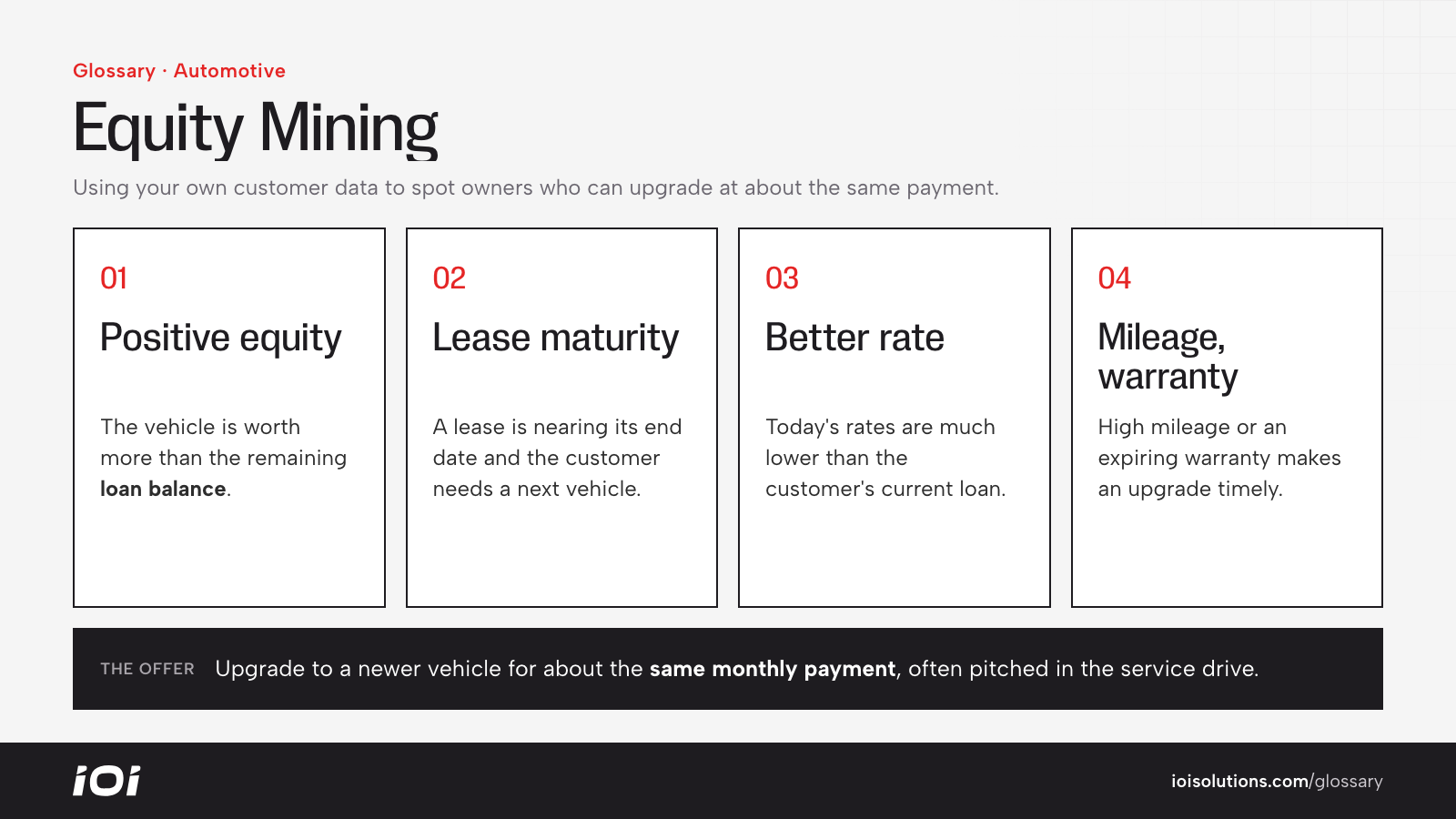
Equity mining is the practice of analyzing a dealership’s customer database to find people who are in a good position to replace their current vehicle. The main signal is equity: the customer’s vehicle is worth more than their remaining loan balance. Other signals include a lease nearing maturity, a much lower interest rate available today, high mileage, or an expiring warranty.
Once those customers are identified, the store reaches out with a personalized offer, often framed as “upgrade to a newer vehicle for about the same monthly payment.”
Why Equity Mining Matters
Equity mining is one of the most efficient sources of sales a dealership has, because it targets people who already know and trust the store.
- Lower acquisition cost. Existing customers are cheaper to reach than new shoppers, especially compared with conquest marketing.
- Used inventory. Every upgrade usually brings in a late-model trade, which is exactly the kind of car many stores struggle to source.
- Loyalty. Reaching out first keeps customers from drifting to a competitor when they start shopping on their own.
- Timing. The data reveals the moment when a deal makes sense financially, which is often before the customer realizes it.
How Equity Mining Works
The process combines data, math, and outreach:
- Pull data. Sales history, loan terms, and service visits come from the dealer management system and CRM. Many stores use dedicated equity mining software that refreshes this daily.
- Estimate payoff. The software calculates the current loan balance from the original term, rate, and payment history.
- Estimate value. Current market value is pulled from used-car valuation data, adjusted for mileage.
- Model the new deal. The system compares the current payment to a payment on a newer vehicle, factoring in equity, current rates, and incentives.
- Flag opportunities. Customers who can upgrade at a similar or lower payment are flagged for outreach.
- Engage. Sales or BDC staff contact the customer, and marketing sends personalized emails, texts, and mail.
The service drive is a frequent trigger. When a flagged customer has a service appointment, the store can alert a salesperson to meet them while their car is being worked on.
How Equity Mining Affects Marketing
Equity mining turns the customer database into a targeting engine. For marketers, that means more personal messaging and more precise audiences.
For example, a dealer might upload a list of customers in an equity position to Meta and Google as a customer match audience, then run ads featuring their vehicle model and a “your trade is in demand” message. The same list can drive direct mail that shows an estimated trade value and a sample payment on a newer model.
Some best-performing campaigns pair equity data with lease maturity and incentive timing. When a manufacturer launches a strong loyalty offer, the equity list becomes the first audience to receive it.
Accuracy matters. If a mailer promises a payment the customer cannot actually get, the campaign creates frustration rather than sales. Messaging should make clear that numbers are estimates subject to credit approval, and offers must follow federal and state advertising rules for credit terms.
Privacy matters too. Customer data should only be used in ways allowed by your privacy policy, and opt-outs for email and text must be honored.
Best Practices
- Keep data fresh. Refresh valuations and payoffs often, since used-car values move quickly.
- Coordinate sales and service. Flag equity customers in the service lane so the opportunity is not missed.
- Personalize the message. Reference the customer’s current vehicle and a realistic next step, not a generic sale.
- Use multiple channels. Combine phone, email, text, mail, and paid social audiences for reach.
- Track results. Measure how many contacted customers buy and what trades they bring in, and compare against your service retention data.