
What Is Invoice Price?
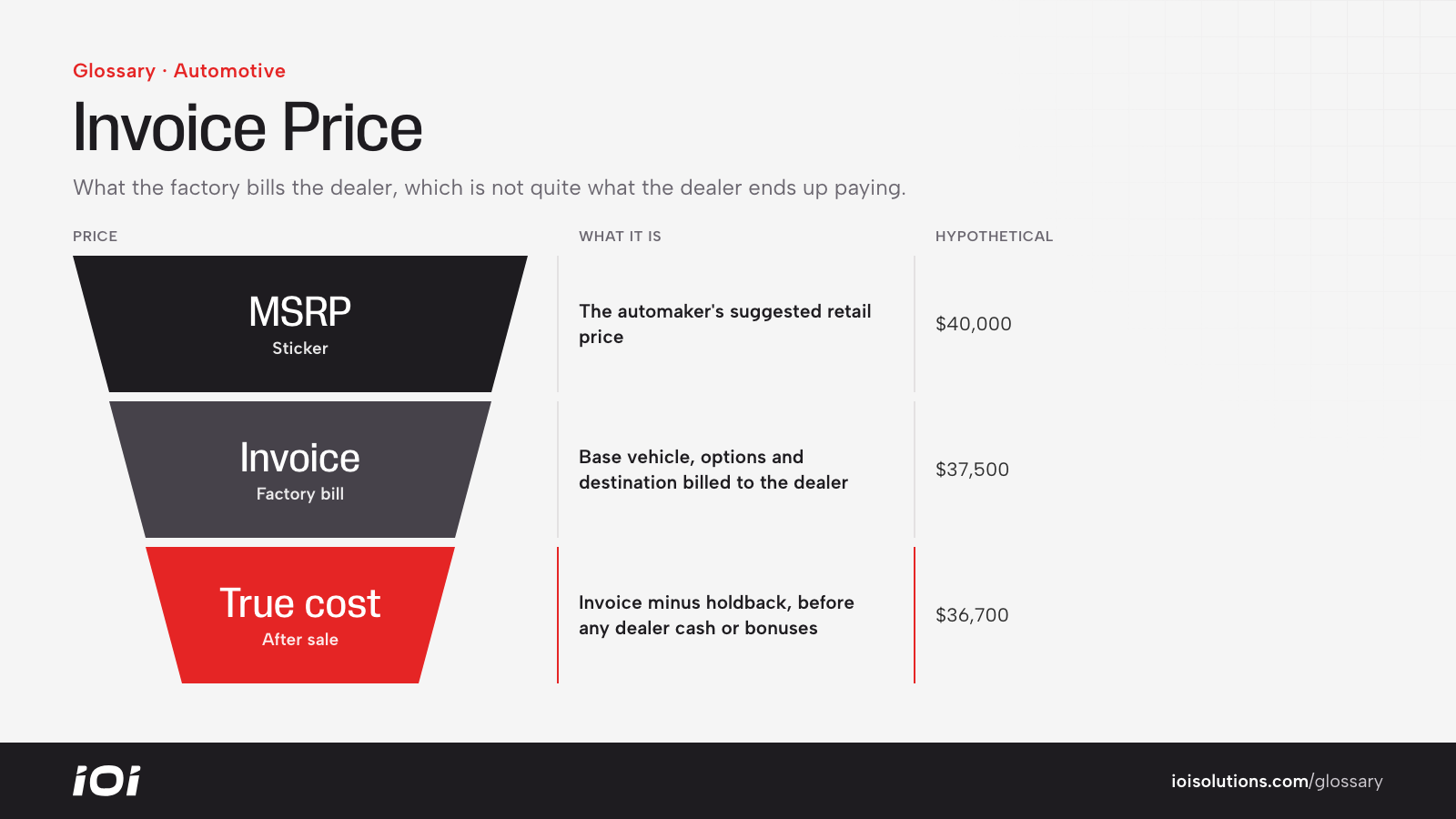
Invoice price is the amount a manufacturer charges a dealer for a new vehicle, as shown on the factory invoice. It covers the base vehicle, factory options, and destination charge, and it is usually lower than the MSRP on the window sticker.
Many shoppers believe invoice is what the dealer “really” paid. In practice, it is not the final cost. Manufacturers often return money to dealers after the sale through dealer holdback, dealer cash, volume bonuses, and other programs, which can push the dealer’s effective cost below invoice.
Why Invoice Price Matters
Invoice price shapes how both shoppers and dealers think about a deal.
- Negotiation anchor. Research-minded buyers often try to negotiate from invoice up rather than from MSRP down.
- Front-end gross. The difference between selling price and invoice is the starting point for front-end gross profit on a new car.
- Pricing strategy. Stores that advertise “at invoice” or “below invoice” pricing rely on back-end money from the manufacturer and from finance and insurance products to stay profitable.
- Financing. Inventory is usually financed through a floor plan line, and the amount financed generally relates to the invoice cost.
How Invoice Price Works
The manufacturer creates an invoice when the vehicle is shipped to the dealer. It typically includes:
- The base invoice price of the model and trim
- The invoice price of each factory option
- The destination charge
- Sometimes regional advertising fees or other assessments
The dealer’s true cost then changes after the sale:
- Holdback is credited back to the dealer, often quarterly.
- Dealer cash or incentive money may be paid on specific models.
- Volume or performance bonuses reward the store for hitting sales targets.
- Floor plan assistance may offset some of the cost of carrying inventory.
Because these programs vary by brand, region, and month, two dealers selling the same vehicle at the same price can earn very different profits.
How Invoice Price Affects Marketing
Invoice price is a sensitive marketing topic. “Invoice pricing” and “employee pricing” style events can drive traffic, but they need to be handled honestly.
If a dealer advertises a price “below invoice,” shoppers may expect to see proof, and regulators may expect the claim to be accurate based on the actual invoice. Overstating savings or using a misleading invoice figure can create legal exposure and damage trust. Many dealers now avoid invoice language and instead show MSRP, a clear discount, and the final price.
For example, a dealer clearing out last year’s models might advertise a specific discount off MSRP rather than an “at invoice” claim. The message is easier to verify, and the store keeps control of how its profit structure is described.
From a strategy perspective, understanding the true cost structure helps marketers plan. When a manufacturer is paying strong incentives or stair-step bonuses on a model, the dealer can afford to advertise more aggressive pricing on that model and should put more budget behind it.
Third-party pricing sites often publish estimated invoice and “fair market” figures. Shoppers arrive informed, so pricing that looks inflated compared to those references tends to lose leads.
Best Practices
- Be accurate with invoice claims. Only advertise “at” or “below invoice” if you can document it.
- Prefer clear discounts. Showing MSRP minus a specific discount is usually easier to understand and defend.
- Align budget with incentives. Put ad dollars behind models where manufacturer money supports aggressive pricing.
- Train staff on the conversation. Salespeople should be able to explain pricing without disputing published invoice estimates.
- Review compliance. Have pricing claims checked against your state’s advertising rules.