
What Is Dealer Holdback?
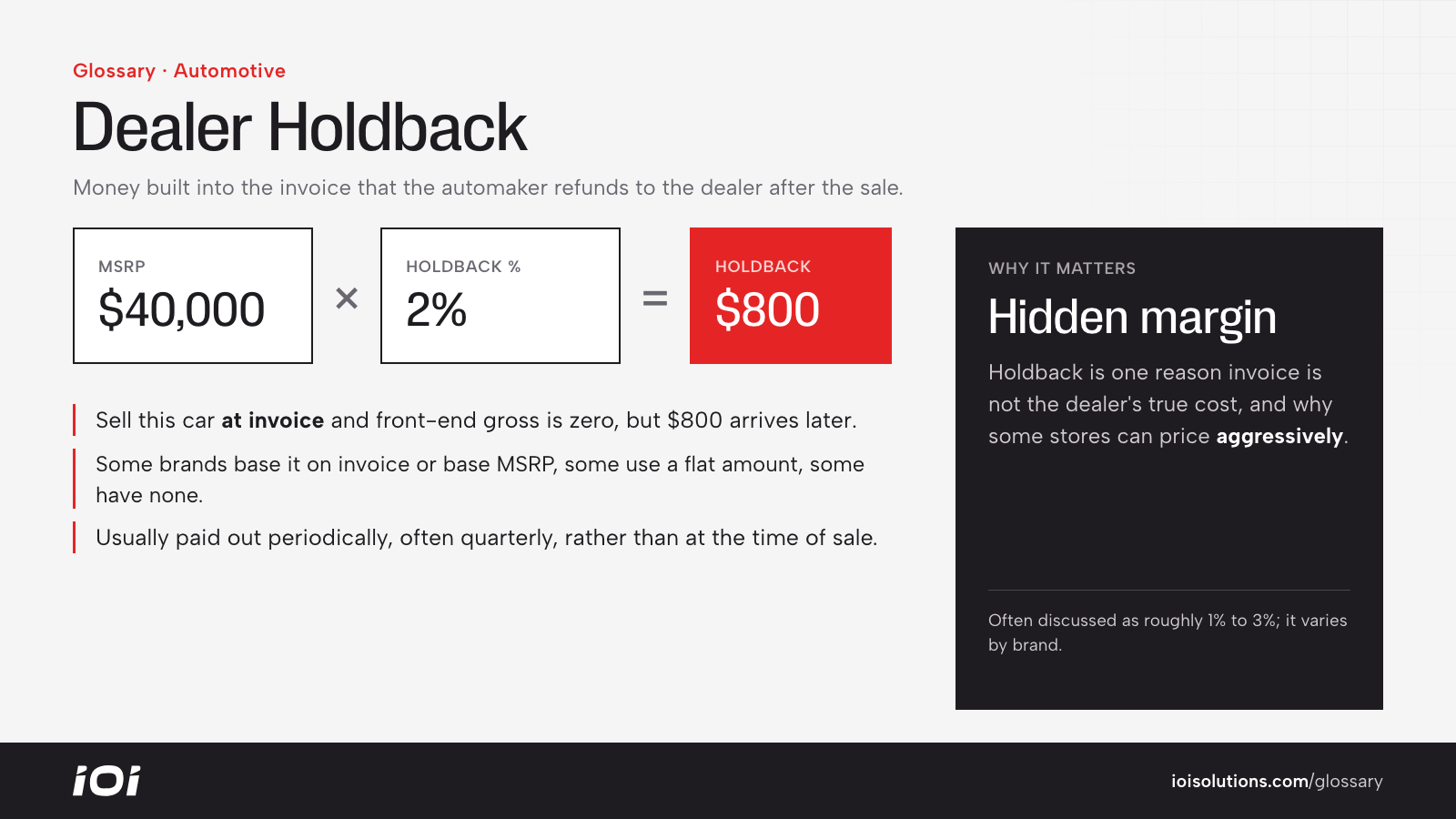
Dealer holdback is an amount the manufacturer builds into the invoice price of a new vehicle and later refunds to the dealer. It is usually calculated as a percentage of either MSRP or invoice, and it is typically paid out periodically, often quarterly, rather than at the time of sale.
The percentage and calculation method vary by brand and change over time. Figures in the low single digits, often discussed as roughly 1% to 3%, are common, and some brands use a flat amount or no holdback at all.
Why Dealer Holdback Matters
Holdback is one reason the invoice price on a new car does not equal the dealer’s true cost.
- Hidden margin. A dealer that sells a car “at invoice” may still earn a profit once holdback is paid.
- Cash flow. Holdback helps dealers cover costs such as floor plan interest, advertising, and overhead.
- Pricing flexibility. Knowing that holdback is coming lets a dealer price aggressively on the front end when competition requires it.
- Profit reporting. Some stores treat holdback as part of vehicle gross, others report it separately, which affects how gross profit is compared across stores.
Holdback is one piece of the money that flows from manufacturers to dealers. It sits alongside dealer cash, volume bonuses, and other manufacturer incentives.
How Dealer Holdback Works
Here is a simplified, hypothetical example. A vehicle has an MSRP of $40,000 and an invoice of $37,500. The brand’s holdback is 2% of MSRP.
Holdback = MSRP × holdback percentage = $40,000 × 2% = $800
If the dealer sells the car at invoice, the front-end gross is zero, but the dealer still receives $800 later in the period. Factor in finance and insurance income and the deal can still be profitable.
The calculation details matter:
- Some brands base holdback on total MSRP, others on base MSRP or base invoice.
- Some exclude the destination charge.
- Payment timing differs, which affects when dealers see the cash.
Dealers track holdback in their accounting system so it can be reconciled when the manufacturer pays.
How Dealer Holdback Affects Marketing
Holdback is mostly an internal finance topic, but it has real implications for pricing strategy and advertising.
First, it explains why some dealers can advertise very aggressive new-car pricing. A volume-focused store may accept little or no front-end gross, relying on holdback, incentive money, and back-end products. A marketer working with that store can build campaigns around transparent, low prices with confidence that the model is sustainable.
Second, holdback is part of the information gap between dealers and shoppers. Some consumer sites discuss holdback openly, and shoppers occasionally bring it up in negotiation. Ads and sales processes that focus on clear total pricing tend to avoid arguments over what the dealer “really” makes.
For example, a dealer facing heavy local price competition on a popular crossover might decide to price near invoice and push volume, knowing that holdback and stair-step bonuses make the strategy profitable. Marketing would then focus budget on that model, lead with price, and track whether the extra volume actually lifts total store profit.
Marketers should not use holdback in consumer messaging. Claims about dealer cost are hard to verify and can create compliance risk.
Best Practices
- Understand your brand’s program. Know how holdback is calculated and when it is paid before setting price strategy.
- Look at total deal profit. Judge campaigns on full deal gross, including holdback and back-end income, not just front-end gross.
- Keep it out of ads. Focus consumer messaging on clear prices and real offers rather than dealer cost.
- Plan around timing. Factor quarterly holdback payments into budget and cash flow planning.
- Reconcile regularly. Make sure the holdback you expect matches what the manufacturer pays.