
What Is Floor Plan Financing?
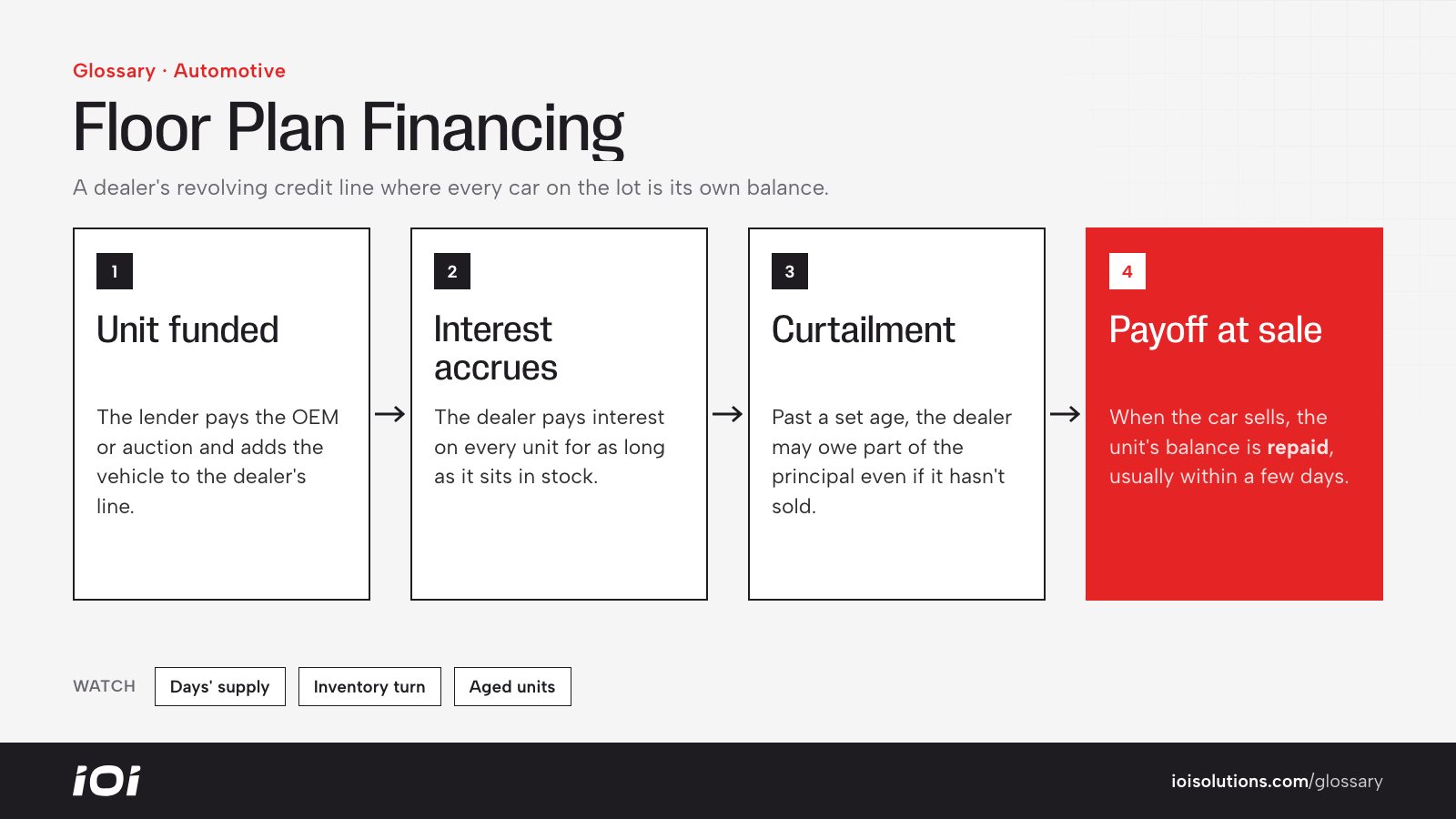
Floor plan financing is a revolving line of credit that lets a car dealer buy inventory without paying cash up front for every vehicle. A lender, often the manufacturer’s captive finance company or a bank, pays the OEM or auction for each unit. The dealer then pays interest on that unit for as long as it sits in stock and repays the principal, known as paying off or “curtailing” the unit, when it sells.
Think of it as a credit card where each vehicle is its own balance. The dealership holds the cars, but the lender holds a security interest in them, and the lender periodically audits the lot to confirm every financed unit is present or has been paid off.
Why Floor Plan Financing Matters
Very few dealers could stock a full lot of new vehicles with their own money. Floor plan credit makes a broad selection possible, which helps sell cars. The trade-off is cost: every day a vehicle sits, it accrues interest. When interest rates rise, floor plan expense can swing a store’s profitability noticeably.
- Carrying cost: slow-moving units cost more the longer they sit.
- Curtailment pressure: many agreements require partial principal payments after a unit ages past a set number of days.
- Credit capacity: stale units occupy credit that could fund fresh, in-demand stock.
- Manufacturer support: some OEMs offer floor plan assistance, credits that offset part of the interest cost.
How Floor Plan Financing Works
- Credit line approved: the lender sets a limit based on the dealer’s financials, brand and sales volume.
- Units are funded: when a new vehicle ships or a used unit is bought at auction, the lender pays the seller and adds the unit to the dealer’s line.
- Interest accrues: the dealer pays interest, usually monthly, on the outstanding balance of every unit.
- Curtailments may apply: after a defined age, the dealer may owe a percentage of principal even though the car has not sold.
- Payoff at sale: when the vehicle sells, the dealer repays the unit’s balance, typically within a few days.
- Audits: the lender checks physical inventory to confirm units are on hand or properly paid off.
Because the cost is directly tied to time, floor plan is the main reason dealers obsess over days’ supply and inventory turn.
How Floor Plan Financing Affects Marketing
A marketer does not manage the credit line, but floor plan cost should shape how you prioritize campaigns. A vehicle that has been sitting for 75 days is quietly costing the store money every morning. Getting it sold a few weeks earlier saves real interest dollars and frees credit for better-turning stock.
- Prioritize aged units. Build campaigns around aged inventory, with price-forward ads and remarketing to shoppers who viewed similar vehicles.
- Measure cost per sale against carrying cost. Spending a bit more to move an aged unit can make sense if it saves weeks of interest and a bigger markdown later.
- Coordinate with the used car manager. Know which units are approaching curtailment dates so advertising can lift them first.
- Feature incentives that move stock. When the OEM offers cash or rate deals on specific models, give those models visible placement.
For example, a used car department that buys heavily at auction ahead of tax season might see supply balloon. If those units do not sell within the first 30 to 45 days, floor plan interest and depreciation start eating the expected gross. A focused paid search and social push in that window is often cheaper than the alternative.
Best Practices
- Ask the dealership for a regular aged-unit list showing days in stock and any curtailment deadlines.
- Set marketing priorities by carrying cost, not just by which vehicles are most exciting to advertise.
- Avoid driving demand to units that are not yet funded or in transit unless the store wants pre-sold orders.
- Report results in terms dealers care about, such as days removed from aged stock, not just clicks.
- Understand that interest rates, lender terms and OEM floor plan assistance vary, so treat carrying-cost math as store-specific.