
What Is Paint Protection Film (PPF)?
Paint protection film (PPF), sometimes called clear bra, is a transparent thermoplastic urethane film applied over a vehicle’s paint to protect it from physical damage. It absorbs impacts from rock chips, gravel, bug splatter, minor scratches and road debris that would otherwise damage the clear coat and paint underneath. Many modern films have a self-healing top layer that allows light swirl marks to disappear with heat from the sun or warm water.
PPF is installed by detailers, wrap shops, dedicated film installers and some dealerships. Film is usually cut from pre-designed vehicle-specific patterns using a plotter, or hand-trimmed by experienced installers, and applied with slip solutions so it can be positioned and squeegeed into place.
Why Paint Protection Film (PPF) Matters
- Preserves resale value: protecting original paint helps keep a vehicle looking new, which matters for luxury, exotic and performance car owners.
- High-ticket service: PPF jobs, especially full-body installs, are among the highest-value services a detailing or wrap shop can sell.
- Upsell potential: PPF pairs naturally with ceramic coating, window tint and interior protection packages.
- Dealer accessory revenue: dealers can offer PPF on new vehicles as an add-on, either installed in-house or through a partner.
Types of Paint Protection Film (PPF)
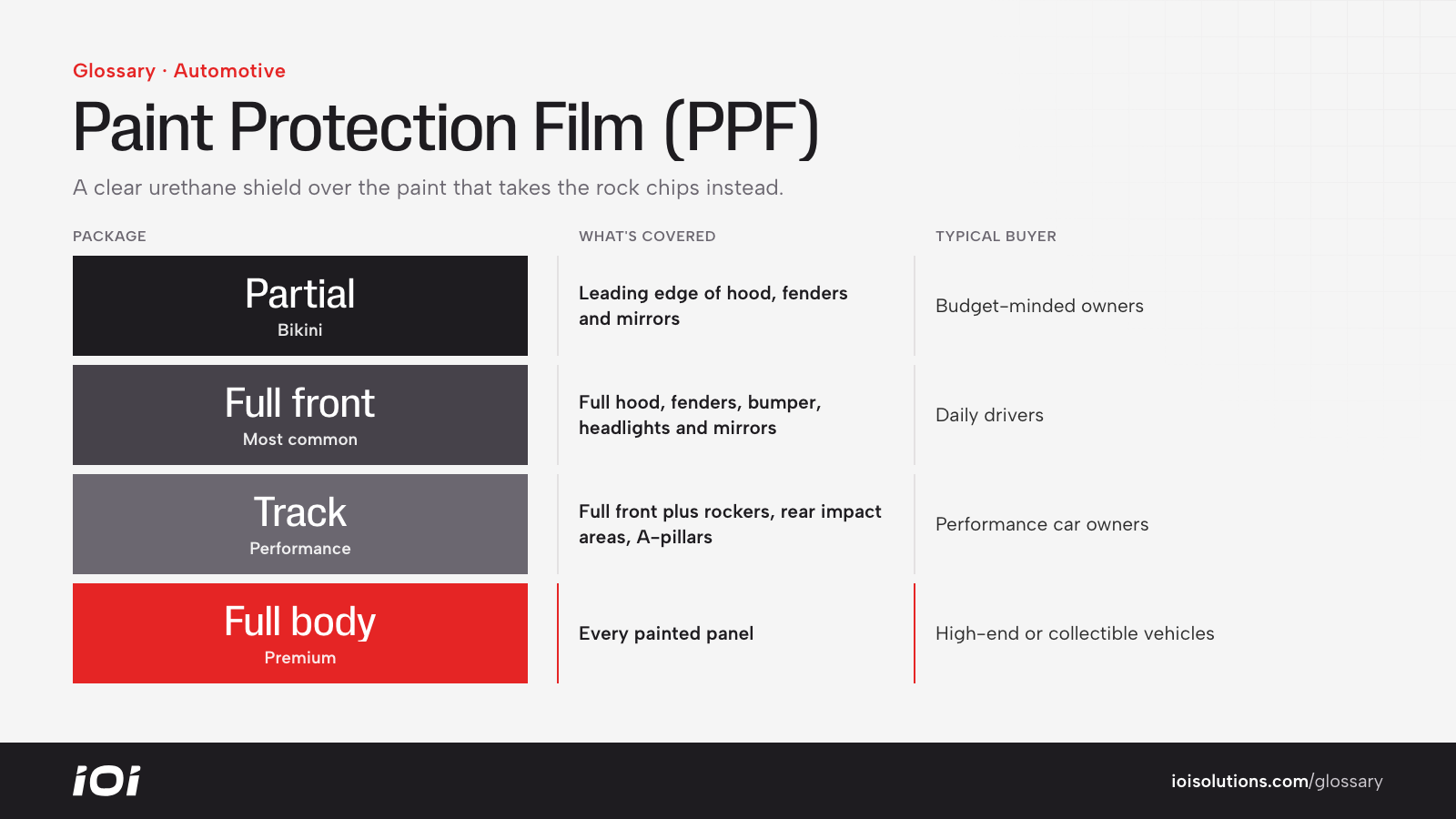
- Partial front or “bikini” coverage: covers the leading edge of the hood, fenders and mirrors.
- Full front: covers the full hood, front fenders, bumper, headlights and mirrors, the most common package for daily drivers.
- Track package: full front plus rocker panels, rear impact areas and A-pillars for performance cars.
- Full body: every painted panel is covered, typically for high-end or collectible vehicles.
- Gloss vs. matte (stealth) finishes: matte films change the look of glossy paint to a satin finish while protecting it.
- Colored PPF: newer films combine protection with color change, overlapping with vinyl wrap services.
Film manufacturers typically offer warranties against yellowing, cracking and peeling when installed by authorized installers, though terms vary by brand.
How Paint Protection Film (PPF) Affects Marketing
PPF is a considered purchase. Customers compare installers carefully, research film brands and look closely at examples of previous work. That shapes how you should market it.
- Visual proof wins. Before-and-after photos, close-ups of edge work and wrapped-edge detail, and short videos of installs perform well on Instagram, TikTok and YouTube.
- Local search is essential. Shoppers search for PPF or clear bra near them, so a strong Google Business Profile with real install photos and reviews matters.
- Package and price clarity. Show coverage diagrams and starting prices for partial, full front and full body to filter out poor-fit leads.
- Vehicle-specific landing pages. Pages for popular models such as specific sports cars, trucks or EVs can capture high-intent searches.
- Bundle for higher order value. Packages combining PPF, ceramic coating and tint raise average order value and simplify decision-making.
- Partner with dealers. Referral arrangements with dealers and sales staff can drive steady new-vehicle installs.
For example, a wrap and detail shop might launch a campaign targeting new owners of a popular EV, which many owners buy with paint protection in mind. A search campaign for that model plus PPF, a landing page showing coverage options and real installs, and remarketing with customer testimonials could generate high-value quote requests.
Best Practices
- Showcase your own installs rather than stock photos, with clear lighting and detail shots of edges.
- Name the film brands you install and explain warranty coverage accurately.
- Use quote forms that ask for vehicle year, make, model and desired coverage to qualify leads.
- Follow up quickly on quote requests, as PPF shoppers often contact several installers.
- Ask happy customers for reviews with photos, which are especially persuasive for appearance services.
- Avoid overstating protection; PPF reduces damage from chips and scratches but does not make paint indestructible.