
What Is Ceramic Coating?
Ceramic coating is a liquid protective product, typically based on silicon dioxide or similar compounds, that is applied to a vehicle’s exterior surfaces and cures into a thin, hard, glossy layer. It bonds to the clear coat and creates a hydrophobic surface that sheds water, resists contamination and makes the vehicle easier to clean. Coatings can also be applied to wheels, glass, trim and some interior surfaces.
Unlike wax or sealants, which wear away within weeks or months, professional ceramic coatings are designed to last for years when properly maintained, depending on the product and conditions. However, coatings are much thinner than paint protection film and do not stop rock chips or deep scratches.
Why Ceramic Coating Matters
- Customer appeal: owners like the deep gloss, water beading and easier washing.
- High-value service: professional coatings, especially with multi-stage paint correction beforehand, are among the most profitable jobs in detailing.
- Recurring revenue: many coating warranties require periodic maintenance visits, which create repeat business.
- Dealer add-on: dealerships often sell coating packages on new and used vehicles as appearance protection products.
How Ceramic Coating Works
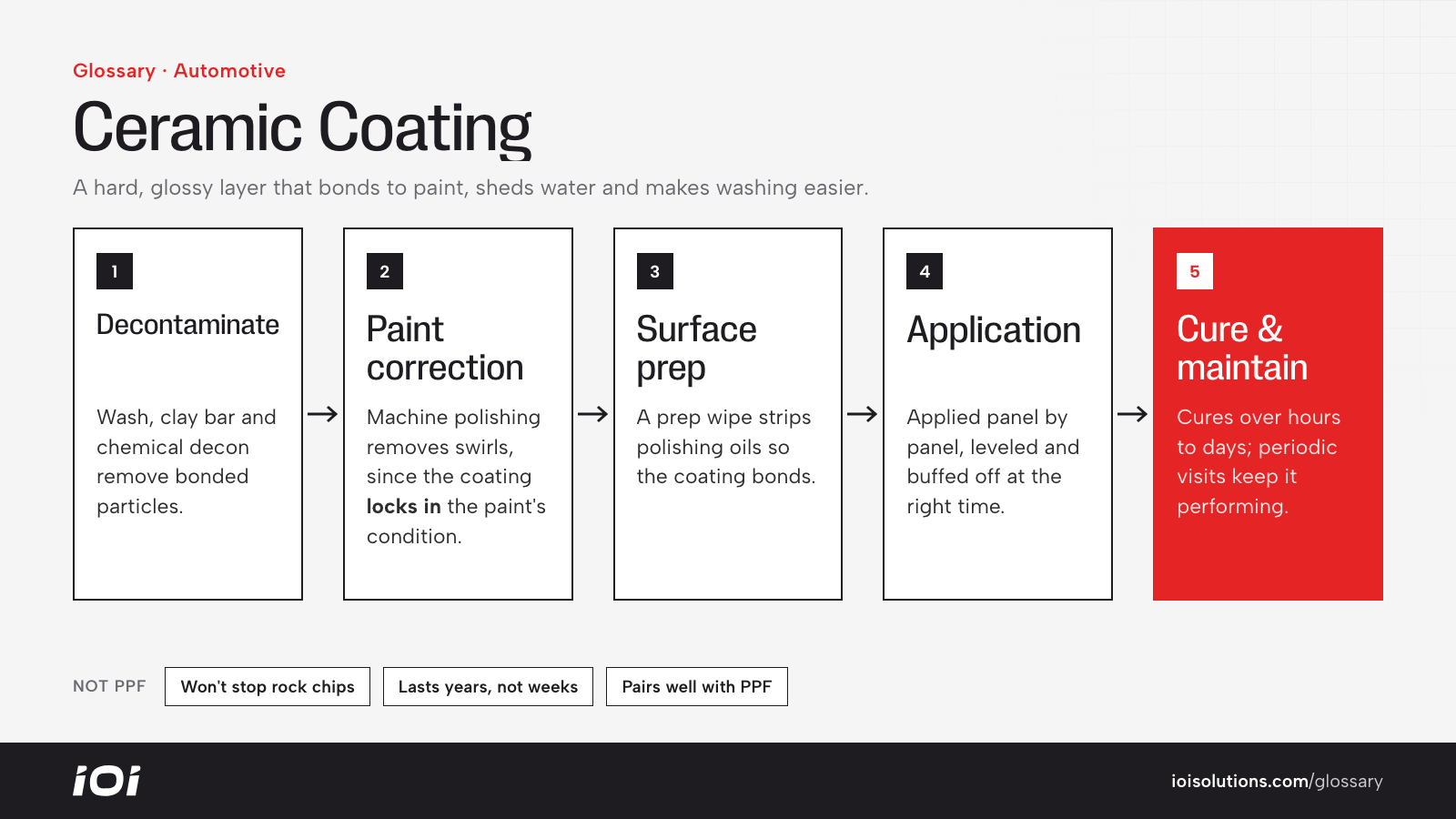
- Wash and decontamination: the vehicle is thoroughly washed, clay-barred and chemically decontaminated to remove bonded particles.
- Paint correction: the paint is machine-polished to remove swirl marks and scratches, since the coating will lock in whatever condition the paint is in.
- Surface prep: panels are wiped with a prep solution to remove polishing oils so the coating bonds properly.
- Application: the coating is applied panel by panel, leveled and buffed off at the right time.
- Curing: the coating cures over hours to days, often with infrared lamps used in the shop to speed initial curing.
- Maintenance: owners are advised to use proper wash techniques and come back for periodic inspections or top-ups.
Products are often sold in tiers with different claimed durability. Professional-grade products may be available only to trained or certified installers.
How Ceramic Coating Affects Marketing
Ceramic coating is crowded and price-sensitive at the low end, with consumer spray products and mobile detailers competing alongside established shops. Strong marketing focuses on quality, process and proof.
- Explain the process. Shoppers often compare a cheap spray-on product with a professional coating plus correction. Content that shows the prep steps justifies the price difference.
- Show results. Water-beading videos, 50/50 paint correction shots and reflection close-ups are effective short-form social content.
- Be precise about durability. Quote the manufacturer’s stated durability or warranty terms rather than vague “lifetime” promises, and explain what maintenance is required.
- Optimize for local search. A strong Google Business Profile with reviews, photos and service details helps capture high-intent “near me” searches.
- Use packages. Tiered offerings with coating, PPF and interior protection raise average order value and simplify comparison.
- Follow up for maintenance. Reminder sequences for maintenance washes and inspections keep customers returning.
For example, a detailing studio might run search ads for ceramic coating in its city, sending traffic to a landing page that explains three packages, shows paint correction examples and invites quote requests with vehicle details. Remarketing could then show water-beading videos and customer reviews to visitors who did not request a quote right away.
Best Practices
- Lead with education about prep and paint correction, since that is where professional work differs from DIY products.
- Name the coating brands you use and describe warranty terms accurately.
- Avoid claiming that coatings prevent rock chips or scratches; recommend PPF for impact protection.
- Collect and display reviews with photos of finished vehicles.
- Build maintenance reminders into your CRM to create repeat visits.
- Compare your pricing to the local market, which varies widely, rather than competing only on price.