
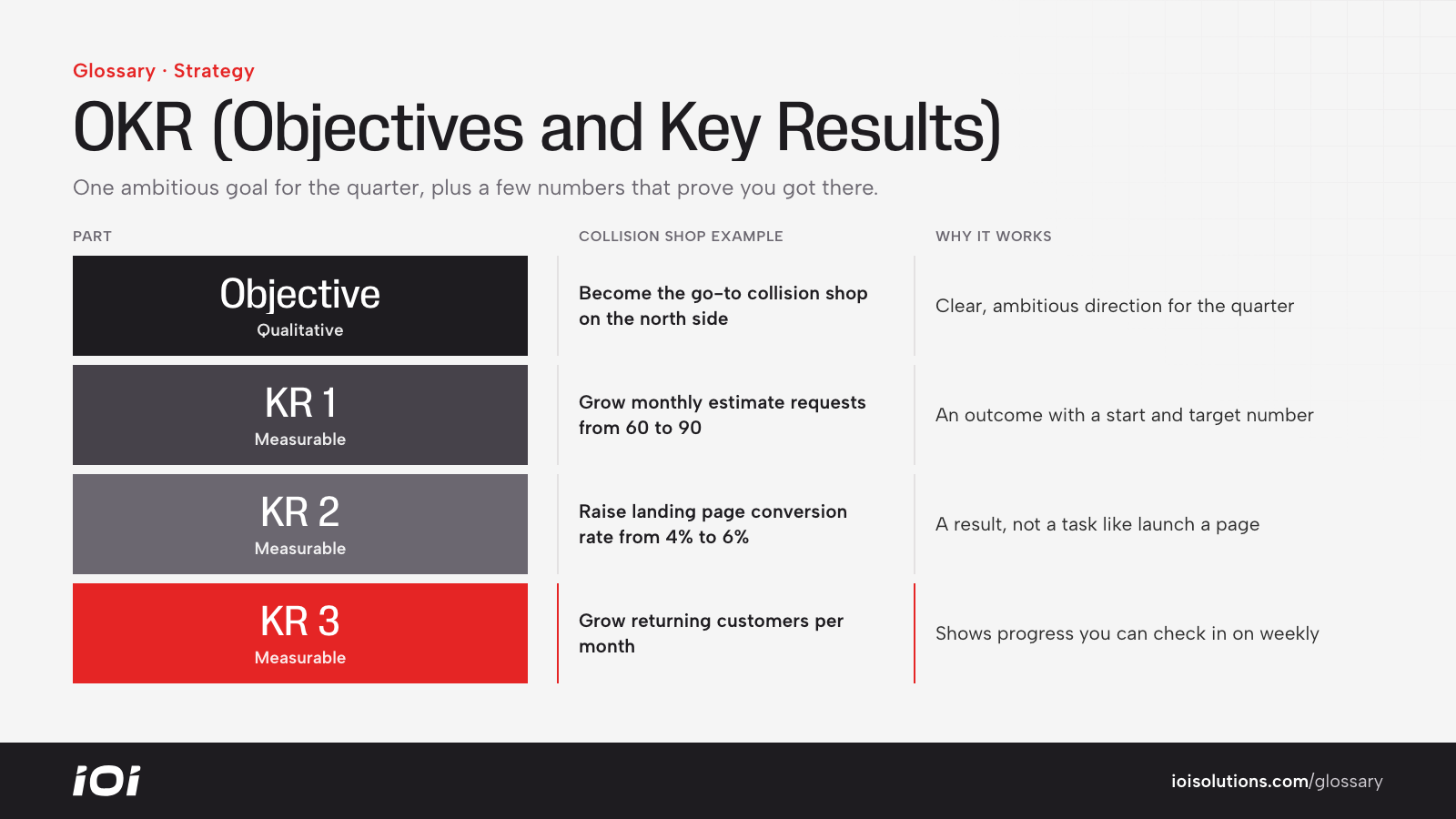
What Are OKRs (Objectives and Key Results)?
OKRs, short for Objectives and Key Results, are a goal-setting framework used to align teams around a small number of priorities. Each OKR has two parts:
- Objective: a clear, qualitative statement of what you want to achieve, such as “Become the go-to collision shop in the north side of town.”
- Key results: usually three to five measurable outcomes that prove you are getting there, such as “Increase monthly estimate requests from 60 to 90.”
OKRs are typically set quarterly, with some longer annual objectives above them. They are meant to focus attention on what matters most for a period, not to list every task a team does.
Why OKRs Matter
Marketing teams and agencies juggle many channels and requests. Without clear priorities, effort spreads thin. OKRs help by:
- Creating focus: a short list of objectives forces trade-offs about what not to do.
- Aligning teams: marketing, sales and service can see how their goals connect.
- Making progress visible: measurable key results show whether work is moving the business.
- Encouraging ambition: stretch targets push teams beyond routine maintenance.
How OKRs Work
A simple OKR cycle looks like this:
- Set objectives tied to business strategy, such as growing service revenue or entering a new market.
- Define key results that are specific, measurable and outcome-based. “Launch a new landing page” is a task; “Raise landing page conversion rate from 4% to 6%” is a key result.
- Plan initiatives (the projects and campaigns) that should move each key result.
- Check in regularly, often weekly or biweekly, to review progress and adjust tactics.
- Score and reflect at the end of the period, then set the next cycle.
OKRs and KPIs work together. KPIs are ongoing health metrics you always watch, like cost per lead. OKRs pick out a few areas to improve significantly during a specific period, and a KPI often becomes a key result when you decide to push it. Many teams also anchor OKRs to a single north star metric.
OKRs in Automotive Marketing
Here is how OKRs might look for different automotive businesses:
- Dealership: Objective: “Grow our used vehicle sales from digital channels.” Key results: increase vehicle detail page views per unit, raise lead-to-appointment rate, and grow used units sold from online leads.
- Repair shop: Objective: “Fill weekday bays consistently.” Key results: increase booked appointments from search, lift appointment show rate, and grow returning customers per month.
- Parts ecommerce brand: Objective: “Make our site the easiest place to buy the right part.” Key results: reduce fitment-related returns, raise conversion rate on product pages and increase repeat purchase rate.
- Automotive SaaS: Objective: “Build a dependable pipeline from independent shops.” Key results: increase demo requests, improve demo-to-trial rate and lower customer acquisition cost.
For example, a body shop focused on reviews might set “Increase average Google rating from 4.3 to 4.6” as a key result, supported by initiatives like automated review requests and faster status updates.
Best Practices
- Keep it short. Three objectives or fewer per team per quarter is usually plenty.
- Measure outcomes, not activity. Key results should describe change in results, not completed tasks.
- Use real baselines. Pull current numbers from your marketing analytics before setting targets.
- Separate OKRs from compensation. Tying bonuses directly to stretch goals encourages sandbagging.
- Review on a rhythm. Regular check-ins keep OKRs from being forgotten after planning.
- Share them openly so everyone, including agency partners, knows what success looks like.