
What Is Natural Language Processing (NLP)?
Natural language processing (NLP) is the field of artificial intelligence that teaches computers to work with human language. It covers everything from breaking a sentence into words and identifying what those words mean, to understanding intent, detecting sentiment and producing new text that sounds like a person wrote it.
You interact with NLP constantly. When Google figures out that “brakes squeaking near me” means you want a local repair shop, when a website chat widget answers a question about service hours, or when your phone transcribes a voicemail, NLP is doing the work. Modern large language models are the most visible form of NLP today, but the field also includes older, narrower techniques such as keyword extraction, entity recognition and text classification.
Why NLP Matters
NLP has changed how people find businesses and how businesses talk back. For marketers, three shifts stand out:
- Search understands meaning, not just keywords. Search engines interpret the intent behind a query, so pages that clearly answer real questions tend to outperform pages stuffed with exact-match phrases.
- AI answers are a new discovery channel. AI assistants and AI-generated search summaries rely on NLP to read your content and decide whether to cite it. This is the core of generative engine optimization (GEO).
- Conversations can be automated. A well-built chatbot can qualify leads, book appointments and answer routine questions around the clock.
NLP also makes large volumes of text usable. Reviews, call transcripts, chat logs and search term reports can be summarized and categorized in minutes instead of days.
How NLP Works
Most NLP systems follow a similar sequence, even if modern models blend the steps together:
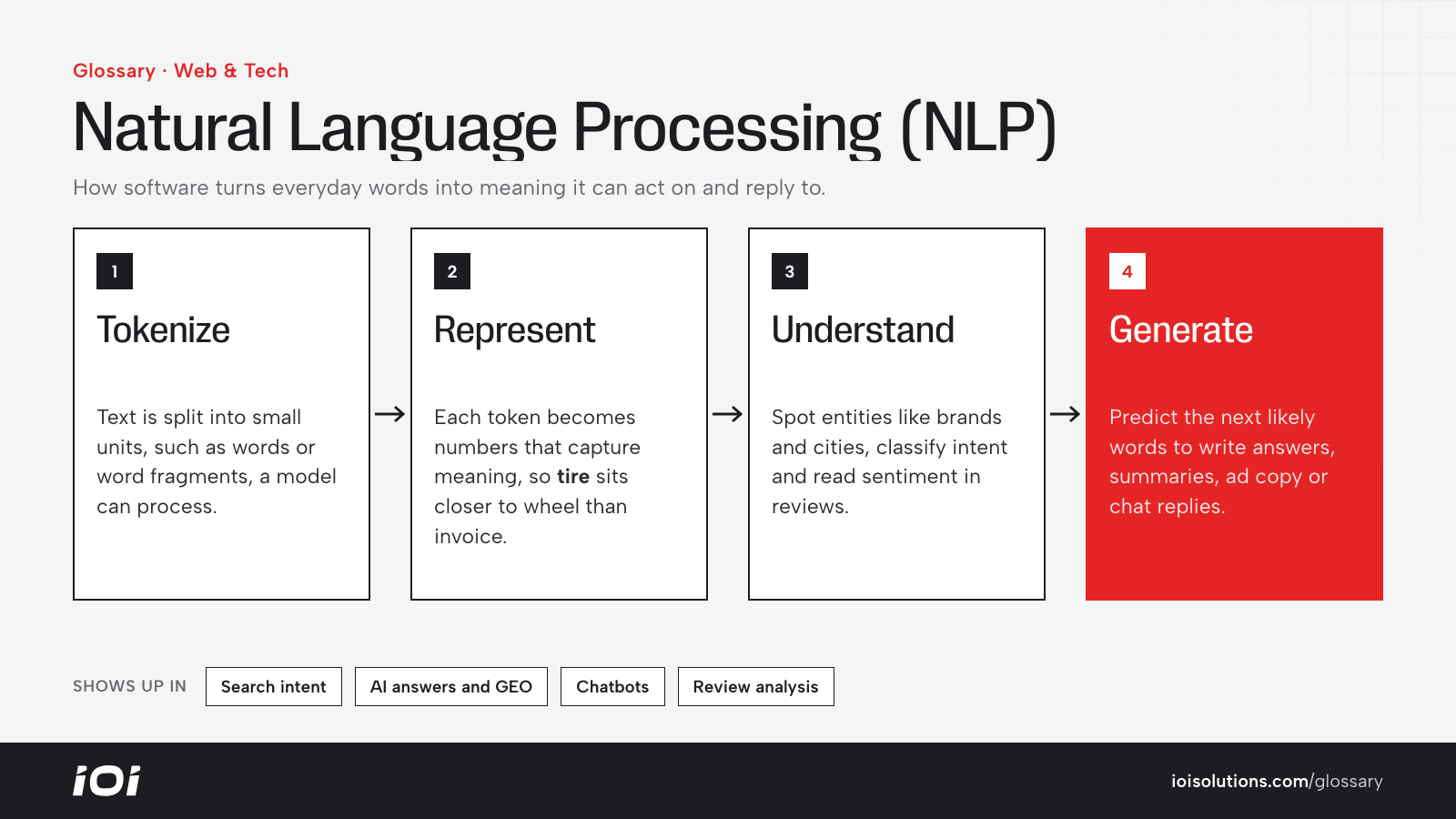
- Tokenization: text is split into small units (words or word fragments) that a model can process.
- Representation: each token is converted into numbers that capture meaning and context, so “tire” and “wheel” end up closer together than “tire” and “invoice.”
- Understanding tasks: the model performs jobs such as entity recognition (spotting brands, models, cities), intent classification (is this person ready to buy?), and sentiment analysis (is this review positive or negative?).
- Generation: language models predict the most likely next words to produce answers, summaries, ad copy or replies.
Older approaches relied on hand-written rules and word counts, such as n-gram analysis. Current systems learn patterns from enormous amounts of text, which is why they handle slang, typos and vague phrasing far better.
NLP in Automotive Marketing
Automotive businesses produce and receive a lot of language, which makes NLP especially practical:
- Dealerships use NLP-powered chat to answer inventory questions (“Do you have a white Tacoma under 40k?”) and route serious shoppers to sales.
- Collision and repair shops can run reviews through sentiment analysis to find recurring complaints, such as slow updates or pickup delays, that hurt ratings.
- Parts and accessories brands can mine search terms and product questions to learn how shoppers describe fitment problems, then rewrite product copy in that language.
- Call tracking platforms transcribe and classify phone calls, so you can see which campaigns drive real appointment requests versus wrong numbers.
For example, a repair shop that writes service pages in plain, question-and-answer language (“How long does a timing belt replacement take?”) gives both search engines and AI assistants clear text to understand and quote.
Best Practices
- Write for intent. Structure pages around the actual questions customers ask, using natural phrasing rather than repeated keywords.
- Use clear entities. Name makes, models, services and locations explicitly so NLP systems can connect your content to the right searches.
- Analyze your own text data. Run reviews, chat logs and call transcripts through NLP tools to surface patterns you can fix or promote.
- Keep humans in the loop. Review AI-generated copy and chatbot answers for accuracy, especially on pricing, financing and warranty claims.
- Set clear handoffs. Make sure automated conversations pass high-intent leads to a person quickly.