
What Is Conversational Marketing?
Conversational marketing is an approach that uses real-time, two-way conversations to engage prospects and customers. Instead of making people fill out a form and wait for a reply, it invites them to talk right away through live chat, a chatbot, text messaging, social media messages, messaging apps or phone calls.
The idea is simple: people buy faster and feel better about it when they can ask questions and get answers in the moment, the way they would in person. It treats every inquiry as the start of a dialogue rather than a record to be processed later, which is especially valuable when shoppers are comparing several businesses at once.
Why Conversational Marketing Matters
Many buyers want quick answers and dislike waiting for callbacks. Conversational marketing matters because it:
- Shortens response time: Engaging leads while they’re still interested often improves conversion.
- Reduces friction: A quick chat can feel easier than a long form or phone call.
- Uncovers intent: Conversations reveal exactly what customers want, their timing and their objections.
- Builds relationships: Personal, helpful exchanges build trust and loyalty.
- Produces insights: Conversation logs show common questions that can improve ads, pages and sales scripts.
How Conversational Marketing Works
A typical conversational marketing setup includes:
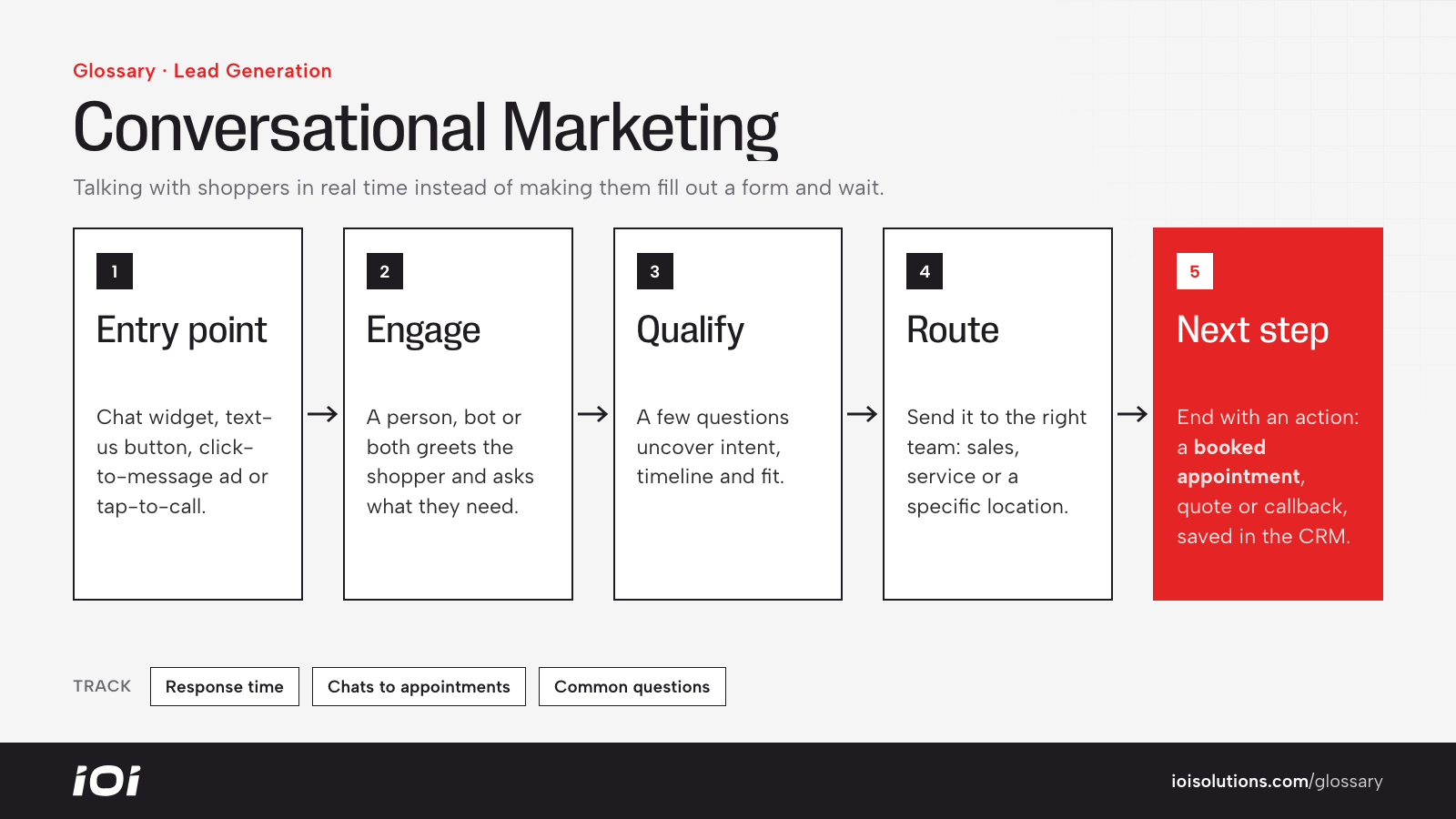
- Entry points: Chat widgets, text-us buttons, click-to-message ads on social platforms and tap-to-call buttons.
- Engagement: A person, bot or combination greets the visitor and asks what they need.
- Qualification: A few questions identify intent, timeline and fit.
- Routing: Qualified conversations go to the right person, such as sales, service or a specific location.
- Next step: The conversation ends with an action, like a booked appointment, a quote, a purchase or a scheduled callback.
- Follow-up: The conversation history is saved in the CRM so the next interaction picks up where it left off.
It often works alongside marketing automation, which handles reminders and follow-up messages, while live staff handle complex or high-value conversations. Text messaging programs must follow consent and opt-out rules, such as those under the TCPA in the United States.
Conversational Marketing in Automotive Marketing
- Dealerships: Shoppers can text about a specific vehicle, ask about trade-in value or start financing questions. A BDC can manage chat and text conversations and set appointments.
- Service departments and repair shops: Texting is widely used to send repair estimates, photos and approval requests, and to tell customers when their vehicle is ready.
- Collision shops: Customers can text accident photos for an initial assessment and get status updates throughout the repair.
- Detailers, wrap and PPF shops: Click-to-message ads on Instagram and Facebook let enthusiasts ask about packages and send photos of their vehicle.
- Parts brands: Chat can answer fitment and shipping questions before the shopper leaves the product page.
For example, a dealer running a click-to-message ad for a certified pre-owned SUV might have staff answer questions about history and pricing over Messenger, then book a test drive within the same conversation.
Best Practices
- Respond fast. Set realistic response time goals and staff for peak hours.
- Be human and helpful. Keep the tone natural and focus on solving the customer’s problem.
- Combine bots and people. Use automation for simple tasks and hand off to staff for complex questions.
- Get consent for texting. Follow opt-in and opt-out rules and honor stop requests.
- Integrate with your CRM. Keep conversation history and lead source attached to each customer.
- Measure results. Track response times, appointments set, shows and sales from conversations.