
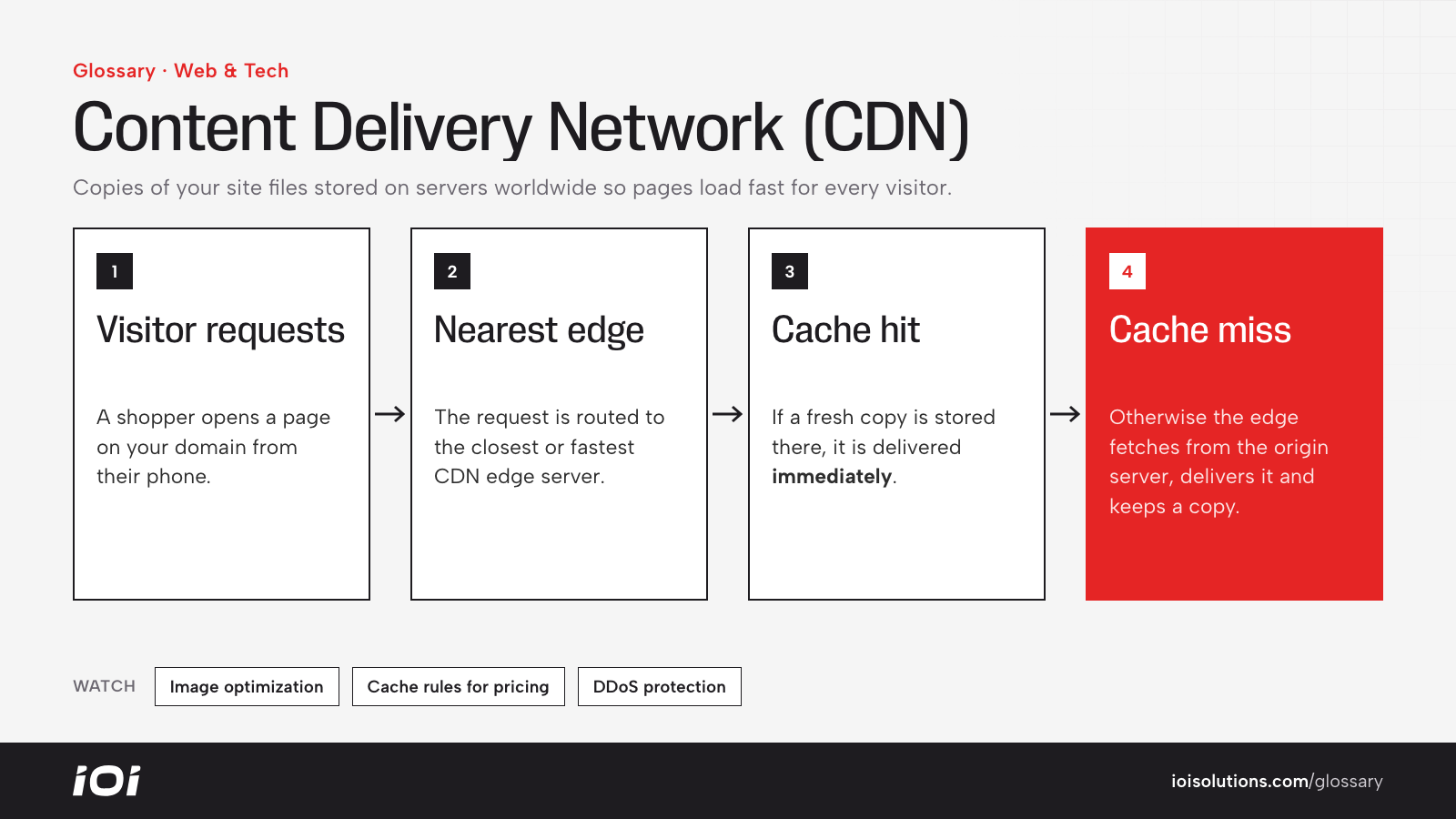
What Is a Content Delivery Network (CDN)?
A content delivery network (CDN) is a group of servers spread across many geographic locations that work together to deliver website content quickly. Instead of every visitor pulling images, scripts and pages from one origin server, the CDN keeps cached copies on “edge” servers and serves each visitor from a nearby location.
Many hosting providers, website platforms and ecommerce systems include a CDN by default. Others connect to a standalone CDN service that sits in front of the site.
Why a Content Delivery Network Matters
Speed affects almost every marketing result. Slow pages frustrate visitors, cost conversions and can weaken search performance. A CDN is one of the most effective ways to improve load times, especially for sites with heavy images and visitors spread over a wide area.
- Faster pages: Shorter physical distance and optimized delivery reduce load times, supporting a better user experience.
- Better Core Web Vitals: Faster delivery of images and files can improve scores measured by tools like PageSpeed Insights.
- Reliability: Spreading load across many servers helps the site stay up during traffic spikes, such as a big sales event or a viral post.
- Security: Many CDNs include protection against distributed denial-of-service (DDoS) attacks and malicious bots, plus free SSL certificates.
- Lower hosting strain: The origin server handles fewer requests, which can reduce costs.
How a Content Delivery Network Works
- A visitor requests a page from your domain.
- The request is routed to the nearest or fastest CDN edge server.
- If the edge server has a fresh cached copy of the file, it delivers it immediately.
- If not, it fetches the file from the origin server, delivers it, and stores a copy for the next visitor.
- Cache rules determine how long files stay stored before being refreshed.
Modern CDNs often do more than caching. They can compress files, convert images to efficient formats like WebP or AVIF, resize images for each device, minify code and apply security rules at the edge.
Content Delivery Networks in Automotive Marketing
Automotive websites are among the most image-heavy on the web, which makes a CDN especially useful.
- Dealership sites may display tens of thousands of vehicle photos across inventory pages. A CDN with automatic image optimization can make search results and detail pages load far faster on mobile, where many shoppers browse.
- Parts ecommerce stores serve customers nationwide or internationally. Edge delivery keeps product pages fast for distant shoppers and helps the site survive traffic surges during promotions.
- Collision, detailing and wrap shops often showcase large galleries of before-and-after work. A CDN keeps those portfolios fast without sacrificing image quality.
- Car show and event sites can see sudden traffic spikes when tickets go on sale or lineups are announced; a CDN helps absorb the surge.
One caution: inventory and pricing change frequently. Cache rules need to make sure shoppers do not see sold vehicles or outdated prices because an old copy of a page is still being served.
Best Practices
- Check whether your website platform already includes a CDN before adding another one.
- Cache static assets like images, CSS and JavaScript for long periods, and use shorter rules for dynamic pages.
- Enable automatic image compression and modern formats where available.
- Purge the cache after major updates, pricing changes or site launches.
- Monitor speed and uptime after setup to confirm the CDN is actually improving performance.
- Use the CDN’s security features, such as a web application firewall and bot protection, to protect forms and checkout.