
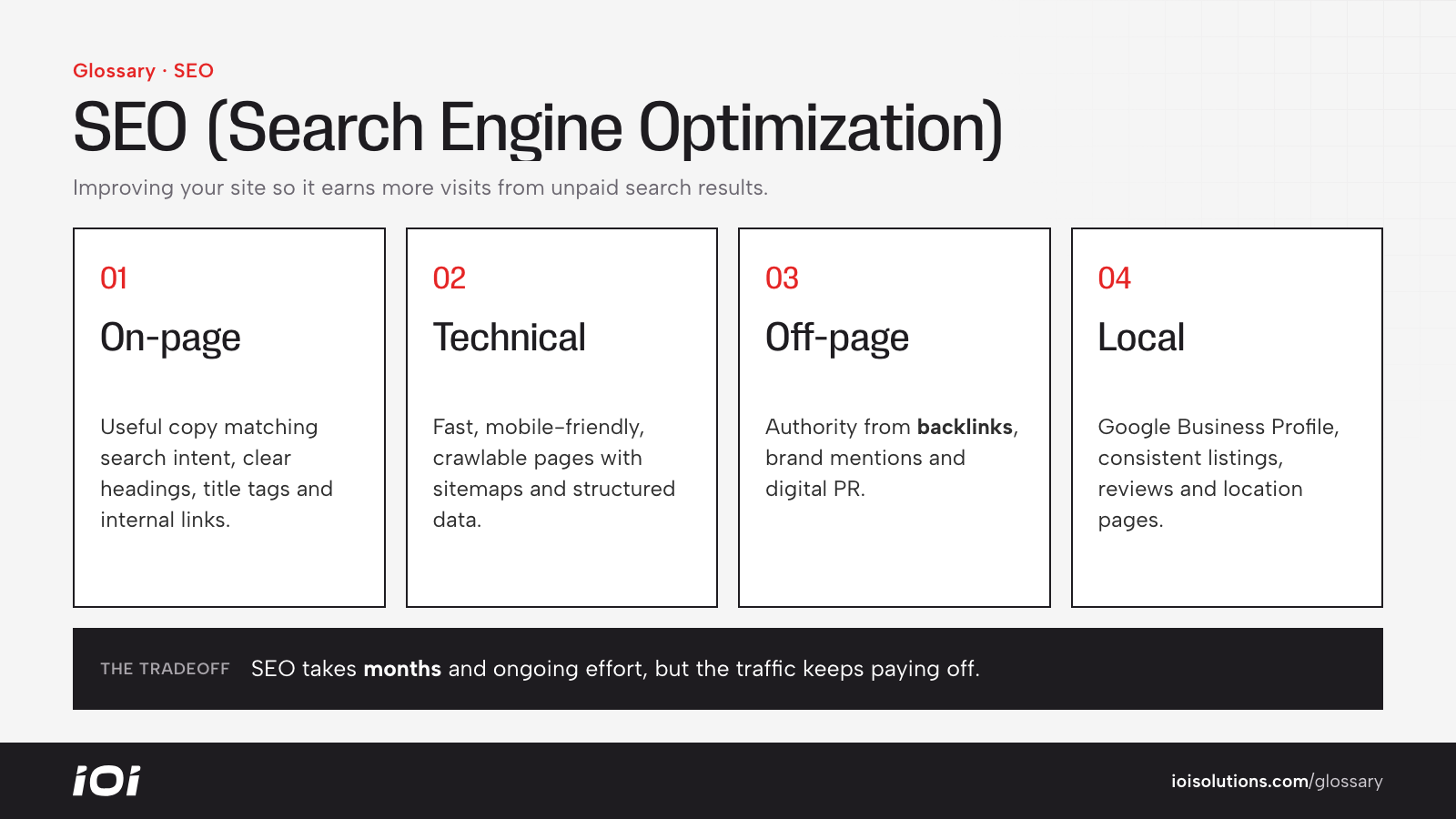
What Is SEO (Search Engine Optimization)?
SEO, or search engine optimization, is the process of improving a website so it appears more prominently in the unpaid results of search engines like Google and Bing. The aim is to earn more organic traffic from people searching for the products, services or information you provide.
SEO is not a single tactic. It combines content, technical work, local listings and reputation building. It also now overlaps with what many call generative engine optimization (GEO), which focuses on being cited in AI-generated answers from tools like Google’s AI features and chat-based assistants. Many of the same fundamentals apply to both.
Why SEO Matters
- Sustainable traffic: Strong rankings can deliver visitors month after month without paying per click.
- High intent: Searchers are actively looking for answers or solutions.
- Credibility: Appearing near the top of results signals legitimacy.
- Lower blended costs: Organic leads reduce reliance on paid media over time.
- Compounding value: Content and authority you build keep paying off.
The tradeoff is time. SEO usually takes months to show meaningful results and requires ongoing effort to maintain. Competitors keep publishing, search engines keep updating their systems, and your own site changes, so rankings are never permanently won. That is why most businesses treat SEO as an ongoing program rather than a one-time project.
Types of SEO
On-Page SEO
Optimizing content and page elements: useful, original copy that matches search intent, clear headings, descriptive title tags, meta descriptions, image alt text and internal links.
Technical SEO
Making sure search engines can crawl, render and index your site: fast load times, mobile usability, clean site architecture, XML sitemaps, canonical tags, structured data and fixing errors.
Off-Page SEO
Building authority through backlinks, brand mentions, digital PR and partnerships with reputable sites.
Local SEO
Improving visibility in map results and local searches with an optimized Google Business Profile, consistent business listings, reviews and location-specific pages.
SEO in Automotive Marketing
- Dealerships: Key opportunities include model and trim research pages, city and neighborhood landing pages, service and parts department pages, well-structured inventory pages and a strong Google Business Profile for each department. Duplicate manufacturer content across many dealer sites is a common weakness, so original content helps a dealer stand out.
- Collision and body shops: Local SEO is critical. Service pages for specific repairs, insurance and certification information, before-and-after galleries and reviews all support rankings in map results.
- Repair and tire shops: Pages for each service, vehicle brands serviced and nearby towns, along with symptom-focused articles, attract searchers at every stage.
- Parts and aftermarket brands: Ecommerce SEO focuses on category structure by vehicle fitment, optimized product pages, original descriptions, install guides and buying guides.
- Detailers and wrap shops: Portfolio pages, service comparisons and local landing pages help capture high-value searches.
For example, a collision shop serving several suburbs might build a genuinely useful page for each one, including directions, local reviews and photos of nearby repairs, rather than thin copies with the town name swapped.
Best Practices
- Start with search intent. Build pages that fully answer what customers are searching for.
- Fix technical foundations. Speed, mobile usability and indexability come before content volume.
- Write original, expert content. Show real experience, photos and specifics that generic content lacks.
- Earn reviews and links. Local relationships, sponsorships and helpful resources attract both.
- Structure your data. Schema markup helps search engines and AI tools understand your business.
- Measure what matters. Track calls, leads and sales from organic search, not just rankings.