
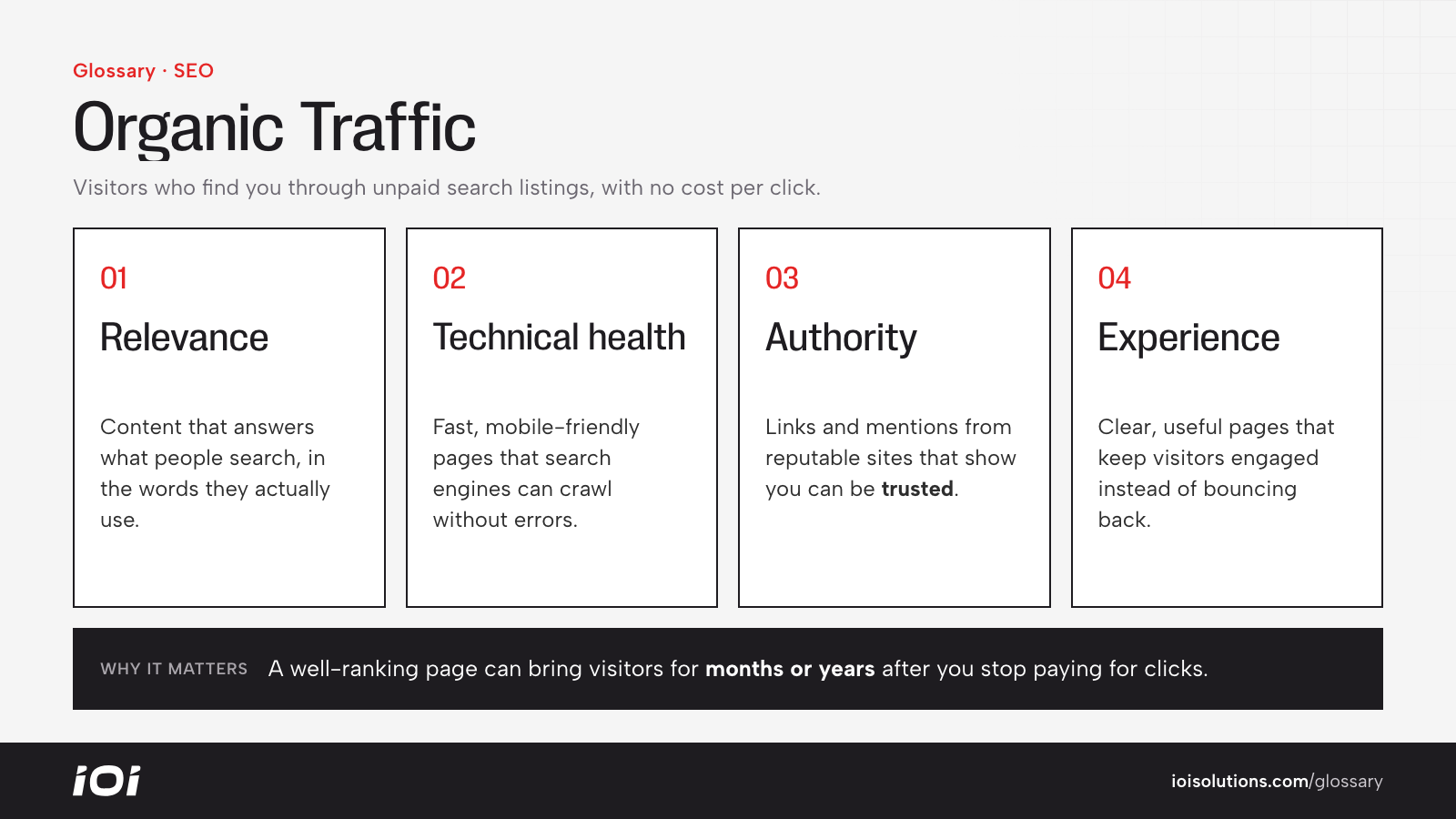
What Is Organic Traffic?
Organic traffic refers to visitors who arrive at your website by clicking an unpaid listing in a search engine such as Google or Bing. You did not pay for the click; the search engine ranked your page because it judged it relevant and useful for the person’s query.
Analytics tools separate organic traffic from other sources such as paid search, direct visits, referrals from other websites, email and social media. In Google Analytics, for example, it typically appears under the “Organic Search” channel grouping. As AI-generated answers and assistants become more common, some unpaid discovery now also comes through AI search tools, which many analytics setups group separately.
Why Organic Traffic Matters
Organic traffic is valuable for several reasons:
- It does not cost per click. You invest in content and site improvements, but each visit does not add to an ad bill.
- It compounds. A well-ranking page can bring in visitors for months or years.
- It signals trust. Many searchers place more confidence in organic results than in ads.
- It reflects intent. People searching for a specific service or product are often ready to act.
Relying only on paid traffic means your visibility disappears the moment you stop spending. Organic traffic gives you a more durable base, and it lowers your blended cost of acquiring a customer.
How Organic Traffic Works
Search engines crawl pages, index them and rank them for each query based on many factors. The main levers you control are:
- Relevance: Content that clearly answers what people search for, using the language they use.
- Technical health: Pages that load fast, work on mobile, can be crawled, and are free of errors.
- Authority: Links and mentions from other reputable sites that show your site is trustworthy.
- Experience: Clear layout and useful pages that keep people engaged instead of bouncing back to the results.
Ranking higher on the SERP generally means more clicks, but the click rate also depends on your title, description and any rich results your page earns. Growing organic traffic is the core goal of SEO.
Organic Traffic in Automotive Marketing
- Dealerships earn organic traffic through model research pages, local landing pages (“used trucks in [city]”), well-structured inventory pages and service department content.
- Collision and body shops benefit from pages targeting specific repairs, insurance questions and nearby towns, along with a strong map listing.
- Repair shops can rank for symptom-based searches, such as a car shaking when braking, then guide readers to book an inspection.
- Parts and aftermarket brands capture organic traffic with product and category pages organized by year, make and model, plus install guides and comparison content.
For example, a detailing shop that publishes a clear guide comparing ceramic coating and paint protection film can attract people researching those services well before they request a quote.
Best Practices
- Target real search intent. Research what customers type, including long-tail keywords, and build pages that answer those searches directly.
- Fix technical issues first. Slow pages, broken links and indexing problems cap how much organic traffic you can earn.
- Write compelling titles and descriptions. Ranking is only half the job; you still need the click.
- Track quality, not just volume. Use website analytics to see whether organic visitors call, book or buy.
- Keep content fresh. Update key pages when prices, services, models or regulations change.
- Be patient. Organic growth usually takes months, so pair it with paid campaigns for short-term results.