
What Is PPC (Pay-Per-Click)?
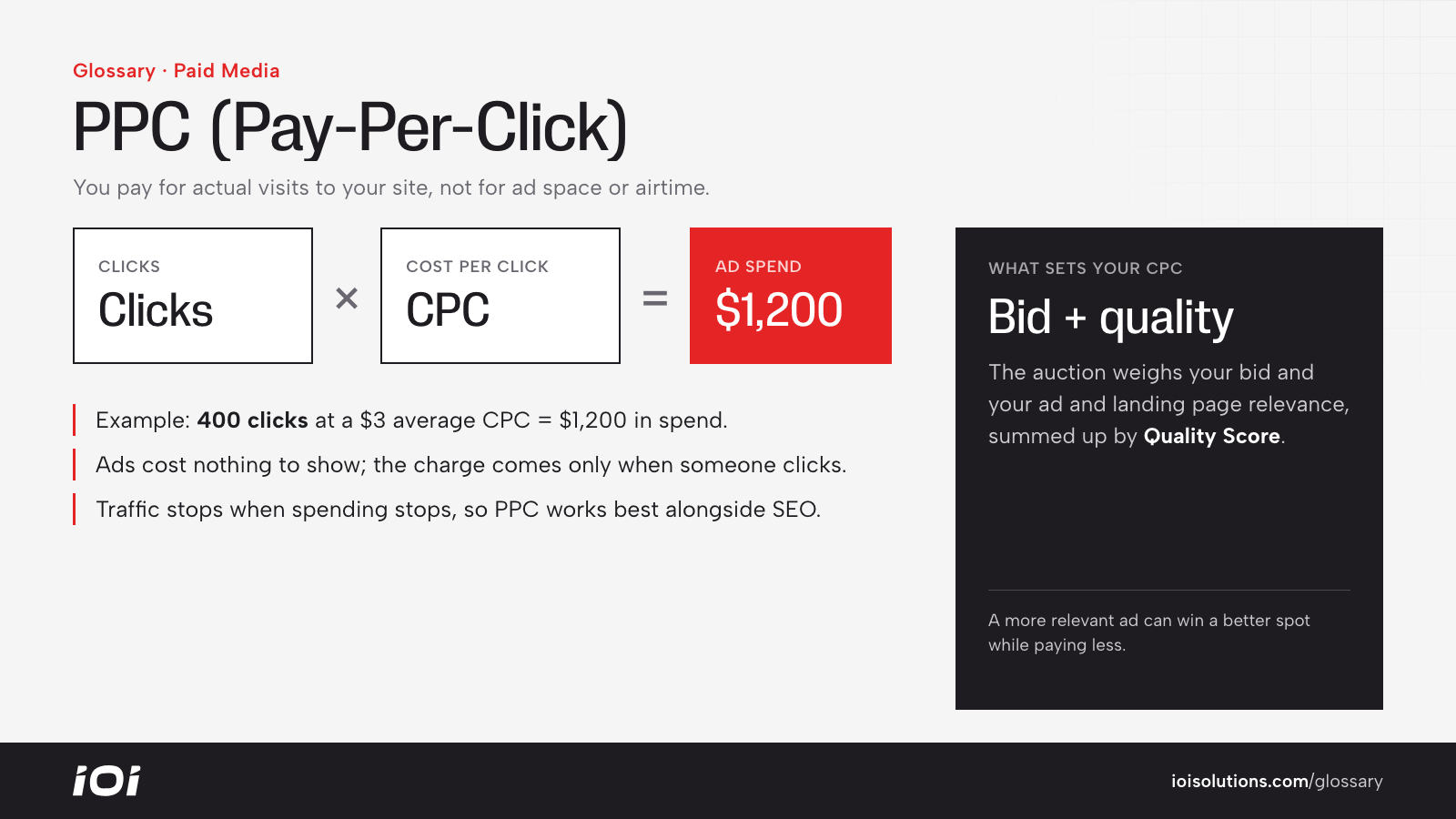
PPC, or pay-per-click, is an online advertising model in which the advertiser pays a fee each time someone clicks one of its ads. Instead of paying for space or airtime up front, you pay for actual visits. The best-known example is search advertising on Google Ads, where ads appear above and below the organic results, but PPC also runs on Microsoft Advertising, Amazon, and social platforms such as Meta and TikTok.
Not every paid ad is strictly pay-per-click. Some campaigns are billed per thousand impressions or per conversion. In everyday use, though, “PPC” has become shorthand for paid search and most auction-based digital advertising.
Why PPC Matters
- Speed: Campaigns can generate traffic and leads within hours of launching, unlike SEO, which takes months.
- Intent: Search ads appear when people are actively looking for what you sell.
- Control: You choose keywords, locations, schedules, budgets and messaging.
- Measurability: With proper tracking, you can see the cost of each lead and sale.
The tradeoff is that traffic stops when spending stops, and competitive markets can make clicks expensive. That is why PPC works best alongside organic efforts.
How PPC Works
The Ad Auction
When someone searches, the platform runs an auction among advertisers targeting that query. Your position and price depend on your bid and on the quality and relevance of your ad and landing page. On Google, this relevance is summarized by Quality Score. A more relevant advertiser can win a better position while paying less per click than a competitor who bids more.
Keywords and Match Types
You choose keywords and match types (broad, phrase and exact) to control which searches trigger your ads, and add negative keywords to block irrelevant searches.
Bidding
Bids can be set manually or by automated strategies that target conversions, conversion value or a set cost per acquisition.
Key Metrics
Core PPC numbers include impressions, click-through rate, cost per click, conversion rate, cost per acquisition and return on ad spend.
PPC in Automotive Marketing
- Dealerships run search campaigns on brand, model and “near me” terms, plus vehicle listing ads and Performance Max campaigns tied to inventory feeds. Service departments run separate campaigns for oil changes, tires and repairs.
- Collision shops bid on urgent, local terms such as “auto body shop near me” and “collision repair,” often favoring call-focused ads during business hours.
- Repair and tire shops target specific services and symptoms, using location targeting tightly around the shop.
- Towing companies rely on call-only or call-heavy campaigns for immediate needs, often running around the clock.
- Parts and aftermarket brands use Shopping campaigns and part-number searches, where the product feed quality matters as much as bids.
For example, a body shop might split campaigns between insurance-related searches and cash-pay cosmetic repair, since the two audiences need different messages and landing pages.
Best Practices
- Track real conversions. Calls, forms, bookings and sales should be tracked so bidding optimizes toward business results.
- Build tight ad groups. Group closely related keywords with matching ads and landing pages to boost relevance.
- Mine search terms weekly. Add negative keywords to cut wasted spend on irrelevant queries.
- Send traffic to focused landing pages. Avoid sending every click to the homepage.
- Use location and schedule settings. Spend where and when your customers can actually buy from you.
- Judge by profit, not clicks. Measure return on ad spend and cost per sale rather than traffic volume.