
What Is Search Engine Marketing (SEM)?
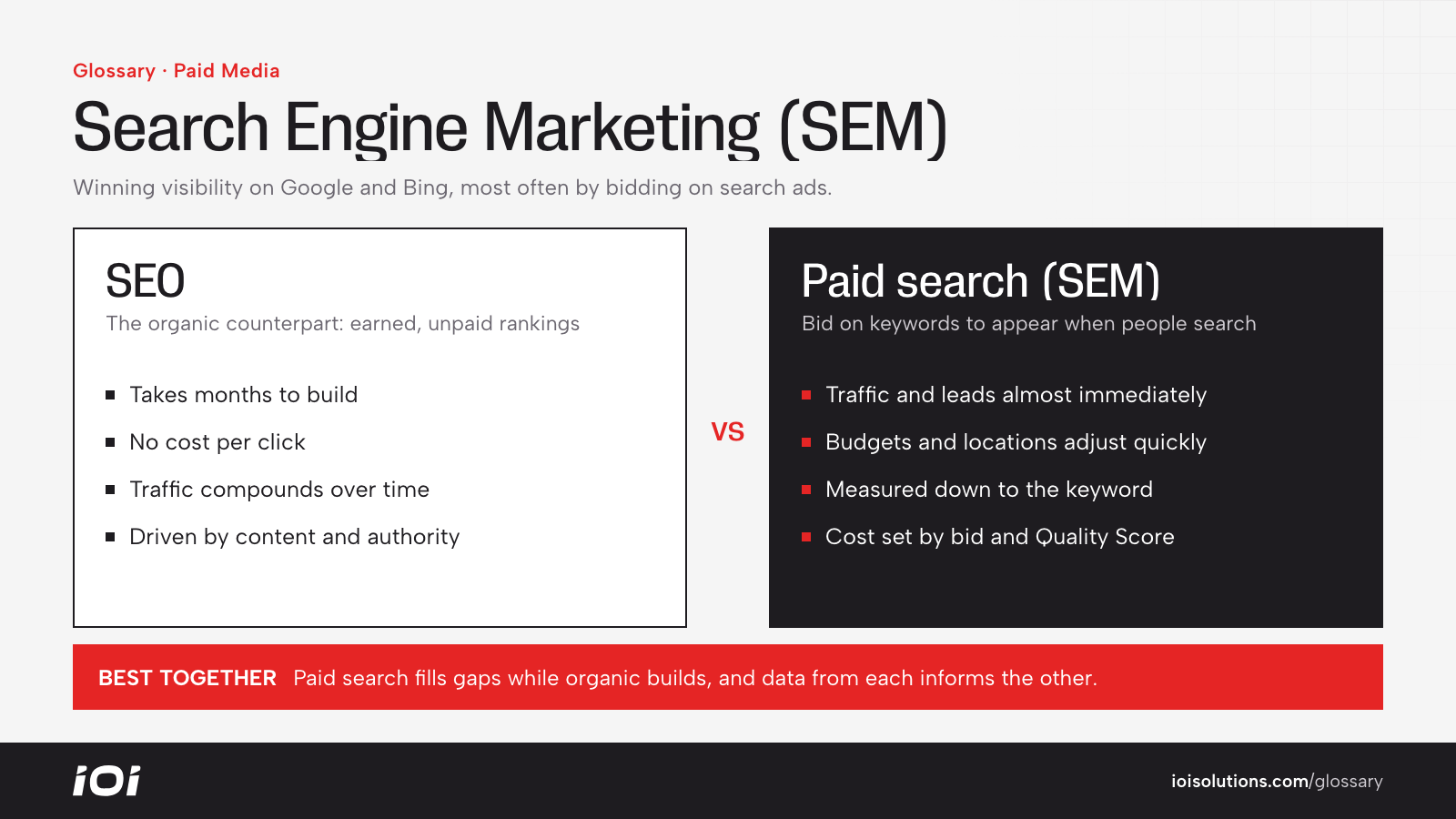
Search engine marketing, or SEM, is the practice of gaining visibility and traffic from search engines such as Google and Bing. In current usage, SEM most often refers to paid search advertising: bidding on keywords so your ads appear when people search for related terms. In a broader sense, some marketers use SEM as an umbrella term covering both paid search and search engine optimization (SEO).
Because the definition varies, it is worth clarifying which meaning is intended when discussing SEM with a team or agency. In this glossary, SEM refers primarily to paid search, with SEO treated as its organic counterpart. The two work best together: paid search fills gaps quickly while organic visibility builds, and data from each informs the other.
Why Search Engine Marketing Matters
Search is where people go when they already have a need. That makes it one of the highest-intent marketing channels available.
- You reach people at the moment they are looking for what you offer.
- Paid search can deliver traffic and leads almost immediately.
- Budgets, locations and schedules can be adjusted quickly.
- Results can be measured down to the keyword.
- Search data reveals what customers want, which informs the rest of your marketing.
How Search Engine Marketing Works
Keyword Research
Identify the searches your customers use, along with their volume, competition and intent.
Campaign Structure
Organize keywords into campaigns and ad groups by theme, product, service or location, each with tailored ads.
The Auction
Every search triggers an auction. Ad position and cost depend on your bid and on quality signals such as expected click-through rate, ad relevance and landing page experience, summarized in Quality Score.
Ads and Assets
Responsive search ads combine multiple headlines and descriptions, while assets add sitelinks, calls, locations, prices and more.
Measurement and Optimization
Track conversions, review search terms, add negative keywords, adjust bids and test ads and landing pages continuously. Most of this work happens in platforms like Google Ads and Microsoft Advertising.
Search Engine Marketing in Automotive Marketing
- Dealerships: Typical SEM structures include brand campaigns, new and used model campaigns, competitor conquest campaigns, service and parts campaigns, and inventory-driven campaigns such as vehicle listing ads. Co-op advertising rules from the manufacturer may shape what dealers can run and how it is reimbursed.
- Collision shops: Local, call-focused campaigns for repair types and insurance-related searches, with tight radius targeting.
- Repair and tire shops: Service-specific ad groups such as brakes, alignments, inspections and tires, linking to matching service pages with online booking.
- Towing and roadside services: Around-the-clock campaigns built around phone calls and immediate availability.
- Parts and aftermarket brands: Shopping campaigns from product feeds, plus search campaigns for part numbers and year, make and model terms.
For example, a dealership might find that its “near me” service searches convert well on weekday mornings and shift more budget to those hours.
Best Practices
- Set up conversion tracking first. Track calls, forms, bookings and sales before scaling spend.
- Structure by intent. Separate brand, high-intent and research searches so each gets the right message and budget.
- Use negative keywords aggressively. Block jobs, DIY, free and other irrelevant terms.
- Match landing pages to ads. Specific pages beat the homepage for relevance and conversions.
- Combine with SEO. Paid and organic together cover more of the SERP and share keyword insights.
- Review regularly. Search markets shift with seasons, competition and inventory, so optimize every week.