
What Is Google Ads?
Google Ads is Google’s online advertising platform. It was known as Google AdWords until 2018, when it was renamed to reflect that it covers far more than text ads on search results. Today it lets advertisers reach people across Google Search, Shopping, YouTube, Google Maps, Gmail, the Google Display Network and partner sites and apps.
Most Google Ads campaigns use a pay-per-click model, where you pay when someone clicks. Some formats, particularly video and display, can also be bought on impressions or views.
Why Google Ads Matters
Google Ads lets you appear at the exact moment people are searching for what you sell, which makes it one of the most direct ways to capture existing demand.
- High intent. Search ads target people actively looking for a product, service or answer.
- Speed. Campaigns can start driving traffic soon after launch, unlike SEO, which builds over time.
- Control. You set budgets, locations, schedules, audiences and bidding goals.
- Measurability. With proper conversion tracking, you can see which campaigns, keywords and ads drive leads and sales.
- Reach. Across Search, YouTube and Display, Google reaches a large share of internet users.
How Google Ads Works
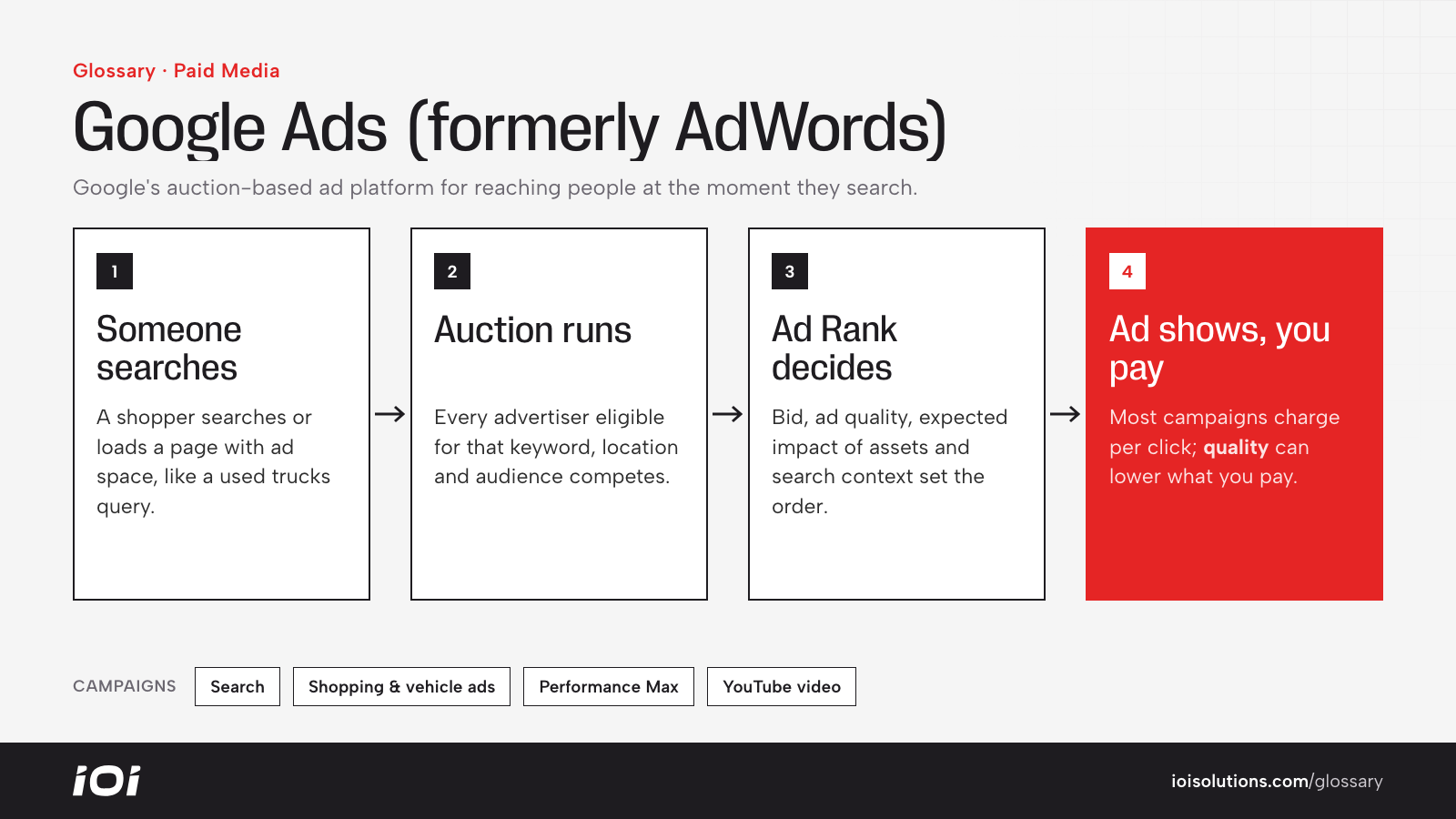
Google Ads runs on auctions. When someone searches or loads a page with ad space, eligible advertisers compete. Google ranks ads using Ad Rank, which considers your bid, ad quality (reflected in Quality Score components), expected impact of assets such as sitelinks and calls, and the context of the search. Better quality can earn better positions at a lower cost per click.
Main campaign types include:
- Search: text ads triggered by keywords.
- Shopping: product ads with images and prices from a Merchant Center feed.
- Performance Max: automated campaigns that run across all Google channels from one setup.
- Video: ads on YouTube.
- Display and Demand Gen: visual ads across Google’s network and feeds.
- Local and call-focused formats that drive store visits and phone calls.
Bidding can be manual or automated. Automated strategies such as Maximize Conversions, Target CPA and Target ROAS use machine learning, which depends heavily on accurate conversion data.
Google Ads in Automotive Marketing
Google Ads is a core channel across the automotive industry:
- Dealerships run search campaigns for brand, model and service terms, plus vehicle listing ads, which display specific inventory with photos, price and mileage using a vehicle feed.
- Collision and repair shops use local search campaigns and call-focused ads to reach drivers who need help now.
- Towing companies rely on mobile, call-driven ads tied to tight service areas and hours.
- Parts and accessories brands use Shopping and Performance Max with detailed product feeds.
- Automotive software companies target B2B searches and retarget site visitors with demo offers.
For example, a repair shop might create separate ad groups for brakes, transmission repair and check engine diagnostics, each pointing to a matching landing page, and schedule ads during hours when staff can answer calls. Automotive advertisers should also watch for special ad policies, such as restrictions on certain financial products, and keep pricing in ads accurate.
Best Practices
- Track real conversions. Set up calls, forms, bookings and, where possible, offline sales imports.
- Structure campaigns by intent. Separate brand, service, model and competitor terms.
- Use negative keywords. Block searches for jobs, DIY, free and other non-buying intent.
- Match ads to landing pages. Send each ad group to the most relevant page, not your homepage.
- Keep feeds clean. Accurate inventory and product data is essential for Shopping and vehicle ads.
- Review search terms regularly. Find new keywords and wasted spend every week or two.