
What Is Content Syndication?
Content syndication is the practice of distributing content you’ve already created, such as articles, videos, guides or press releases, to other websites and platforms so it reaches a wider audience. The content may be republished in full, in part or as a summary that links back to the original.
Syndication is different from guest posting. A guest post is original content written specifically for another site. Syndicated content is published first in one place, usually your own site, and then shared elsewhere.
Why Content Syndication Matters
Creating good content takes time. Syndication helps you get more value from each piece by:
- Expanding reach: Putting your content in front of audiences that already trust another publisher.
- Building authority: Appearing on respected industry or local sites strengthens credibility.
- Driving traffic and leads: Links and calls to action bring readers back to your site.
- Supporting B2B lead generation: Paid syndication networks can distribute gated content like white papers to targeted professionals in exchange for contact details.
How Content Syndication Works
Common syndication approaches include:
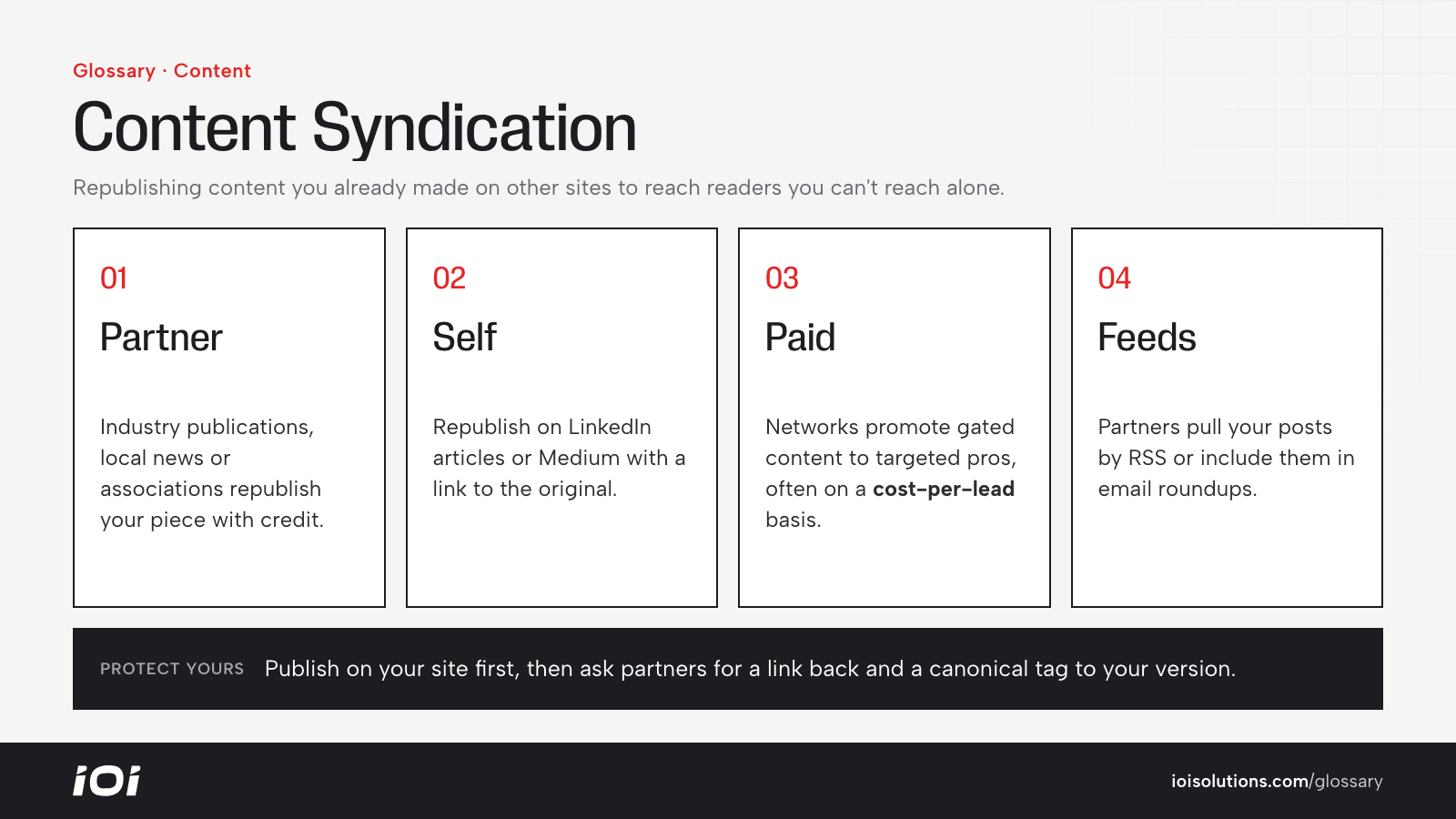
- Free or partner syndication: Industry publications, local news partners, association newsletters or partner websites republish your content with credit.
- Self-syndication: Republishing on platforms like LinkedIn articles or Medium, often with a link to the original.
- Paid syndication: Networks and publishers promote your content to specific audiences, often on a cost-per-lead basis.
- Feeds and newsletters: Partners pull your content automatically through RSS or include it in their email roundups.
Because syndicated copies can create duplicate content, the original publisher should ideally be clear to search engines. Ask partners to link back to the original article, and where possible use a canonical tag pointing to your version or a noindex tag on the copy. Search engines may still pick a different version to rank, especially if the syndicating site is more authoritative, so it’s often wise to publish on your own site first and wait before syndicating.
Content Syndication in Automotive Marketing
- Repair and collision shops: A seasonal safety article, like a winter driving checklist, can be shared with local news sites, community newsletters or chamber of commerce publications, crediting the shop’s expertise.
- Dealerships: Model comparison guides or EV ownership explainers can be adapted for local publications or community platforms, building awareness in the market area.
- Parts and aftermarket brands: Installation guides and build features can be shared with enthusiast forums, club newsletters and retailer blogs.
- Automotive software companies: Research reports, webinars and white papers can be syndicated through trade publications to reach dealer principals, fixed operations directors or collision shop owners.
- Car shows and events: Event recaps and photo galleries can be shared with partner clubs and local media.
For example, a tire shop that publishes a guide to choosing all-season versus winter tires might offer a shortened version to a local news site’s driving section, with a link back to the full guide.
Best Practices
- Publish on your site first. Give search engines time to find the original before syndicating.
- Get attribution and a link. Agree on how your brand is credited and where the link goes.
- Choose relevant partners. A well-matched local or industry site beats a large but unrelated one.
- Adapt for each audience. Adjust titles, intros or length to fit the partner’s readers.
- Track results. Use UTM codes to measure traffic and leads from each syndication partner.
- Vet paid networks. Check lead quality and audience targeting before committing to paid syndication.