
What Is Click-Through Rate (CTR)?
Click-through rate (CTR) measures how often people who see something actually click on it. It applies to paid ads, organic search listings, emails, social posts and any other place where a link is shown. If 100 people see your ad and 4 click it, your CTR is 4%.
CTR is a measure of relevance and appeal. A high CTR suggests your message matches what the audience wants, while a low CTR suggests a mismatch in targeting, messaging or creative.
Why Click-Through Rate Matters
- It reflects relevance. CTR shows how well your ad or listing resonates with the people seeing it.
- It affects ad costs. In Google Ads, expected CTR is one of the components of Quality Score, which influences your ad rank and how much you pay per click.
- It drives traffic. A better CTR on the same number of impressions means more visitors without more reach.
- It guides creative testing. CTR is often the first signal of which headline, image or offer stands out.
CTR is not the end goal. An ad with a high CTR but poor conversion may attract the wrong people. Always look at CTR alongside conversion rate and cost per acquisition.
How to Calculate Click-Through Rate
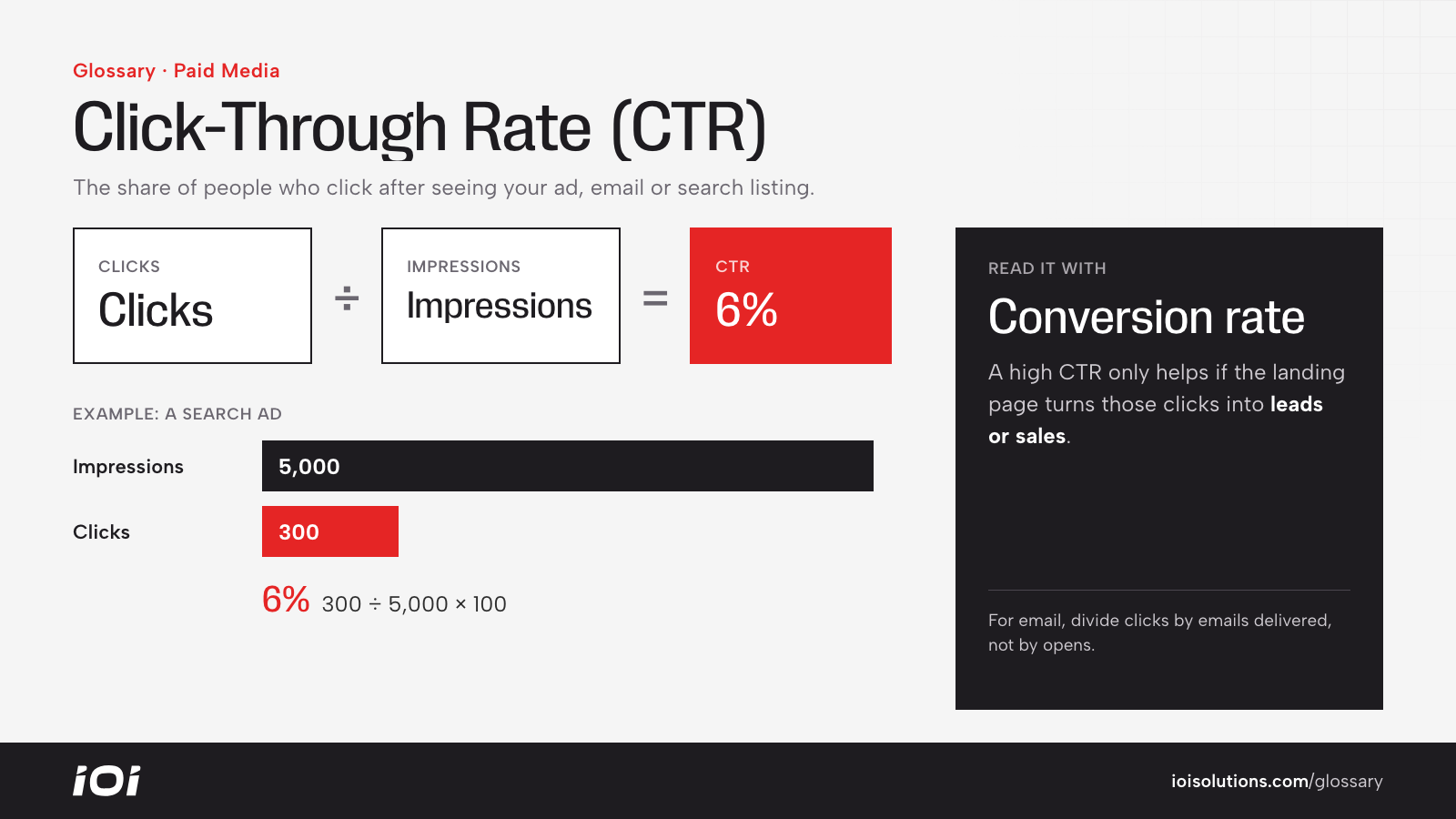
CTR = (Clicks ÷ Impressions) × 100
For example, a search ad shown 5,000 times that receives 300 clicks has a CTR of 6%. For email, CTR is usually calculated as clicks divided by emails delivered, while click-to-open rate divides clicks by opens. Be clear about which version you’re reporting.
CTR is shaped by many factors: ad position, keyword intent, ad copy, extensions or assets, images, audience targeting, competition and device. Organic search CTR also depends on title tags, meta descriptions, rich results and whether features like maps, ads or AI summaries appear above your listing.
Click-Through Rate in Automotive Marketing
- Dealerships: Search ads that include the exact model, a specific offer and local relevance usually earn more clicks than generic ads. Vehicle listing ads with real photos and prices give shoppers a clear reason to click.
- Collision shops: Ads mentioning insurance acceptance, free estimates or certifications can stand out to stressed drivers comparing options.
- Repair and tire shops: Call assets, location assets and “open today” messaging help mobile searchers act quickly. Some may call directly from the ad, which counts as an interaction rather than a website click.
- Parts brands: Shopping ads with clear product images, competitive pricing and ratings tend to get more clicks.
- Social ads: For detailers and wrap shops, scroll-stopping before-and-after video often lifts CTR significantly compared with static stock images.
For example, a body shop testing “Collision Repair Near You” against “Free Estimates. We Work With All Insurers” might find the more specific benefit draws more clicks from the right audience.
What Is a Good Click-Through Rate?
Good CTR varies widely by channel, industry, ad format, keyword intent and position. Search ads generally have much higher CTRs than display ads, branded keywords outperform generic ones, and local high-intent searches often perform well. Compare your CTR to your own past results and to similar campaigns rather than a single industry average.
- Match ads to intent. Group keywords tightly so ad copy reflects what people searched.
- Be specific. Include offers, prices, locations and differentiators when possible.
- Use ad assets. Sitelinks, callouts, call and location assets make ads larger and more useful.
- Test creative regularly. Rotate headlines, images and hooks to find winners and avoid fatigue.
- Improve organic snippets. Write compelling titles and meta descriptions for key pages.
- Don’t chase clicks alone. Optimize for conversions and revenue, using CTR as a supporting metric.