
What Are Ups (Showroom Traffic)?
In car dealership language, an up is a sales opportunity: a customer who arrives at the showroom or on the lot and is greeted by a salesperson. The term comes from the traditional “up system,” in which salespeople take turns, with the next person in rotation being “up” to help the next customer who walks in. Ups are the dealership’s version of foot traffic, and counting them is one of the most basic sales measurements.
Dealers often split ups into types, such as fresh walk-in ups, appointment ups from phone or internet leads, and be-backs, meaning shoppers returning for a second visit.
Why Ups Matter
Most vehicle sales still involve at least one in-person visit, so ups are a key bridge between marketing and sold units.
- Sales forecasting: with a known close rate, the number of ups helps predict monthly sales.
- Staffing: traffic patterns guide how many salespeople to schedule by day and hour.
- Process quality: comparing ups to sales reveals whether the showroom is converting visitors well.
- Marketing feedback: rising or falling traffic is often the first signal that a campaign or market change is working or not.
Shoppers now do much of their research online before visiting, so many dealers see fewer but more decided ups than in the past.
How Ups Work
Dealerships log ups in their CRM or a showroom traffic log. Each entry usually records the customer, the salesperson, the vehicle of interest, the source (walk-in, appointment, phone, internet, referral) and the outcome. Key ratios include:
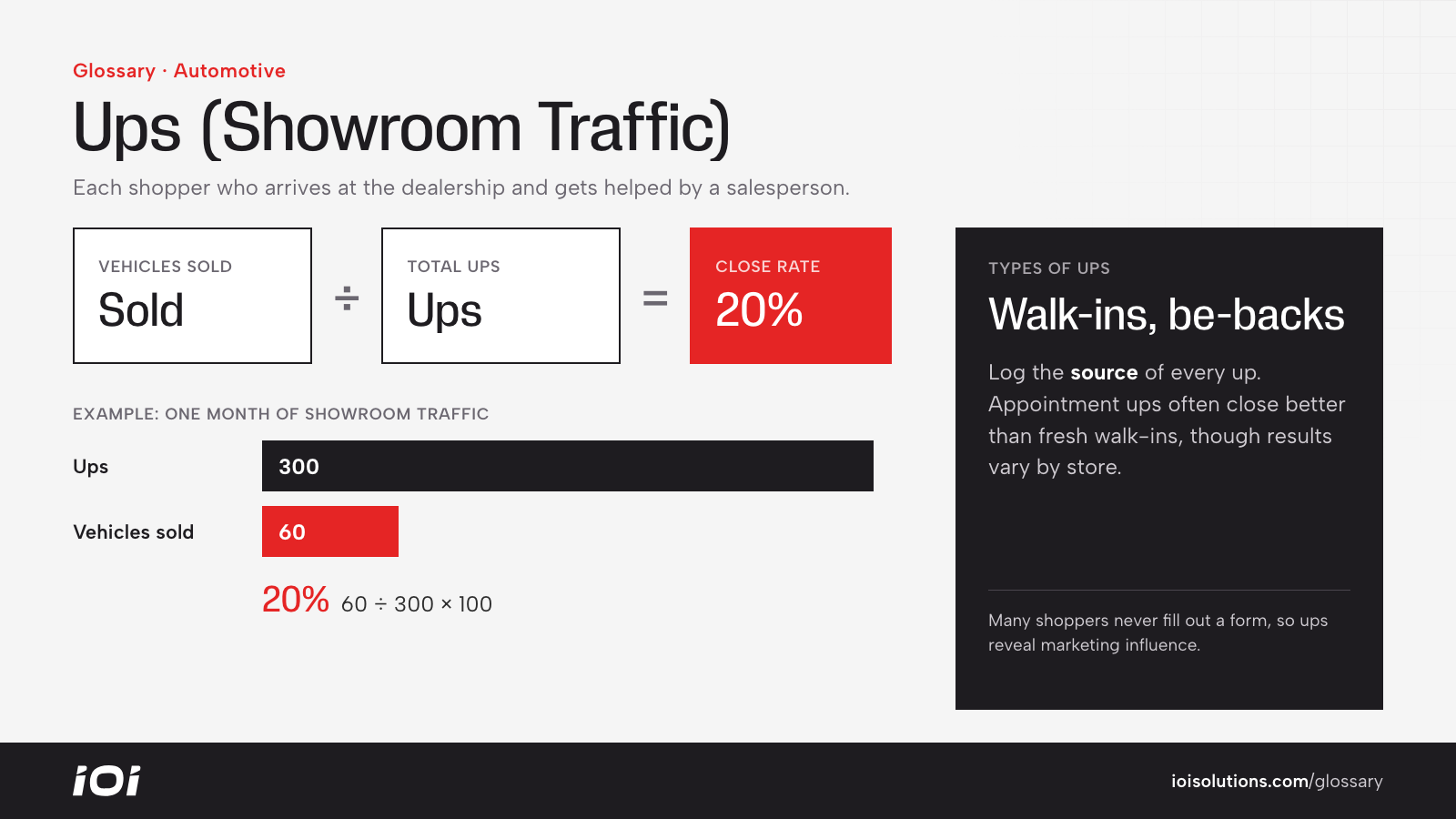
Showroom Close Rate = Vehicles Sold / Total Ups x 100
For example, a store with 300 ups in a month that sells 60 vehicles has a 20% showroom close rate. Breaking that out by source often shows that appointment ups close at a higher rate than fresh walk-ins who have not engaged with the store before, though results vary by store and process.
Many stores use a structured “road to the sale” with steps such as meet and greet, needs assessment, vehicle presentation, test drive, write-up and turnover to a manager. Some have moved away from strict rotation toward appointment-based or customer-choice systems.
How Ups Affect Marketing
Ups are where digital marketing becomes physical. Because many shoppers never fill out a form, showroom traffic is one of the best indicators of marketing influence.
- Track source honestly. Train salespeople to ask how visitors found the store and which vehicle they saw online, and record it consistently.
- Connect online and offline. Match ups to prior website visits, calls or leads where possible to understand the full customer journey.
- Drive appointments, not just leads. Campaigns that book visits produce higher-quality ups, so appointment show rate becomes a key metric.
- Use location data carefully. Ad platforms can estimate store visits, which helps directional analysis but should not replace CRM data.
For example, if a dealer launches a strong used truck campaign and walk-in ups asking about trucks rise while online leads stay flat, the campaign may be working even though form fills do not show it. A disciplined up log makes that visible and supports better attribution decisions.
Best Practices
- Log every up in the CRM, including those that do not buy, with source and vehicle of interest.
- Compare up counts with ad spend and campaign timing to spot trends.
- Measure close rate by up type to identify process improvements.
- Make sure online prices and offers match what salespeople present in the showroom.
- Recognize that traffic and close rates vary by brand, market and season, so compare against your own history.