
What Is Appointment Show Rate?
Appointment show rate is the percentage of booked appointments where the customer actually shows up. In dealerships it is tracked for sales appointments, usually set by salespeople or a BDC, and for service appointments booked online, by phone or through reminder campaigns. Repair shops, body shops, detailers and wrap shops track it too, since a no-show is lost capacity.
It sits in the middle of the funnel, between booking an appointment and making a sale, and is one of the best indicators of both lead quality and follow-up process.
Why Appointment Show Rate Matters
- Sales depend on visits: most vehicle purchases involve an in-person visit, so appointments that do not show rarely turn into sales.
- Capacity planning: service departments and shops schedule technicians and bays based on bookings, so no-shows waste paid labor time.
- Lead quality signal: a campaign that produces many booked appointments but few shows may be attracting low-intent shoppers.
- Process signal: poor confirmation and reminder practices can lower show rates regardless of lead quality.
How to Calculate Appointment Show Rate
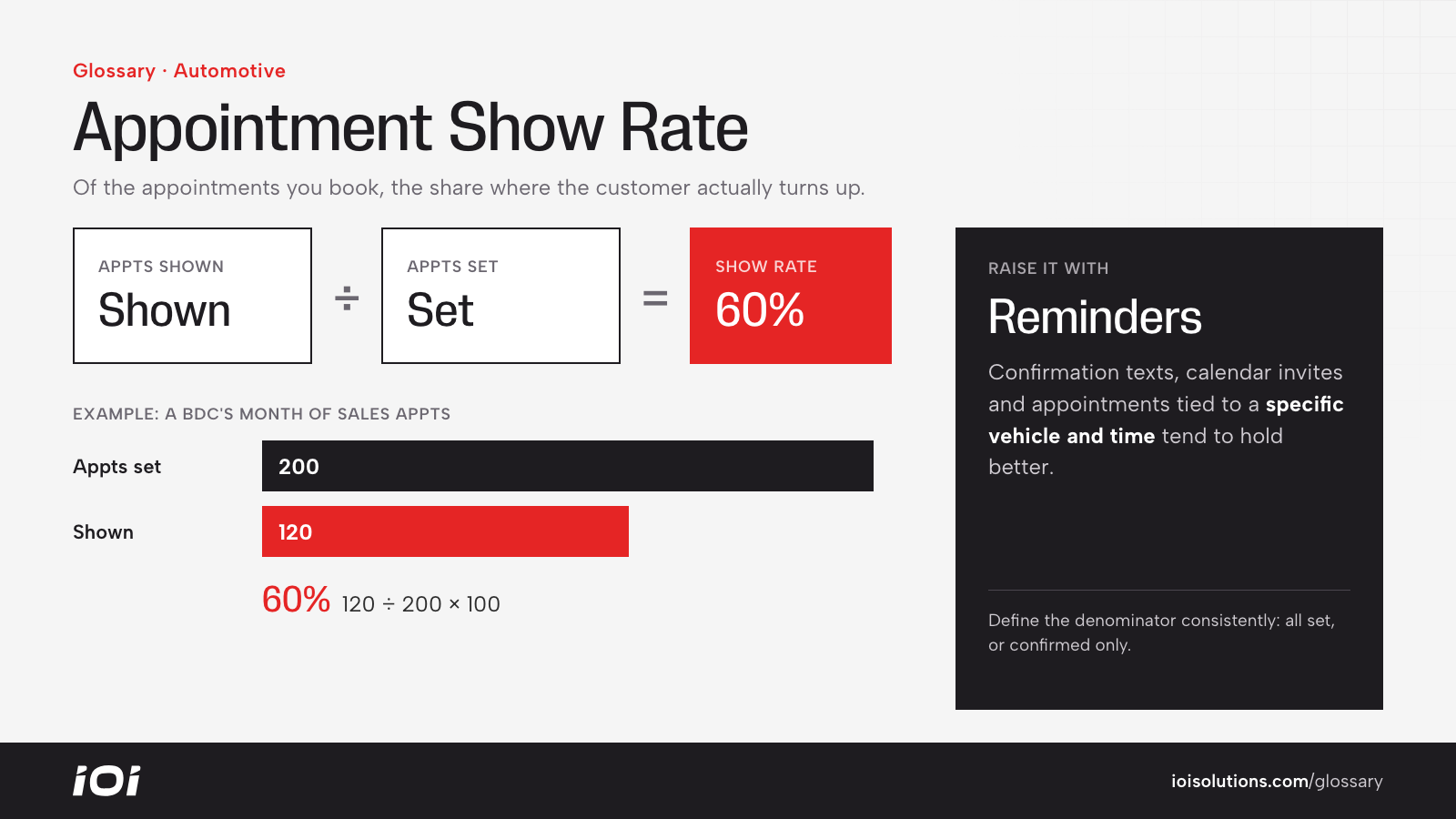
Appointment Show Rate = Appointments Shown / Appointments Set x 100
For example, if a BDC set 200 sales appointments in a month and 120 customers arrived, the show rate is 60%. Some stores count only appointments that were confirmed, while others count all appointments set, so define the denominator consistently. It is also useful to track appointments that were rescheduled rather than missed.
Related measures include appointment set rate (leads that book an appointment) and sold-from-appointment rate. Together they form a funnel: leads, appointments set, appointments shown, vehicles sold.
How Appointment Show Rate Affects Marketing
For a marketer, show rate helps answer whether a campaign is producing real shoppers or just form fills.
- Compare show rate by lead source. If paid social leads book well but show poorly compared with search leads, adjust targeting, creative or form friction.
- Set expectations in ads. Clear pricing, accurate inventory and honest offers reduce surprise and increase show rates.
- Use automated reminders. Confirmation texts, calendar invites and day-of reminders typically improve attendance.
- Make the appointment specific. Appointments tied to a specific vehicle, salesperson and time tend to hold better than vague “come in anytime” invitations.
- Optimize toward shows. Where possible, send “appointment shown” events back to ad platforms as offline conversions so algorithms learn which users actually arrive.
For example, a service department running a tire promotion might see bookings jump while show rate drops. Adding a confirmation text with the quoted price and a reminder the day before could recover many of those visits. Similarly, a dealer BDC might find that appointments set more than a few days out show less often than next-day appointments and adjust its scripts.
What Is a Good Appointment Show Rate?
Show rates vary widely by industry segment, lead source, appointment type and how the store defines the metric. Service appointments booked by existing customers often show at higher rates than first-time sales appointments from internet leads. Rather than chase a generic benchmark, track your own trend by source and appointment type.
- Confirm every appointment by text or phone and send a reminder shortly before it.
- Track show rate by lead source, campaign and staff member.
- Keep appointments specific, with a named contact and the vehicle or service ready.
- Follow up quickly with no-shows to reschedule while interest is still fresh.
- Pair show rate with lead-to-sale close rate and overall conversion rate to see the full funnel.