
What Is a Unique Value Proposition (UVP)?
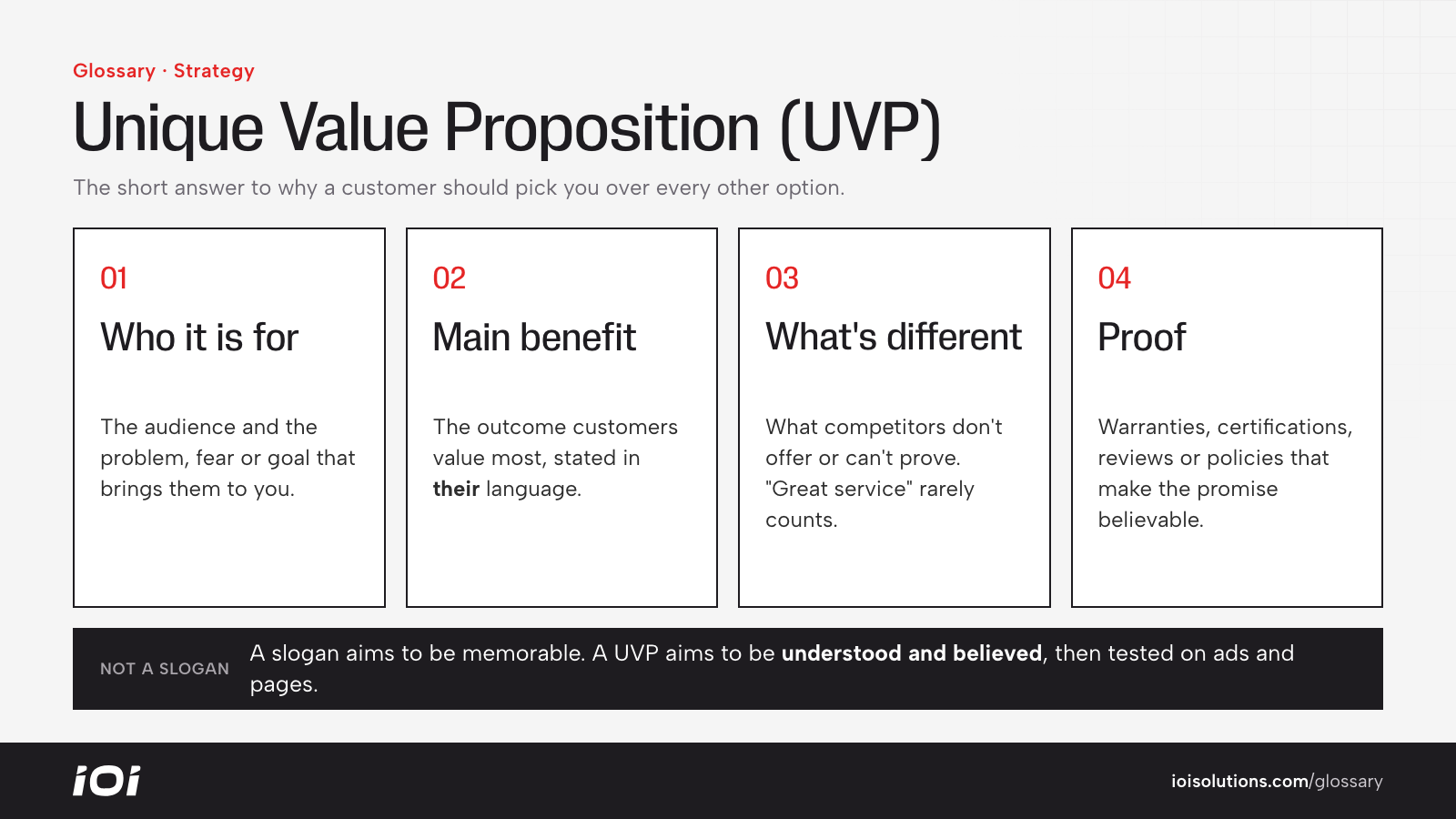
A unique value proposition (UVP) is a short, clear statement explaining what you offer, who it is for, the main benefit it delivers, and what makes it different from the alternatives. It answers the question every prospect silently asks: “Why should I buy from you instead of someone else, or instead of doing nothing?”
A UVP is not a slogan. Slogans aim to be memorable; a value proposition aims to be understood and believed. The best UVPs are specific, rooted in real strengths, and written in the customer’s language.
Why a Unique Value Proposition Matters
Most buyers compare several options quickly. If your message sounds like everyone else’s, they default to price, location or convenience. A strong UVP gives them a reason to prefer you.
- It raises conversion rates by making the decision easier on landing pages and ads.
- It keeps messaging consistent across your website, ads, sales scripts and signage.
- It reduces price pressure by highlighting value beyond the lowest number.
- It guides internal decisions about which services, policies and investments support the promise.
How to Build a Unique Value Proposition
- Know the audience. Define your target audience and the problems, fears and goals that drive them.
- List what you actually deliver. Capture concrete strengths: warranties, certifications, speed, selection, pricing model, convenience, expertise.
- Study competitors. Note what everyone already claims. “Great customer service” and “quality work” rarely differentiate.
- Find the overlap. Pick the benefit customers value most that competitors do not offer or cannot prove.
- Write it simply. A common structure is a headline stating the main benefit, a sub-headline explaining who it is for and how, and two to four supporting points or proof elements.
- Test it. Run headline tests on landing pages and ads to see which framing performs best.
Unique Value Proposition in Automotive Marketing
Automotive categories are crowded, and many businesses sell similar products. That makes a sharp UVP especially valuable.
- Dealerships: Rather than “Best deals in town,” a dealer might lead with a transparent pricing policy, a long exchange window on used vehicles, complimentary maintenance, or a fully online buying process with home delivery.
- Collision shops: Concrete promises such as OEM-certified repairs for specific brands, a lifetime warranty on workmanship, direct insurer billing, or help arranging a rental car resonate more than “quality repairs.”
- Repair shops: A shop might differentiate on digital inspections with photos sent by text, a nationwide parts and labor warranty, or same-day service for common repairs.
- Aftermarket brands: Guaranteed fitment, made-in-USA manufacturing, tested performance gains or a no-hassle return policy can set a brand apart from cheaper imports.
- Automotive software: Vendors should frame value in operational terms, such as faster cycle times or less time spent on manual data entry, instead of feature lists.
For example, a detailing studio competing with mobile washers might position itself around certified ceramic coating installation in a climate-controlled facility, with a documented warranty. That tells a new-car owner why the price is higher and why it is worth it.
Best Practices
- Lead with the outcome the customer wants, not the feature you are proud of.
- Be specific: numbers, timeframes and named guarantees are more persuasive than adjectives.
- Back every claim with proof such as reviews, certifications, warranties or photos.
- Make sure you can deliver the promise every day; an unkept UVP damages trust quickly.
- Place the UVP prominently above the fold on your homepage and key landing pages.
- Revisit it when competitors catch up or your offer changes.