
What Is the Aftermarket?
The automotive aftermarket is everything bought for a vehicle after it leaves the factory and the original sale is complete, when those products come from companies other than the automaker. It includes replacement parts (brakes, filters, batteries, body panels), performance upgrades (exhausts, tuners, suspension), accessories (floor mats, lighting, racks, wheels), appearance products (wraps, tint, coatings), tools, fluids and the service businesses that install them.
Aftermarket parts are an alternative to OEM parts. Some are designed to match factory specifications at a lower price, some improve on the original, and some add features the factory never offered. Quality ranges from premium brands that exceed OEM standards to low-cost options with inconsistent fit.
Why the Aftermarket Matters
The aftermarket is one of the largest segments of the automotive economy because most vehicles stay on the road for many years after the factory warranty ends. It matters because:
- It serves owners for the life of the vehicle, long after any dealer relationship fades.
- It drives independent repair. Many independent shops rely on aftermarket parts to offer competitive pricing.
- It fuels enthusiast culture. Off-road, performance, truck, tuner and show communities are built around aftermarket modification.
- It is increasingly online. More parts and accessories are researched and bought through ecommerce sites and marketplaces, which raises the importance of accurate data and search visibility.
Types of Aftermarket Products and Businesses
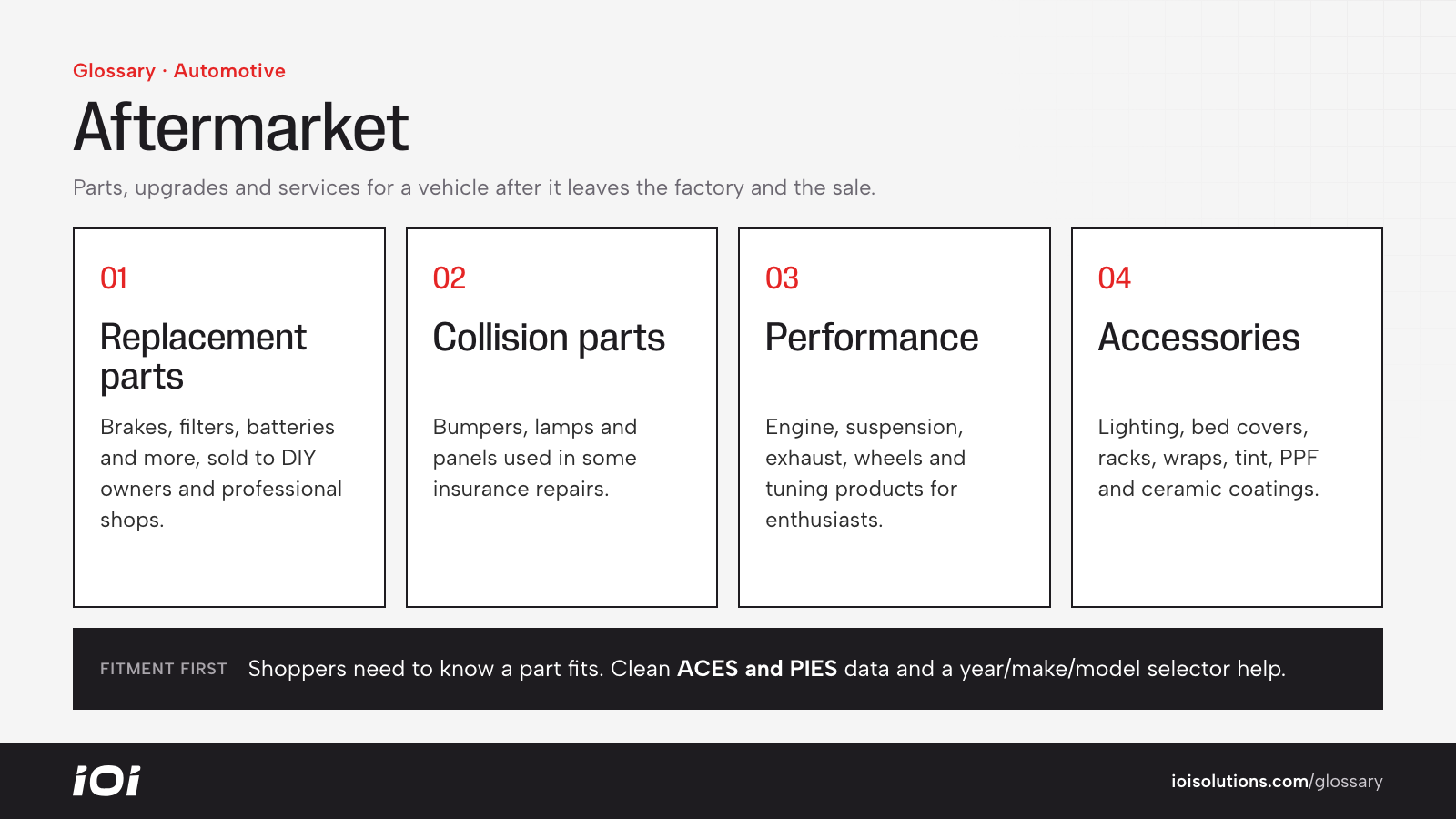
- Replacement parts: maintenance and repair items sold through parts stores, distributors and online retailers, often to both DIY owners and professional shops.
- Collision parts: aftermarket bumpers, lamps and panels used in some insurance repairs, sometimes certified by independent quality programs.
- Performance and specialty: engine, suspension, exhaust, wheels and tuning products for enthusiasts.
- Accessories and appearance: lighting, bed covers, racks, wraps, tint, paint protection film and ceramic coatings.
- Service and installation: shops that install, customize or maintain vehicles with aftermarket products.
The industry often splits the market into DIY (do-it-yourself owners) and DIFM (do-it-for-me customers who pay a shop to install).
How the Aftermarket Affects Marketing
Marketing in the aftermarket has a few defining challenges:
- Fitment is everything. Shoppers want to know a part fits their exact vehicle. Clean ACES and PIES data and a reliable year/make/model selector reduce returns and lift conversion.
- Search is part-number driven. Many buyers search by OEM part number, brand plus part, or vehicle plus upgrade, so product pages need those details clearly stated.
- Content sells. Install videos, build features and real customer photos help shoppers picture the product on their vehicle.
- Communities matter. Forums, clubs, creators and car shows influence purchase decisions in enthusiast categories.
- Marketplaces compete. Brands must balance selling direct with selling through large retailers and marketplaces, while protecting pricing and product data.
For example, a lift kit brand might pair YouTube install content with Google Shopping campaigns segmented by truck model, sending each shopper to a fitment-confirmed product page.
Best Practices
- Invest in data quality. Accurate fitment, specs and images are the foundation of aftermarket ecommerce.
- Build vehicle-specific pages that target searches like “[model] leveling kit,” supporting strong ecommerce SEO.
- Show the product installed using photos and video on real vehicles.
- Be honest about fit and install difficulty to reduce returns and negative reviews.
- Engage enthusiast communities through sponsorships, events and creator partnerships.
- Make compatibility visible on every product page, including notes on trims or options that do not fit.