
What Is Co-op Advertising?
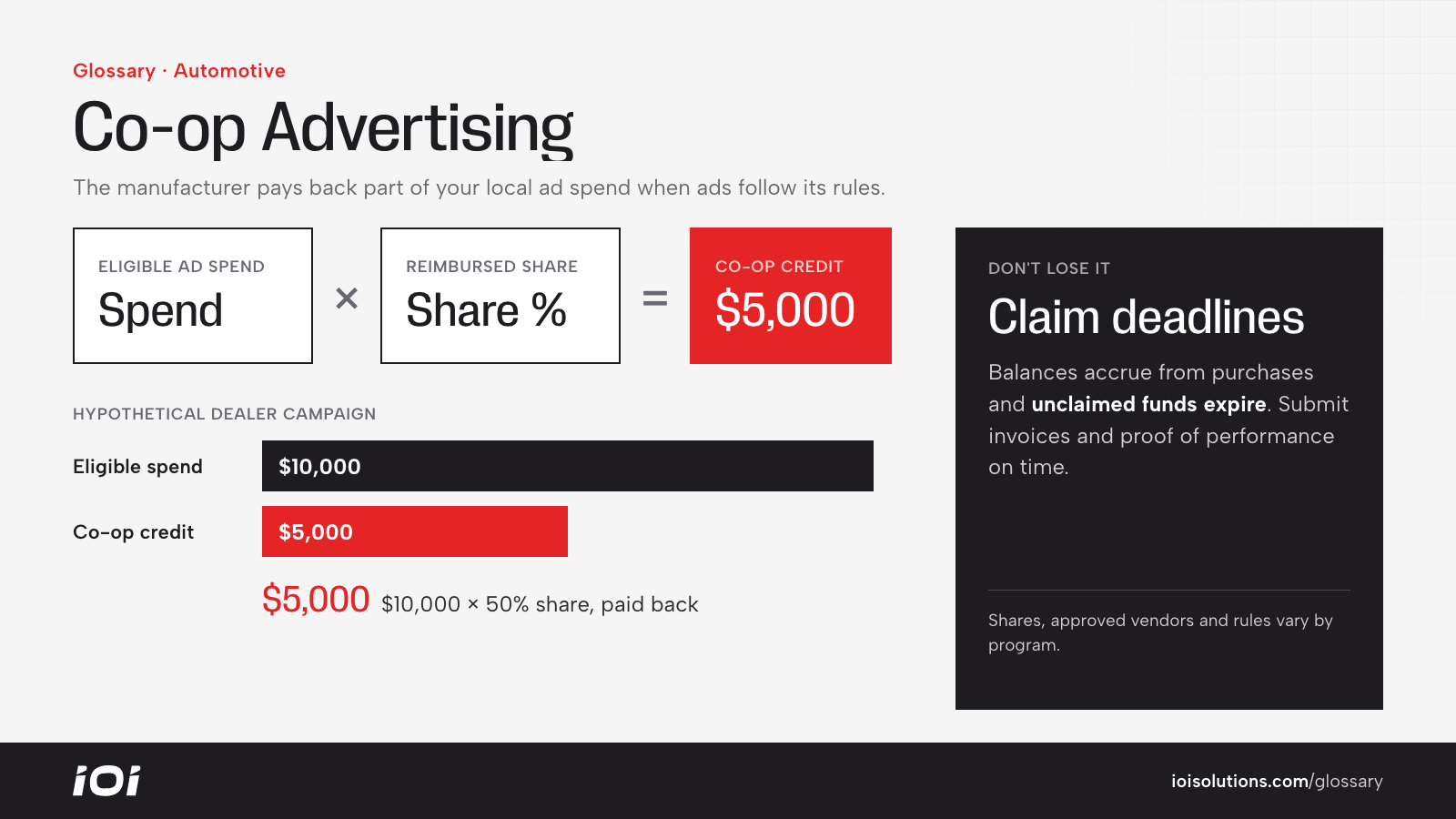
Co-op (cooperative) advertising is a cost-sharing arrangement in which a manufacturer pays back part of the money a dealer or retailer spends on local advertising, as long as the ads promote the manufacturer’s products and follow its rules. In automotive, the most common version is automaker co-op for franchise dealers, but parts, tire and accessory manufacturers run similar programs for the shops and retailers that sell their products.
Co-op funds usually sit at the local, or Tier 3, level of tiered automotive advertising. The OEM wants local dealers to advertise its vehicles consistently and effectively, and co-op money gives them a financial incentive to do so.
Why Co-op Advertising Matters
For many dealers and retailers, co-op is a meaningful source of marketing budget:
- It stretches your budget, letting you run more campaigns for the same out-of-pocket spend.
- It aligns local and national messaging so shoppers see consistent branding.
- Unused funds are often lost. Most programs have accrual periods and claim deadlines, so money left unclaimed simply expires.
- It shapes vendor and channel choices, since some programs only reimburse approved vendors, channels or ad formats.
How Co-op Advertising Works
Programs vary by brand, but the general process is similar:
- Accrual: the dealer or retailer builds up a co-op balance, often based on how many vehicles or how much product it purchases from the manufacturer.
- Eligibility rules: the program specifies which media, vendors, content and disclaimers qualify, and what share of costs it will reimburse.
- Pre-approval: some programs require submitting ads or plans before they run.
- Execution: the campaign runs following brand guidelines on logos, imagery, model names, offer language and legal disclosures.
- Claim submission: after the campaign, the dealer submits proof of performance, such as invoices, screenshots, ad copies or placement reports, before the deadline.
- Reimbursement: approved amounts are credited or paid back to the dealer.
Many automakers use a third-party administrator to manage claims and compliance checks.
How Co-op Advertising Affects Marketing
Co-op can be a real advantage, but it also adds constraints that shape campaign planning:
- Creative restrictions: brand rules may limit how you can describe vehicles, display prices or use imagery. Plan creative within those rules from the start rather than fixing it later.
- Channel limits: some programs reimburse search, display and video only through certified vendors. Confirm your agency or platform qualifies before assuming spend is eligible.
- Documentation burden: digital campaigns change often, so keep organized records of what ran, where and when.
- Mixed messaging: a single ad can promote both brand-eligible and non-eligible content, such as a used vehicle of another brand, which may reduce or void reimbursement.
- Not every dollar should be co-op. Some high-performing tactics, like certain used car or service campaigns, may not qualify but still deserve budget.
For example, a dealer running a new-model search campaign through an approved vendor, using compliant offer language, could have part of that spend reimbursed, while its used inventory campaigns run on the dealer’s own budget.
Outside dealerships, a tire shop selling a major tire brand may have access to co-op funds for local ads featuring that brand’s products, as long as it follows the brand’s logo and pricing rules.
Best Practices
- Read the current program guide each period; rules change frequently.
- Track your accrual balance and deadlines so funds do not expire unused.
- Get pre-approval where it is offered, especially for new creative or channels.
- Organize proof of performance as campaigns run, not weeks later.
- Keep co-op and non-co-op campaigns separate to simplify claims and reporting.
- Judge campaigns on results, not reimbursement. A cheap campaign that does not sell vehicles is still wasted money.