
What Is Inventory Turn?
Inventory turn, also called inventory turnover, measures how many times a business sells and replaces its average inventory over a period, usually a year. In a dealership it is most often applied to new and used vehicles, but parts departments and aftermarket ecommerce brands track it too.
A high turn means stock moves quickly and capital is recycled often. A low turn means money is sitting on the lot or the shelf. In used vehicles especially, turn is treated as one of the most important management numbers because used cars depreciate and age every day they wait.
Why Inventory Turn Matters
Turn connects inventory, cash and profit. A store that turns its used inventory 12 times a year needs far less capital to produce the same unit sales as one that turns it six times. Faster turn usually means:
- Lower carrying cost: less floor plan interest per vehicle sold.
- Less depreciation: units are sold closer to their acquisition value.
- Fresher inventory: shoppers see new arrivals more often, which keeps return visits and engagement up.
- Higher return on capital: the same dollars generate more gross over a year.
The trade-off is that chasing turn too aggressively can mean pricing too low and giving up gross per unit. The best operators balance turn with per vehicle retail gross.
How to Calculate Inventory Turn
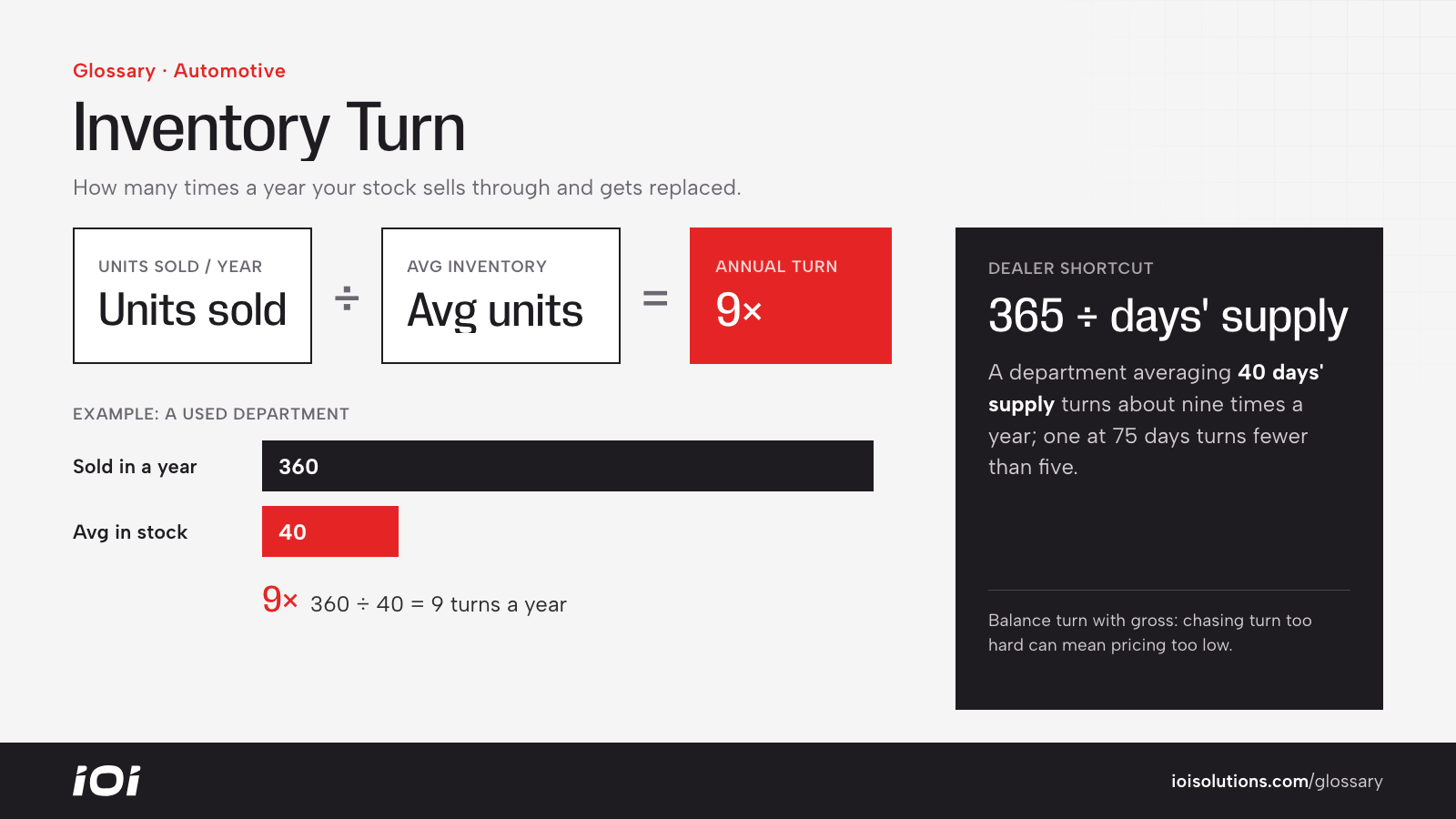
Inventory Turn = Units Sold in Period / Average Units in Inventory
Annualized, many dealers use a simpler version: Annual Turn = 365 / Days’ Supply. For example, a used department averaging 40 days’ supply turns about nine times per year. A department sitting at 75 days turns fewer than five times.
Finance teams may calculate turn using cost of goods sold divided by average inventory value instead of units. That version is common for parts departments and ecommerce brands, where SKUs vary hugely in price.
How Inventory Turn Affects Marketing
Marketing is one of the few levers that can speed up turn without simply cutting price. The goal is to get each unit in front of the right shopper sooner.
- Launch campaigns the day a unit is frontline-ready. Waiting for photos or descriptions adds days to every vehicle’s life on the lot.
- Use inventory-driven ads. Listing ads and dynamic social ads that pull from the live feed help every unit get exposure without manual campaign builds.
- Remarket by model and segment. Shoppers who viewed a similar vehicle are the fastest path to a sale.
- Watch the slow tail. Turn averages hide outliers, so flag units with no leads after two or three weeks.
For parts and accessories brands, turn guides which SKUs deserve shopping and Performance Max budget. A brand might find its fastest-turning lift kits need less promotion, while slow-moving fitment-specific parts benefit from targeted search campaigns built around year, make and model queries.
For example, a used car store that cuts average reconditioning-to-online time from five days to two, and pushes every new arrival into listing ads and remarketing immediately, may lift turn without changing its pricing strategy at all.
What Is a Good Inventory Turn?
Good turn varies a lot by franchise, market, price point and whether you are measuring new, used or parts. Used car departments generally aim higher than new car departments, and luxury or specialty inventory often turns more slowly. Rather than chasing a universal benchmark, compare against your own history, your group’s other stores and OEM or 20-group guidance.
- Track turn separately for new, used and parts so each has a realistic target.
- Monitor it alongside aged inventory to catch units dragging the average down.
- Shorten reconditioning and merchandising time, since those days count against turn.
- Align ad spend with turn goals, increasing exposure on slow segments rather than spreading budget evenly.
- Balance turn against gross so faster sales do not simply come from deeper discounts.