
What Is HTML (HyperText Markup Language)?
HTML, short for HyperText Markup Language, is the core language used to build web pages. It uses tags to label content so browsers know what each part of a page is: a heading, a paragraph, a list, a link, an image, a button or a form.
HTML defines structure and meaning, not appearance. Visual styling comes from CSS (Cascading Style Sheets), and interactive behavior usually comes from JavaScript. Together, these three technologies power nearly every website.
Why HTML Matters
Marketers do not need to be developers, but understanding HTML basics pays off. Search engines, AI search tools, screen readers and browsers all read your HTML to understand your pages.
- SEO: Elements like the title tag, meta description, headings, image alt text and links live in HTML.
- Accessibility: Well-structured HTML helps assistive technologies read pages correctly.
- Tracking: Analytics scripts and ad pixels are placed in a page’s HTML.
- Troubleshooting: Knowing how to view page source helps you spot missing tags, duplicate headings or broken links.
How HTML Works
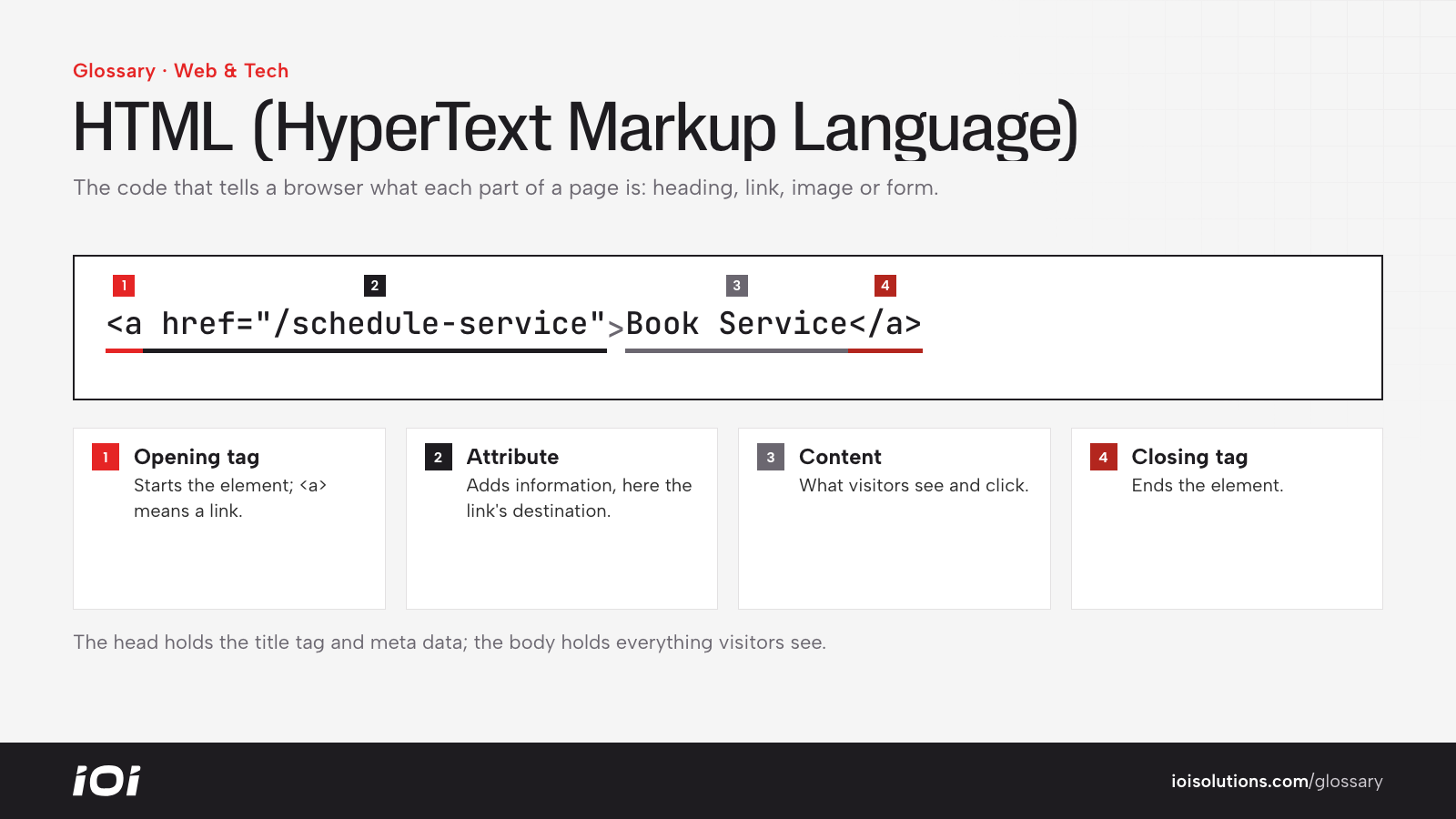
An HTML document is built from elements, most of which have an opening tag and a closing tag around content. For example, a paragraph is written with <p> before the text and </p> after it. Elements can include attributes that add information, such as a link’s destination or an image’s alt text.
A page has two main parts:
- The head: Information about the page that is mostly invisible to visitors, including the title tag, meta description, canonical tag, structured data, and links to stylesheets and scripts.
- The body: Everything visible on the page, such as headings, text, images, videos, forms and navigation.
Common elements marketers encounter include headings from <h1> through <h6>, paragraphs, lists, links (<a>), images (<img>) and forms. Semantic elements like header, nav, main, article and footer describe the purpose of page sections, which helps both search engines and accessibility tools.
Most businesses do not write HTML by hand. A content management system or website builder generates it from templates. But those templates decide how well the HTML is structured across every page.
HTML in Automotive Marketing
Automotive websites often run on platform templates, so HTML quality can vary widely.
- Dealership sites: Vehicle detail pages should use a clear heading with year, make, model and trim, descriptive image alt text, and structured data for vehicles and offers where supported. Some templates load key content only through scripts, which can make it harder for search engines to read.
- Collision and repair shops: Service pages should use proper heading hierarchy, a real HTML phone link that is tappable on mobile, and local business structured data.
- Parts ecommerce: Product pages benefit from clean HTML for specifications, fitment tables and product structured data that can support rich results.
- Landing pages: When adding a tracking pixel or chat widget, the code snippet usually goes into the page’s HTML head or body, often through a tag manager.
For example, a body shop might discover its homepage has three separate H1 headings and no alt text on gallery images. Fixing those HTML issues is quick and improves clarity for search engines and visitors using screen readers.
Best Practices
- Use one clear H1 per page and a logical H2 and H3 structure beneath it.
- Write descriptive alt text for meaningful images.
- Use real HTML text for important content rather than embedding words in images.
- Keep templates lean; excessive scripts and nested code slow pages down.
- Add relevant structured data, such as local business, product, vehicle or FAQ markup, where appropriate.
- Validate key templates periodically and check page source after site updates.