
What Is Marketing Automation?
Marketing automation is the use of software to handle repetitive marketing tasks automatically. Instead of manually sending every email, text, or reminder, you set up rules and triggers once, and the system acts on them whenever conditions are met. A new lead fills out a form and instantly gets a confirmation. A customer who hasn’t visited in six months gets a reminder. A shopper who abandons a cart gets a follow-up.
Automation platforms range from simple email tools with basic sequences to full systems that combine email, SMS, CRM data, lead scoring, and ad audience syncing.
Why Marketing Automation Matters
People expect fast, relevant communication. Automation makes that possible without adding staff:
- Speed: Leads get an immediate response, even after hours.
- Consistency: Every customer gets the right follow-up, not just the ones someone remembered.
- Personalization at scale: Messages can reflect each person’s interests, vehicle, or history.
- Efficiency: Your team spends time on conversations that need a human, not routine reminders.
- Revenue from existing customers: Automated reminders and win-back campaigns bring customers back who might otherwise drift away.
How Marketing Automation Works
Most automation is built from a few core components:
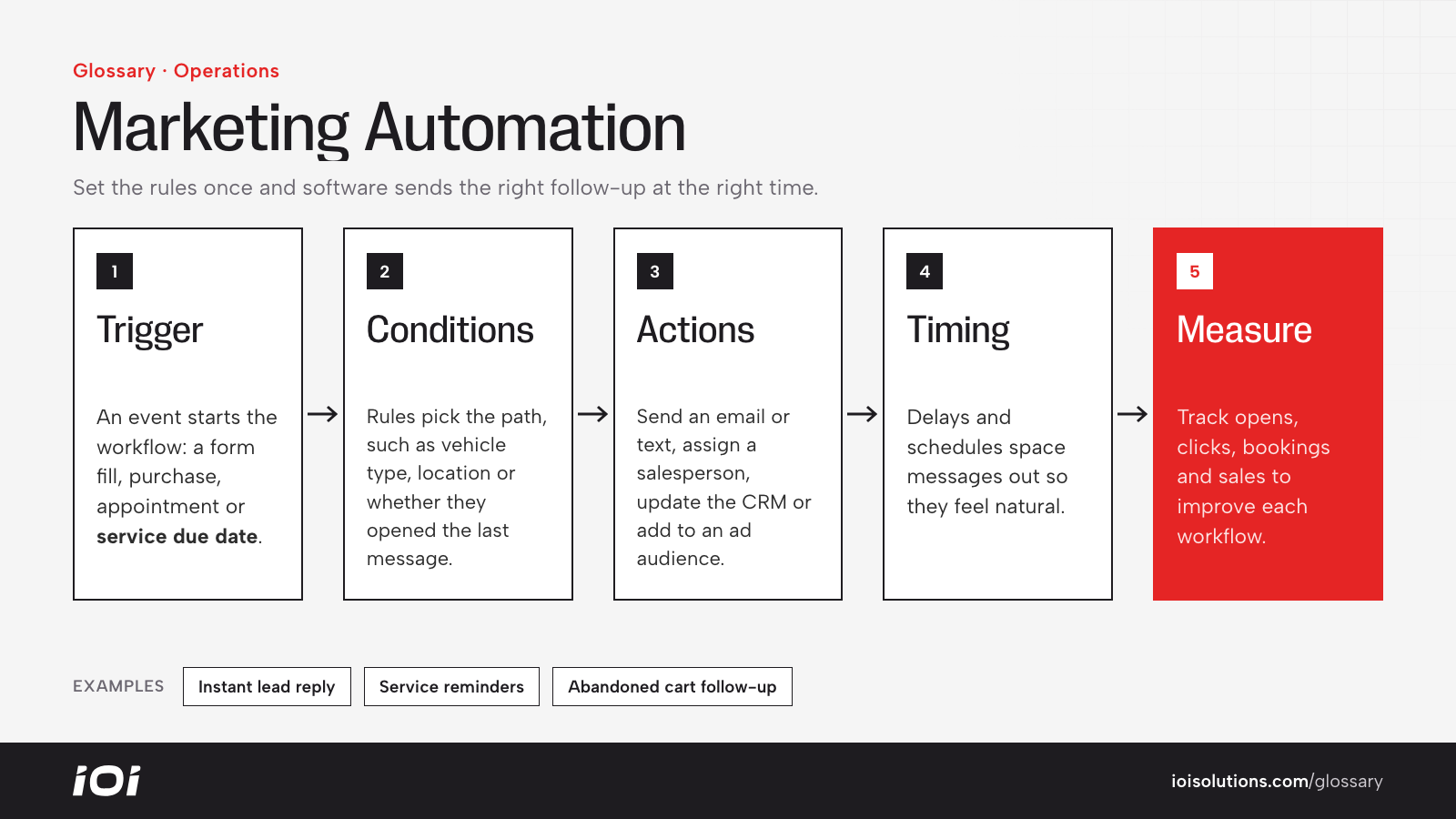
- Triggers: Events that start a workflow, such as a form submission, purchase, appointment, or a date like a service due date.
- Conditions: Rules that decide which path someone follows, like vehicle type, location, or whether they opened the last message.
- Actions: What happens next: send an email or text, assign a lead to a salesperson, update a CRM field, or add the contact to an ad audience.
- Timing: Delays and schedules that space out messages appropriately.
- Measurement: Tracking opens, clicks, bookings, and sales to improve each workflow.
Good automation feels timely and personal to the recipient, even though nobody typed the message in that moment. Poor automation feels generic, arrives at the wrong time, or keeps sending after the person has already bought.
Common workflows include welcome sequences, lead nurturing, appointment reminders, review requests, post-purchase follow-ups, and re-engagement campaigns. Mapping these to the customer journey keeps messaging relevant at each stage.
Marketing Automation in Automotive Marketing
- Dealerships: Instant lead responses, follow-up sequences for unsold leads, lease-end and equity alerts, and service reminders based on mileage or time since last visit.
- Repair shops: Oil change and maintenance reminders, declined-service follow-ups, appointment confirmations, and review requests after the visit. These directly support service retention.
- Collision shops: Automated repair status updates by text, which reduce “is my car ready?” calls, plus post-repair review requests.
- Detailing and ceramic coating shops: Maintenance wash or coating inspection reminders timed to the product’s recommended schedule.
- Parts and accessories ecommerce: Abandoned cart emails, post-purchase install guides, and suggestions for complementary parts that fit the customer’s vehicle.
Best Practices
- Start with high-impact workflows. Lead response, appointment reminders, and review requests usually deliver value fastest.
- Keep data clean. Automation is only as good as the data behind it. Accurate names, vehicles, and contact preferences matter.
- Respect consent and frequency. Follow email and texting regulations, honor opt-outs, and avoid overwhelming people.
- Write like a human. Automated doesn’t have to mean robotic. Use plain, friendly language.
- Hand off to people at the right time. Route hot leads and replies to staff quickly instead of letting automation keep going.
- Review performance regularly. Check workflows for broken steps, outdated offers, and declining results, a core part of marketing operations.