
What Are Fleet Sales?
Fleet sales are the sale or lease of vehicles to organizations rather than individual consumers. Buyers include small businesses with a few work trucks, contractors, delivery and logistics companies, utilities, rental companies, government agencies, and large corporations with hundreds or thousands of vehicles.
Fleet purchases range from light-duty pickups and vans to medium and heavy-duty trucks, often with upfits such as shelving, ladder racks, service bodies, or refrigeration. Many dealerships run a separate fleet or commercial department to handle these accounts, and some brands have dedicated commercial vehicle dealers.
Why Fleet Sales Matter
Fleet business can be a significant and stable revenue stream.
- Volume. One account can buy many vehicles in a single order and replace them on a regular cycle.
- Fixed operations. Fleet vehicles need regular maintenance and repair, which feeds the fixed operations department for years.
- Long relationships. Fleet buyers value reliable partners and often stay with a dealer that delivers on time and supports them well.
- Manufacturer programs. Automakers usually offer fleet incentives and pricing programs that require the buyer to be registered as a fleet customer.
Fleet margins per unit are often thinner than retail, so the value comes from volume, service, and the life of the relationship.
Types of Fleet Sales
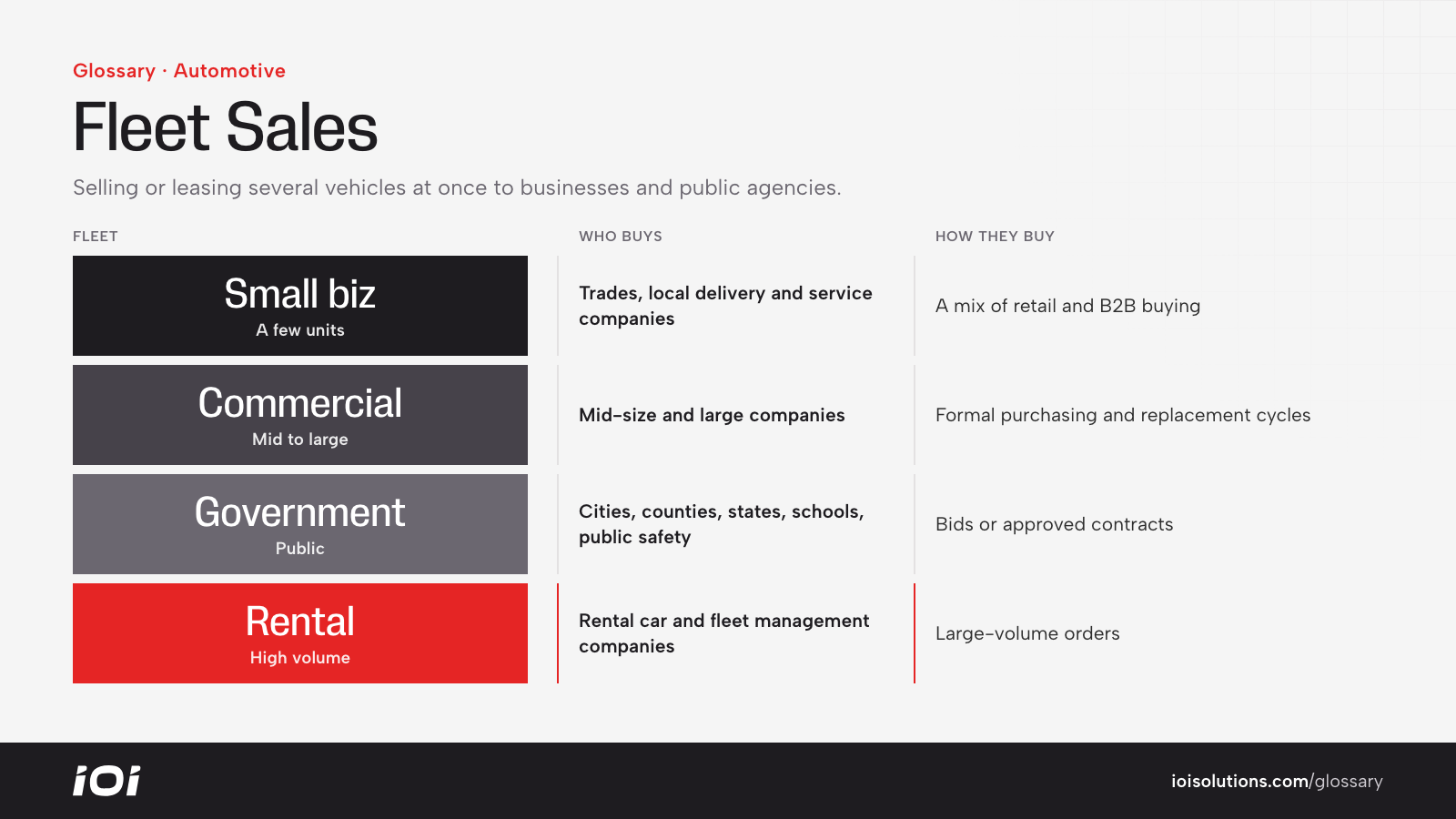
- Small business fleet: a handful of vehicles for trades, local delivery, or service companies. Buying behavior looks like a mix of retail and B2B.
- Commercial fleet: mid-size and large companies with formal purchasing processes and replacement cycles.
- Government fleet: cities, counties, states, schools, and public safety agencies, often buying through bids or approved contracts.
- Rental and leasing fleet: rental car and fleet management companies buying in large volumes.
- Heavy-duty and vocational: larger trucks configured for construction, towing, waste, and similar work.
How Fleet Sales Affect Marketing
Fleet marketing works more like B2B marketing than consumer car advertising. The buyer may be an owner, an operations manager, a fleet manager, or a procurement team, and the decision often involves several people.
That favors approaches such as account-based marketing. A dealer can identify target businesses in its area, such as plumbing companies, landscapers, and electrical contractors, and reach them with tailored content, direct outreach, and paid campaigns aimed at business decision-makers.
For example, a dealer might build landing pages for “work trucks for contractors” and “cargo vans for delivery businesses,” each showing available upfits, commercial financing, fleet incentives, and the store’s commercial service hours. Paid search can capture business owners searching for these terms, and LinkedIn or Meta campaigns can reach owners of local service businesses.
Service is a selling point. Fleet buyers care about uptime, so messaging about fast service lanes, loaner or rental availability, and mobile service can matter more than price alone.
Lead handling also differs. A fleet inquiry should go to a commercial specialist who can quote multiple units, coordinate upfits, and handle tax exemption and registration paperwork, rather than being treated like a retail lead.
Best Practices
- Define your ideal fleet customer. Build an ideal customer profile by industry, size, and vehicle needs.
- Create commercial landing pages. Separate fleet content from retail pages and speak to business needs.
- Highlight service and uptime. Promote commercial service capacity, hours, and turnaround.
- Route leads to specialists. Send fleet inquiries directly to the commercial team.
- Track account value. Measure lifetime revenue per account, including service, not just units sold.