
What Is ADAS Calibration?
ADAS calibration is the procedure of resetting and aligning the sensors behind a vehicle’s advanced driver assistance systems so they read the road accurately. ADAS features include automatic emergency braking, lane-keeping assistance, adaptive cruise control, blind spot monitoring and parking sensors. These systems depend on cameras, radar, lidar and ultrasonic sensors mounted in precise positions.
When a windshield is replaced, a bumper is removed, a wheel alignment changes or a collision shifts a sensor mount, the system may need calibration so it “sees” the world at the correct angle and distance. Manufacturers publish the conditions under which calibration is required.
Why ADAS Calibration Matters
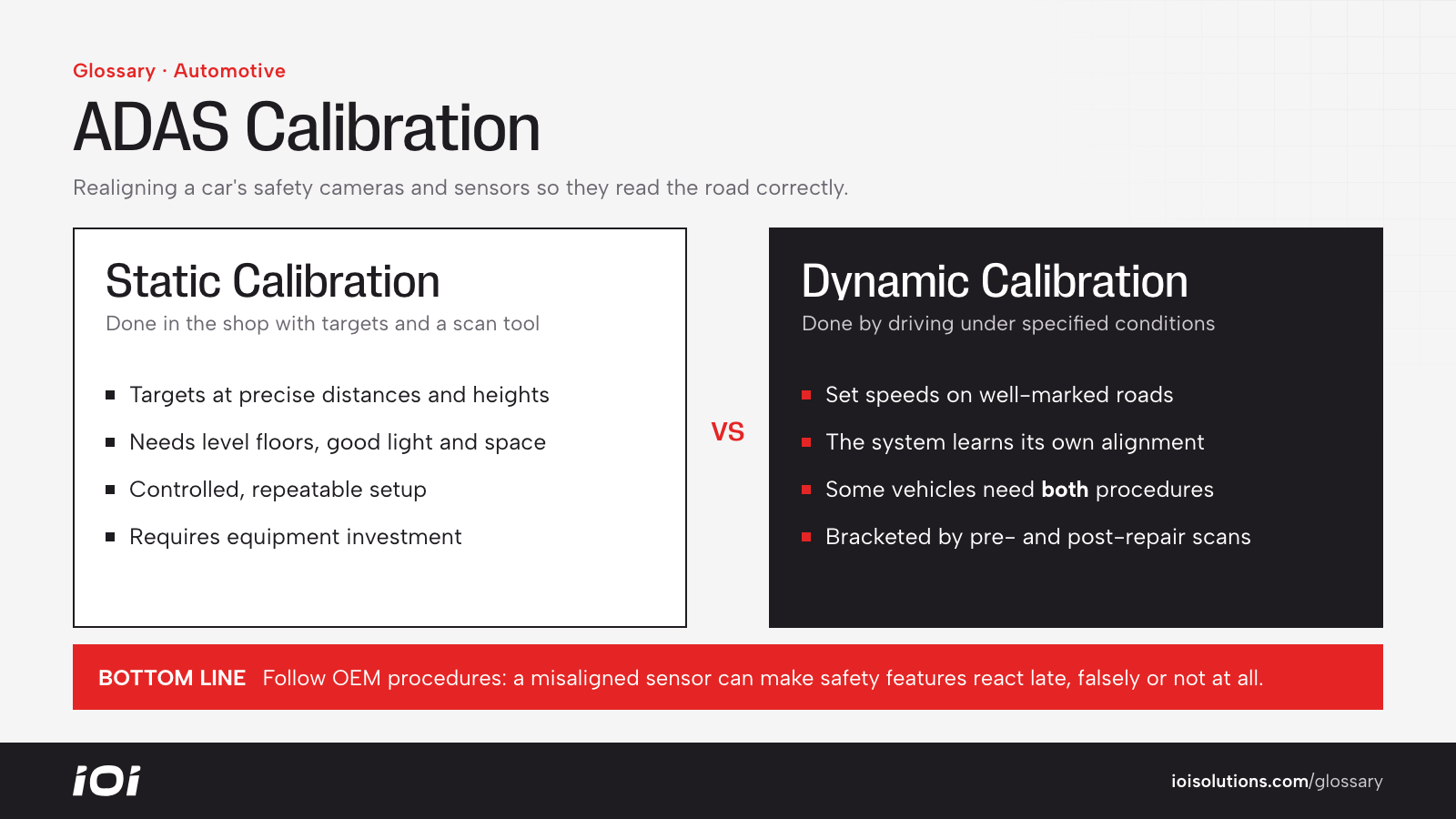
- Safety: a misaligned camera or radar can cause a safety feature to react late, react falsely or not work at all.
- OEM requirements: many manufacturer repair procedures call for calibration after specific repairs, and shops are expected to follow them.
- Liability: skipping required calibrations can expose a shop to legal and reputational risk.
- Revenue: calibration is a growing service line for collision centers, glass shops, dealers and specialist mobile providers.
Types of ADAS Calibration
- Static calibration: performed in a controlled shop space with targets placed at precise distances and heights from the vehicle, using a scan tool. It requires level floors, proper lighting and enough room.
- Dynamic calibration: performed by driving the vehicle under specified conditions, such as certain speeds on well-marked roads, while the system learns its alignment.
- Combination: some vehicles require both a static and a dynamic procedure.
Calibration is usually preceded by pre-repair and post-repair diagnostic scans that identify fault codes. Shops either invest in calibration equipment and space or sublet the work to a dealer or specialist, which adds to cycle time.
How ADAS Calibration Affects Marketing
ADAS calibration gives repair businesses a strong, trust-building message and a new service to promote.
- Collision shops: highlighting in-house calibration and adherence to OEM procedures differentiates a shop from competitors that sublet or skip the step. It pairs naturally with OEM certification messaging.
- Auto glass shops: windshield replacement on camera-equipped vehicles often requires calibration, so glass shops can promote “replacement plus calibration” as a complete service.
- Dealers: service departments can market calibration to independent shops as a B2B sublet service and to owners after windshield or suspension work.
- Mobile calibration providers: these businesses market primarily to shops, so outreach, local partnerships and B2B search campaigns fit better than consumer ads.
Educational content works well because many drivers do not know calibration exists. For example, a glass shop might publish a page explaining why lane-keep cameras need calibration after windshield replacement and run search ads on queries such as windshield replacement for specific models with lane-assist features.
Be careful with claims. Describe what calibration does without overstating safety outcomes, and only advertise procedures and certifications the business actually performs.
Calibration also affects how you measure marketing. Because it is often added after teardown or windshield work, track calibration revenue as part of the overall job value so campaigns that bring in sensor-equipped vehicles get proper credit.
Best Practices
- Explain ADAS calibration in plain language on service pages and estimates so customers understand the line item.
- Promote in-house calibration as a quality and convenience advantage if you have the equipment and training.
- Target model-specific searches where calibration is commonly required after windshield or bumper work.
- For B2B calibration services, build relationships with nearby collision and glass shops that lack equipment.
- Keep all safety claims accurate and tied to manufacturer procedures.