
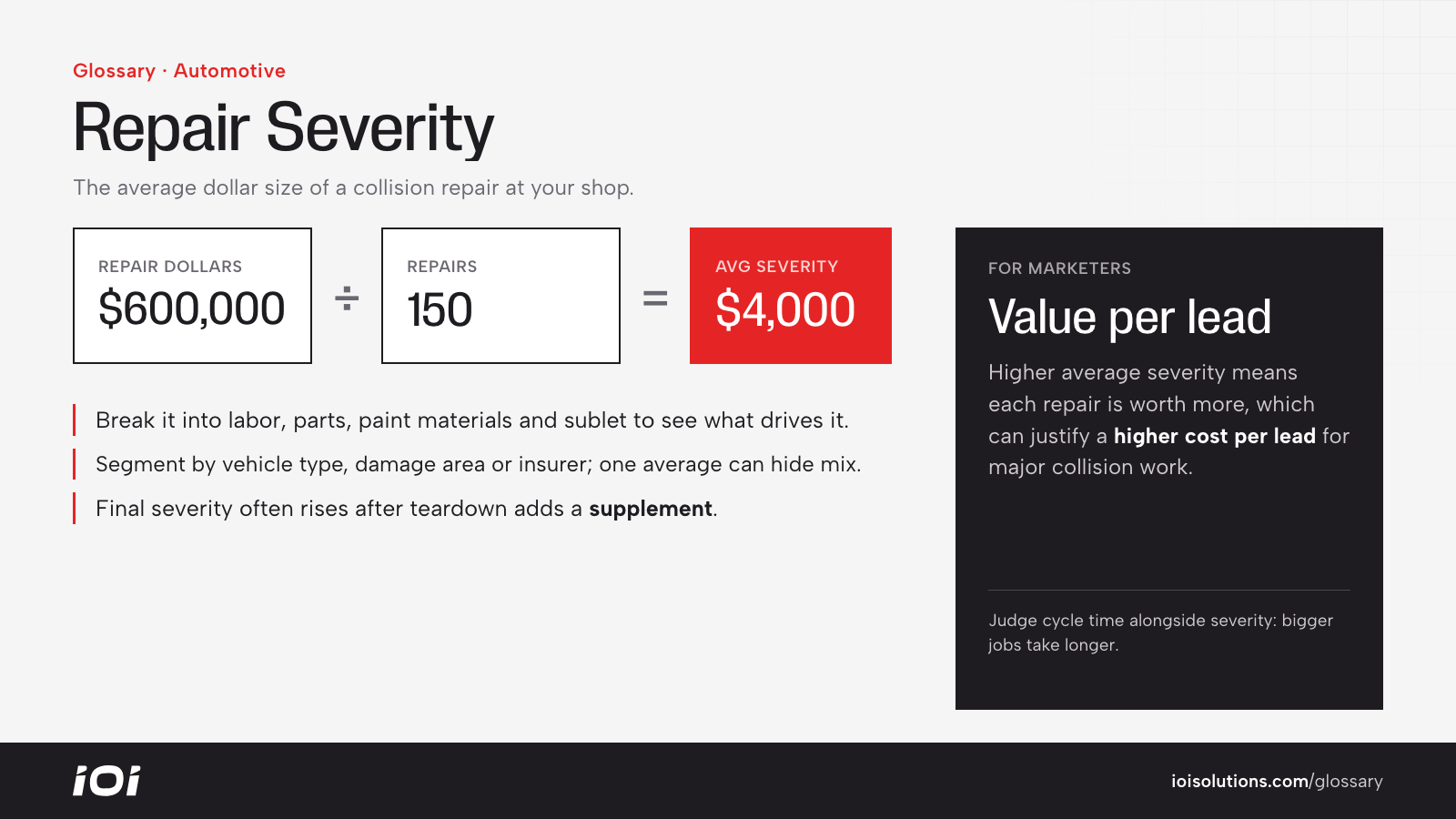
What Is Repair Severity?
Repair severity is a collision industry term for the average cost of a repair, typically measured as the total repair bill per vehicle or per claim. Insurers use severity to understand claim costs, and body shops use it to describe the average size of the jobs they handle. A shop with a high average severity is doing larger repairs, while a shop with a low severity is handling more light, cosmetic work.
Severity can be broken down into components such as labor, parts, paint materials and sublet costs. It is closely related to whether a vehicle is repaired at all, since if the repair cost approaches a vehicle’s value, it may be declared a total loss instead.
Why Repair Severity Matters
- Revenue per job: severity tells a shop how much revenue each repair brings in on average, which shapes staffing and capacity planning.
- Insurer relationships: carriers compare severity across shops in their programs. A shop whose severity looks out of line for similar damage may face extra scrutiny.
- Cycle time expectations: larger repairs naturally take longer, so cycle time should be evaluated alongside severity.
- Industry trends: modern vehicles with sensors, advanced materials and complex lighting tend to cost more to repair, pushing severity upward over time.
How to Calculate Repair Severity
Average Repair Severity = Total Repair Dollars / Number of Repairs (or Claims)
For example, a shop that completed 150 repairs in a month totaling $600,000 would have an average severity of $4,000. Many shops and insurers segment severity further by vehicle type, damage area, insurer or job category, because a single average can hide large differences in mix.
Severity changes as estimates are updated. An initial estimate may grow after teardown reveals hidden damage, leading to a supplement. Final severity reflects the completed repair.
How Repair Severity Affects Marketing
Severity helps a body shop decide which kinds of work to pursue and how much it can afford to spend to win them.
- Value leads by job size. A higher average severity means each repair is worth more, which can justify a higher cost per lead or call.
- Target the work you want. A shop with structural and aluminum repair capabilities might target high-severity work, using OEM certification messaging. A smaller shop focused on cosmetic repairs might advertise dent and bumper repair to drive volume.
- Segment campaigns. Separate campaigns for major collision repair, minor dents and scratches, and paintless dent repair help match budgets to value.
- Track severity by lead source. If Google Ads leads average much larger repairs than social leads, that should influence budget allocation.
For example, a collision center that gains OEM certification for a luxury brand might expect higher severity on those repairs because of specialized procedures and parts. A campaign aimed at owners of that brand could deliver fewer leads but more revenue per lead.
Best Practices
- Track severity by lead source and campaign in your shop management system or CRM.
- Use severity and close rate together to set a realistic maximum cost per lead.
- Match ad messaging to the repair types your shop is best equipped and certified to handle.
- Segment severity by insurer and repair type to avoid misleading averages.
- Understand that severity varies by region, vehicle mix and insurer, so compare against your own history rather than a general figure.