
What Is Aged Inventory?
Aged inventory is stock that has been sitting longer than a business’s target timeframe. In a dealership, it usually means vehicles that have been in inventory past a set threshold, often 60 days for used vehicles and somewhat longer for new, though every store sets its own lines. Parts departments and aftermarket brands use the term for SKUs that have not sold in months.
Dealers commonly group stock into aging buckets such as 0 to 30, 31 to 60, 61 to 90 and 90-plus days. The older the bucket, the more urgent the problem, because carrying costs and price pressure grow over time.
Why Aged Inventory Matters
An aged vehicle is expensive in several ways at once.
- Carrying cost: every day adds floor plan interest and lot costs.
- Depreciation: used vehicles lose market value over time, so the same car sells for less in week ten than in week two.
- Lower gross: aged units are usually discounted, which drags down per vehicle profit.
- Stale merchandising: repeat shoppers see the same listings, and online marketplaces may flag long-listed units as less attractive.
- Opportunity cost: capital and lot space tied up in old stock cannot fund fresh, faster-selling units.
Many used car operations follow a disciplined process: reprice on a schedule, and wholesale units that pass a hard age limit rather than letting them sit indefinitely.
How Aged Inventory Works
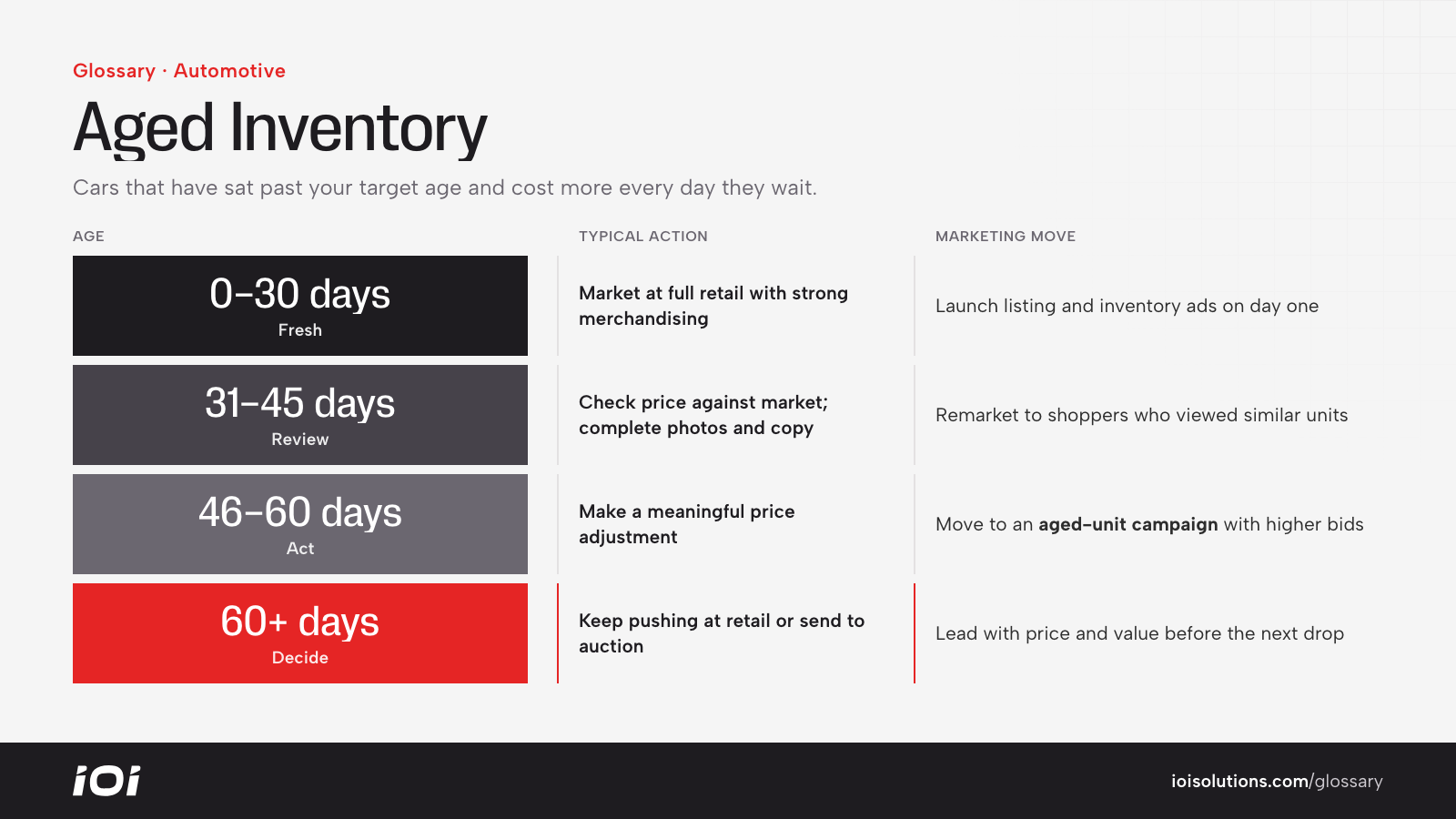
Aging starts on the day a vehicle enters inventory, typically when it is purchased, traded in or received from the manufacturer. Stores pull aging reports from their DMS or inventory management tool and act at each threshold. A typical used car playbook might look like this:
- Days 0 to 30: market at full retail with strong merchandising.
- Days 31 to 45: review pricing against the market and check that photos and descriptions are complete.
- Days 46 to 60: make a meaningful price adjustment and increase advertising exposure.
- Past 60 days: decide whether to keep pushing at retail or send the unit to auction or wholesale.
New vehicle aging works similarly but often involves model-year changeovers and manufacturer incentives that help clear outgoing stock.
How Aged Inventory Affects Marketing
Aged inventory is one of the clearest places where marketing can save a dealership money. The aim is to find a buyer before the next price drop or a trip to auction.
- Create an aged-unit campaign. Separate aged vehicles into their own ad sets so they can get higher bids and dedicated budget.
- Lead with price and value. Price-reduced messaging, payment examples and “manager’s special” framing fit aged stock well.
- Use remarketing. Shoppers who viewed similar vehicles in the past few weeks are the most likely buyers.
- Refresh the listing. New photos, a better lead image or an updated description can revive interest in vehicle listing ads and marketplaces.
- Expand reach. Widen geographic targeting for aged units, since a buyer two hours away is better than a trip to auction.
For example, a used car manager might hand marketing a weekly list of units over 45 days. Those vehicles go into a dedicated listing ad campaign with a higher bid and a social carousel highlighting the new price. If a unit still gets no leads after two weeks of that push, the data supports a wholesale decision rather than another markdown.
Best Practices
- Get a weekly aging report and agree on which buckets marketing should prioritize.
- Check merchandising first: missing photos, poor lead images or wrong pricing often explain why a unit aged.
- Tie ad budgets to aging so older units automatically get more exposure.
- Measure lead volume per aged unit to spot vehicles with a pricing or demand problem rather than an exposure problem.
- Coordinate with sales managers before running price-led ads so the advertised price matches what is on the lot.