
What Is a Business Development Center (BDC)?
A Business Development Center (BDC) is a dedicated team, either in-house or outsourced, that manages customer communication for a dealership or other automotive business. BDC agents respond to internet leads, answer and make phone calls, send texts and emails, and set appointments for the sales and service departments.
The idea is specialization. Instead of salespeople juggling floor customers and online inquiries, the BDC focuses entirely on fast, consistent follow-up, while salespeople focus on selling to people who show up. Some dealerships run a sales BDC, a service BDC or a combined team.
Why a BDC Matters
Marketing produces leads, but leads only turn into revenue if someone handles them well. A BDC matters because:
- Response speed affects results. Shoppers often contact several dealers; the first helpful response has an advantage.
- Consistency improves conversion. A structured process makes sure every lead gets multiple follow-up attempts.
- Appointments are measurable. The BDC creates a clear handoff point, so you can track how many leads become appointments, shows and sales.
- It recovers lost opportunities. BDCs often work old leads, unsold showroom visitors and service customers who may be ready to buy.
How a BDC Works
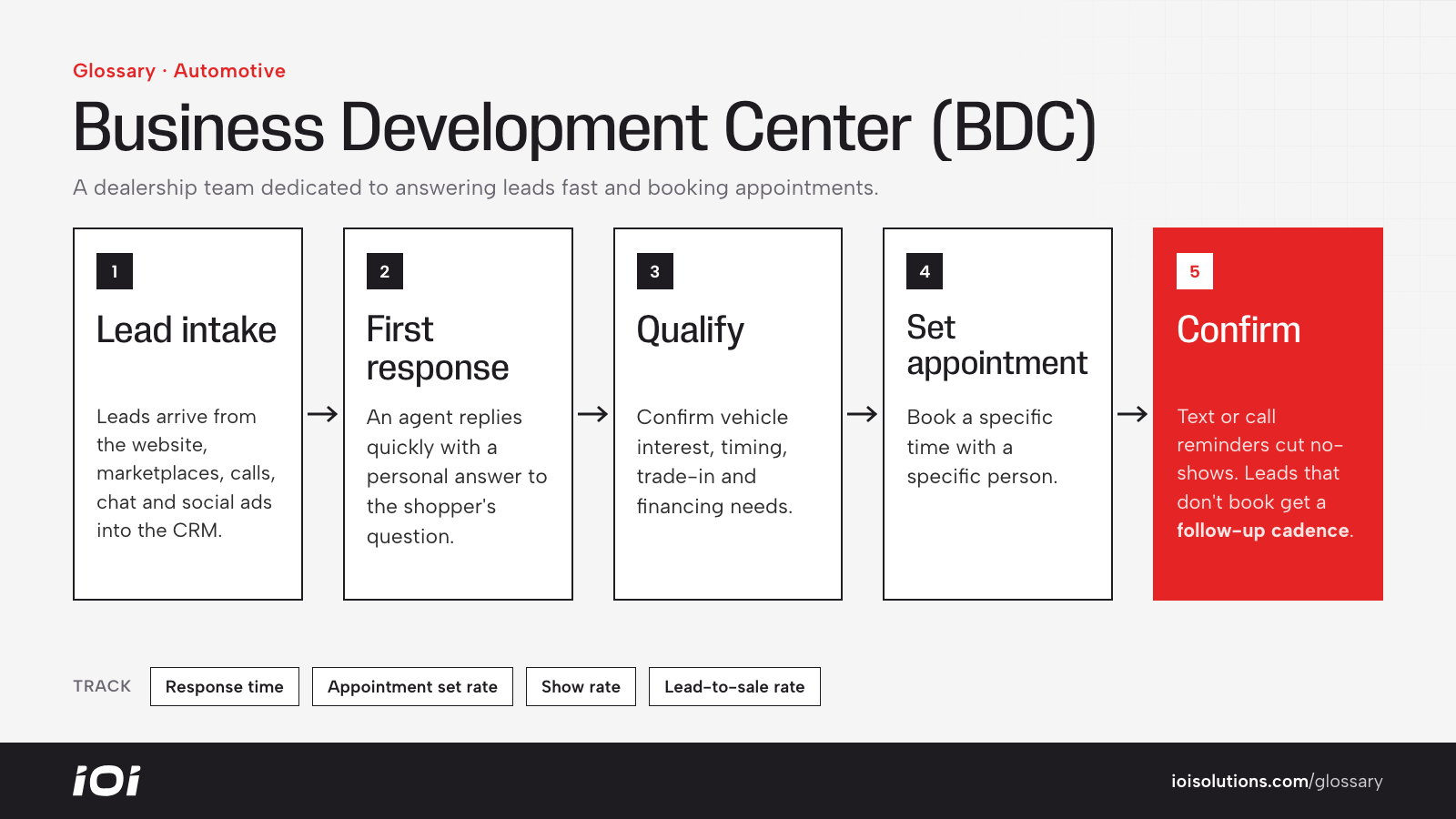
A typical sales BDC workflow looks like this:
- Lead intake: leads arrive from the website, marketplaces, phone calls, chat and social ads, usually into the CRM, often in ADF/XML format.
- First response: an agent replies quickly with a personal answer to the shopper’s question.
- Qualification: the agent confirms vehicle interest, timing, trade-in and financing needs.
- Appointment setting: the agent books a specific time with a specific person.
- Confirmation: reminders by text or call reduce no-shows.
- Follow-up cadence: leads that do not book get scheduled follow-up over days or weeks.
Service BDCs handle appointment requests, maintenance reminders, recall notices and declined-work follow-up. Many BDCs also run outbound campaigns such as equity mining, lease-end outreach and service-to-sales.
Core metrics include response time, contact rate, appointment set rate, appointment show rate and lead-to-sale close rate.
How a BDC Affects Marketing
The BDC sits between marketing and sales, so its performance changes how campaigns look:
- It can make or break lead ROI. Two dealers with the same ads can see very different sales if one BDC responds in minutes and the other in hours.
- It provides lead quality feedback. BDC notes reveal whether a channel brings real shoppers or junk leads, helping marketers adjust targeting.
- Call handling matters. Many campaigns drive phone calls; call recordings and tracking show whether calls are answered and converted.
- Messaging should match. If an ad promotes a specific offer, BDC scripts should know about it.
Collision shops, repair shops and other automotive businesses can use the same model on a smaller scale, such as a dedicated person or service handling estimate requests, callbacks and appointment reminders.
Best Practices
- Set and track response-time standards for every lead source, including after hours.
- Use personal, helpful responses rather than generic templates.
- Book firm appointments with a time and a named contact.
- Share data with marketing regularly so campaigns can be adjusted based on lead quality.
- Review calls and messages for coaching opportunities.
- Measure the full chain, from lead to appointment to show to sale.
- Staff for peak demand. Look at when leads and calls actually arrive, including evenings and weekends, and schedule agents or an after-hours service so high-intent shoppers are not left waiting until the next morning.