
What Is Tier 1, Tier 2 and Tier 3 Advertising?
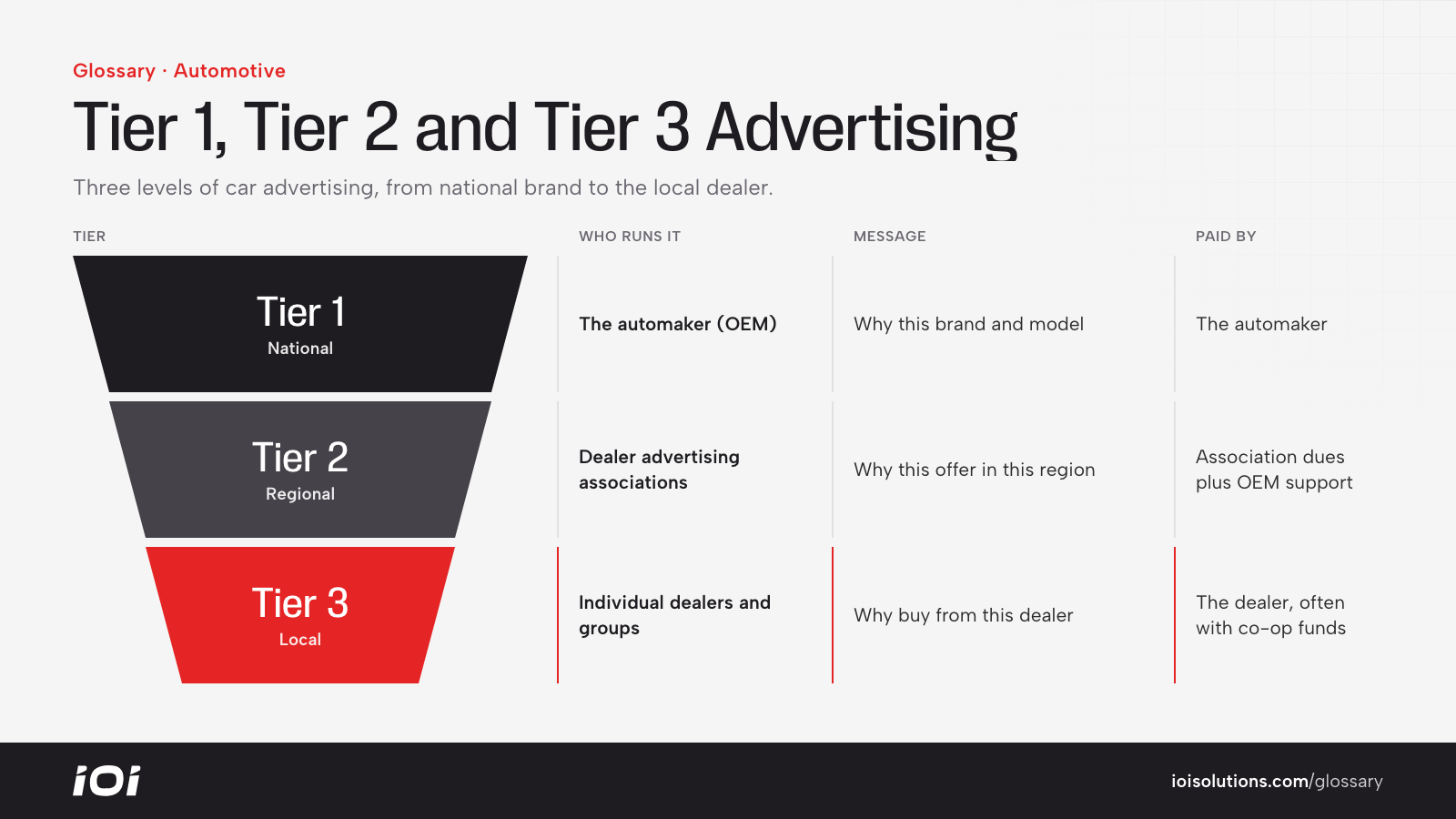
Automotive advertising is commonly divided into three tiers based on who runs it and what it is meant to do:
- Tier 1: national advertising run by the automaker (OEM). It builds the brand and introduces vehicles, think big TV spots, national digital campaigns and sponsorships.
- Tier 2: regional advertising run by dealer advertising associations, groups of franchise dealers for one brand in a market, often with automaker support. It promotes regional offers and sales events and pushes shoppers toward local dealers.
- Tier 3: local advertising run by individual dealerships or dealer groups. It promotes specific inventory, pricing, service offers and the dealership itself.
Each tier narrows the focus, from “why this brand” to “why this offer in this region” to “why buy from this dealer.”
Why the Tiers Matter
Understanding the tiers helps dealers and agencies avoid wasted or conflicting spend:
- Different goals: Tier 1 drives awareness, Tier 2 drives regional demand and Tier 3 converts that demand into sales at a specific store.
- Different funding: Tier 1 is paid by the automaker, Tier 2 by association dues plus automaker contributions, and Tier 3 by the dealer, often partly reimbursed through co-op advertising programs.
- Different rules: Tier 2 and Tier 3 ads must usually follow automaker brand and disclosure guidelines, especially when co-op funds are involved.
- Shared audiences: because all three tiers target overlapping shoppers, they compete in the same ad auctions and media environments.
How the Tiers Work Together
Ideally, the tiers form a relay. Tier 1 makes a shopper interested in a new model. Tier 2 tells them about a regional lease or financing offer on it. Tier 3 shows them the actual vehicles in stock at a nearby dealership, with reasons to buy there, such as service reputation, convenience or pricing.
In practice, overlap is common in digital channels. Automaker, association and dealer campaigns may all bid on the same model keywords, sometimes raising costs. Some automakers coordinate digital buying across tiers or provide approved vendor programs for dealers to reduce that friction.
How the Tiers Affect Marketing
For a dealership or its agency, the tier structure should shape strategy:
- Focus Tier 3 on what only you can say. Your inventory, your people, your reviews, your service department, your location and your buying experience are your advantages. Generic model awareness is already covered by Tier 1.
- Ride Tier 1 and Tier 2 momentum. When a national launch or regional event is running, align your local ads and landing pages so shoppers find matching inventory and offers.
- Check compliance. Use correct offer language, disclaimers and logo usage to stay eligible for co-op reimbursement.
- Watch for keyword overlap. Review search terms and auction insights to see whether you are bidding against your own association on model searches, and adjust where it makes sense.
- Use Tier 3 for conquest marketing. Local targeting of competitive brand shoppers is usually a dealer-level decision.
For example, during a regional sales event promoted by the Tier 2 association, a dealer might run Tier 3 search and social ads featuring its eligible in-stock vehicles, with the same offer terms and a clear local reason to visit.
Best Practices
- Know your association’s calendar and plan local campaigns around its major events.
- Keep offers consistent with Tier 1 and Tier 2 messaging so shoppers do not see conflicting prices.
- Differentiate at Tier 3 with real photos, staff, reviews and community involvement.
- Document co-op eligibility before launching any campaign you plan to claim.
- Measure at the store level, tracking leads, appointments and sales from your own campaigns separately from regional activity.