
What Are Vehicle Listing Ads (VLAs)?
Vehicle Listing Ads (VLAs) are a Google ad format that lets car dealers advertise individual vehicles from their inventory. Each ad shows a photo of the actual vehicle with details such as price, make, model, year, mileage and the dealer’s name. When a shopper clicks, they go to that vehicle’s Vehicle Detail Page or a Google-hosted page for the dealership.
VLAs work much like Shopping ads in ecommerce, but are designed for vehicles. They typically appear at the top of Google search results, in a carousel, when someone searches for a vehicle such as “used Toyota RAV4 near me,” and can also appear across other Google surfaces depending on the campaign setup and market.
Why VLAs Matter
VLAs put a real vehicle in front of shoppers at the moment they are searching:
- Highly visual and specific. Shoppers see the exact vehicle, its price and its location before clicking, which tends to bring in better-qualified traffic.
- Prime placement. VLAs often appear above standard text ads.
- Scales with inventory. Every vehicle in your feed can become an ad without writing individual ad copy.
- Measurable to the unit level. You can see which vehicles attract clicks and leads, helping with pricing and merchandising decisions.
How VLAs Work
Setting up and running VLAs generally involves:
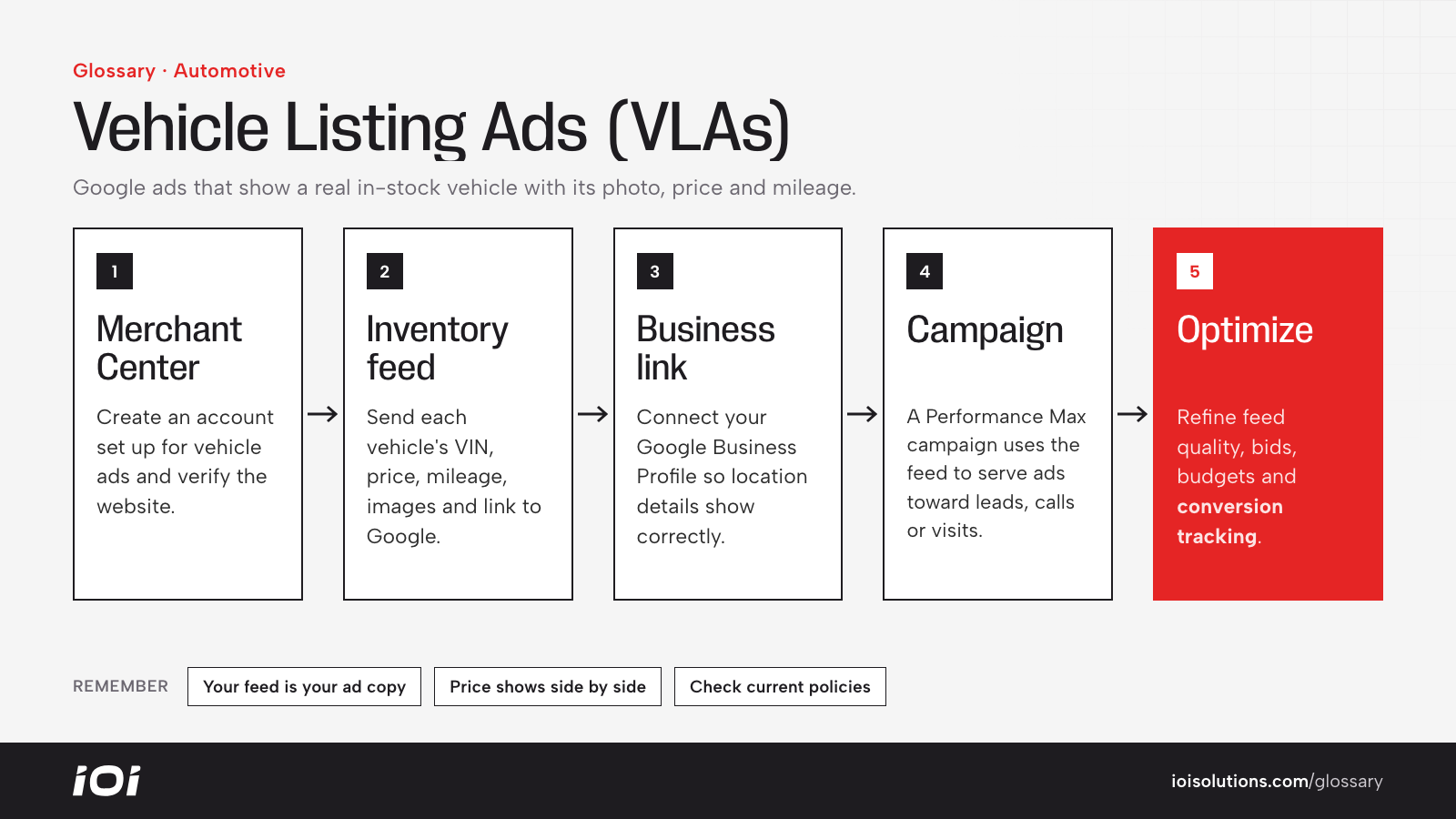
- Merchant Center setup: the dealer creates a Google Merchant Center account configured for vehicle ads and verifies the website.
- Inventory feed: a data feed sends each vehicle’s VIN, price, condition, mileage, images, link and other required attributes to Google, usually through an inventory or feed provider.
- Business link: the account is connected to the dealership’s Google Business Profile so location information appears correctly.
- Campaign: a Performance Max campaign (vehicle ads currently run through this campaign type in Google Ads) uses the feed to serve ads, optimized toward goals such as leads, calls or store visits.
- Optimization: the dealer refines feeds, bids, budgets and conversion tracking based on performance.
Google’s requirements, eligible countries and campaign types change over time, so always check current policies before launching.
How VLAs Affect Marketing
For dealers, VLAs shift paid search from keywords toward inventory and data quality:
- Your feed is your ad copy. Missing prices, poor photos or inaccurate mileage lead to disapprovals or weak performance.
- Pricing competitiveness shows instantly. Shoppers compare listings side by side in the carousel, so overpriced units get skipped.
- Conversion tracking is critical. Automated bidding needs accurate tracking of form leads, calls, chats and ideally sold vehicles to optimize toward real buyers.
- VDP experience matters. VLAs deliver high-intent clicks, but a slow or unclear VDP will waste them.
- Segment strategically. Many dealers separate new, used and CPO inventory, or give aged units extra exposure.
For example, a used car dealer could group vehicles over 45 days in stock into a separate asset group with a higher budget priority to speed up turn, while monitoring return on ad spend by segment.
Best Practices
- Use real, high-quality photos of each vehicle, with a strong first image.
- Keep the feed accurate and current, updating at least daily so sold units drop off fast.
- Show competitive, transparent prices that match the VDP exactly.
- Track meaningful conversions, including calls and, where possible, offline sales data.
- Monitor Merchant Center diagnostics for disapprovals and fix issues quickly.
- Coordinate with other campaigns such as search and remarketing so they work together rather than overlap blindly.