
What Is Top of Funnel (TOFU) Marketing?
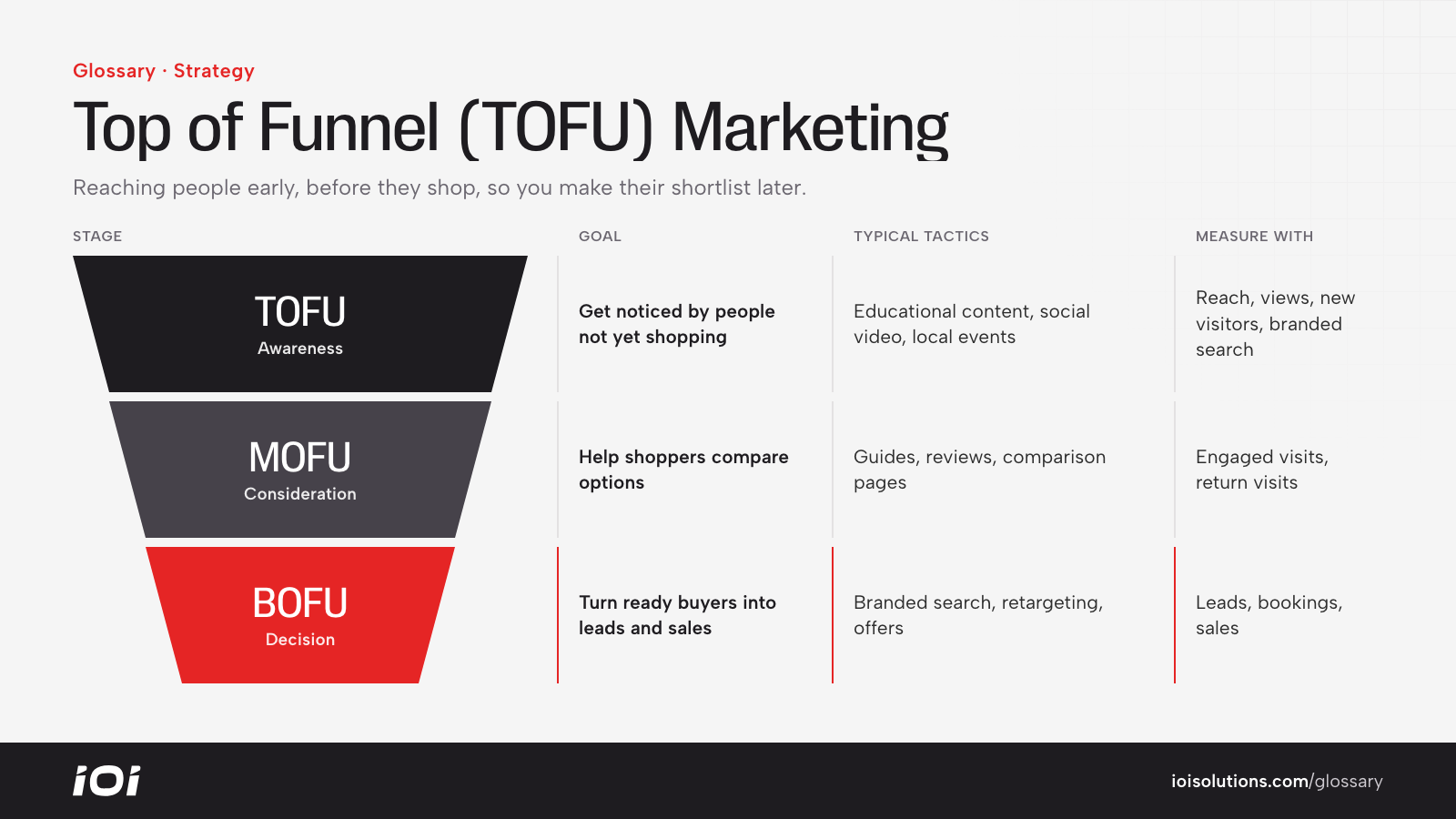
Top of funnel (TOFU) marketing covers the activities that introduce your business to people who are early in their buying process. These prospects may have just realized they have a problem or need, or they may not be actively shopping at all yet. TOFU marketing aims to earn their attention and become a familiar name, so you are on the shortlist when they are ready to act.
TOFU sits at the widest part of the marketing funnel, above middle of funnel (consideration) and bottom of funnel (decision). The audience is large, and most of it will not convert soon, which is exactly why the tactics and metrics differ from lower-funnel work.
Why TOFU Marketing Matters
It is tempting to spend everything on bottom-funnel tactics like branded search and retargeting, because they show quick, measurable returns. But those channels can only harvest demand that already exists. TOFU marketing:
- Creates future demand by reaching people before they start comparing providers.
- Feeds every lower stage. Retargeting pools and branded search volume shrink if nobody new is entering the funnel.
- Builds trust early, which often makes later conversions cheaper.
- Reduces reliance on a single channel by building recognition across several.
How TOFU Marketing Works
TOFU tactics prioritize reach, relevance and memorability over immediate sales. Common approaches include:
- Educational content: blog posts, guides and videos that answer early questions (“What does a ceramic coating actually do?”).
- Social and video ads: broad or interest-based campaigns on Meta, TikTok and YouTube that tell a story or demonstrate value.
- Organic social and short-form video: consistent, entertaining content that builds an audience.
- SEO for informational queries: ranking for research-stage searches, and being cited in AI-generated answers.
- Partnerships and events: sponsorships, local events and creator collaborations.
Success is measured with metrics such as reach, video views, engagement, new site visitors, growth in branded search and audience list size, rather than immediate conversions alone.
TOFU Marketing in Automotive
Automotive businesses often underinvest in TOFU, then wonder why lead costs keep rising. Practical examples:
- Dealerships can run short video tours of new models or “what to know before you trade in” content to reach shoppers who are months away from buying.
- Detailers and wrap shops can post before-and-after transformations that spread on social platforms and build a local following.
- Collision shops can publish “what to do after an accident” guides, so their name is familiar when a crash happens.
- Parts and aftermarket brands can partner with build-channel creators to show products installed on real vehicles.
- Car shows rely almost entirely on TOFU reach to fill attendance and attract vendors.
For example, a tire shop that publishes a simple video on reading tire date codes may not get a booking from that view, but it builds a remarketing audience of local drivers who care about tires.
Best Practices
- Lead with value, not offers. Early-stage audiences respond to helpful or entertaining content more than hard sells.
- Capture audiences for later. Install tracking pixels and build engagement audiences so TOFU viewers can be retargeted.
- Use the right metrics. Judge TOFU by reach, engagement quality and downstream lift, not last-click sales.
- Stay consistent. Awareness builds through repetition over months, not a single campaign burst.
- Balance the budget. Keep a steady share for awareness alongside demand generation and conversion campaigns.