
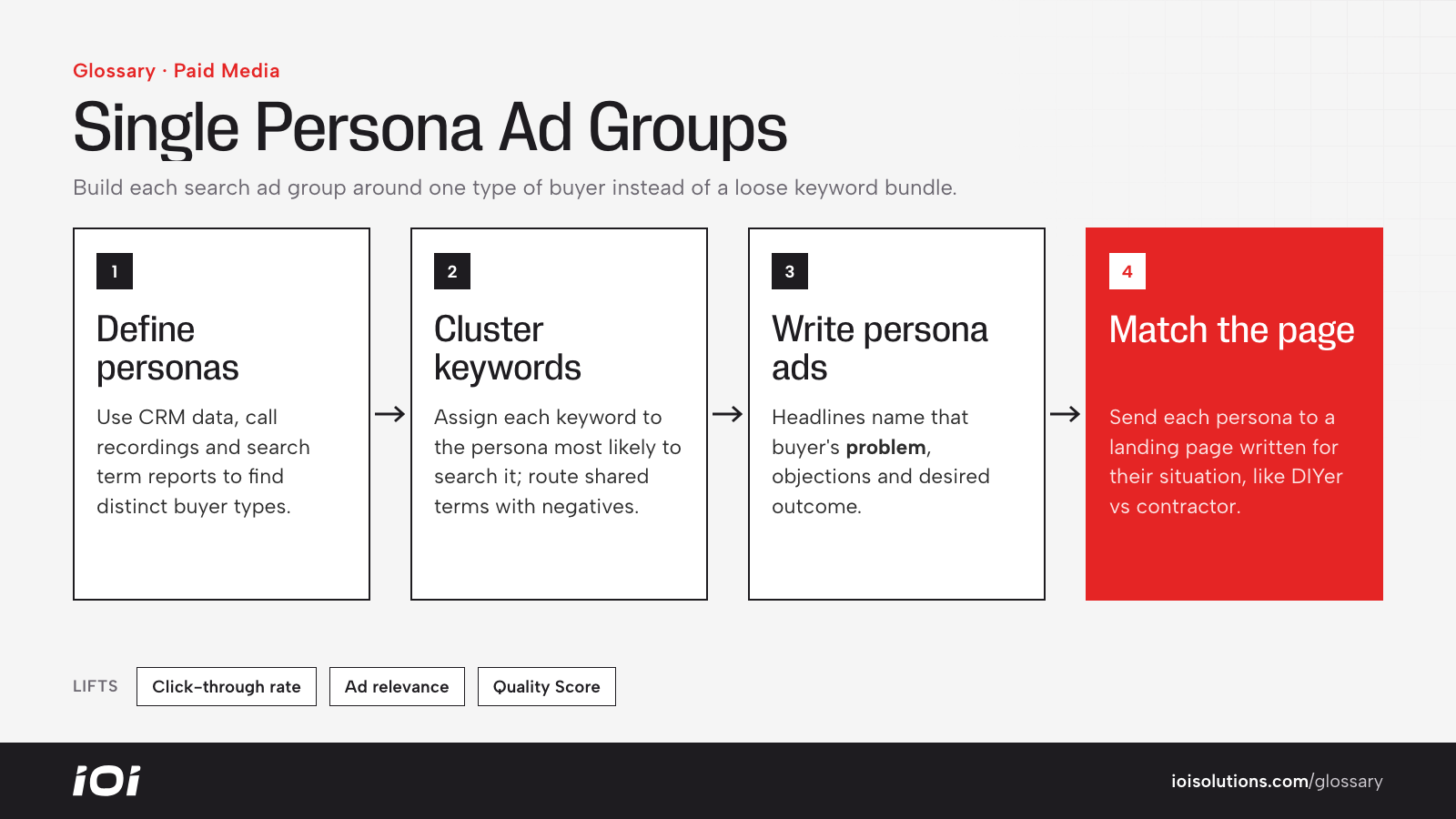
What Are Single Persona Ad Groups?
Single persona ad groups (SPAGs) are a way of structuring paid search campaigns so that each ad group targets one clearly defined type of buyer rather than a loose bundle of related keywords. Every element inside the ad group, from the keyword list to the headlines to the landing page, is written for that one person and the problem they are trying to solve.
The idea grew out of older structures like single keyword ad groups (SKAGs), which isolated one keyword per ad group for tight control. As search platforms moved toward broader matching and automated bidding, isolating individual keywords became less practical. Grouping by persona keeps the relevance benefits while giving the algorithm enough data to work with.
Why Single Persona Ad Groups Matter
Search is driven by intent, and intent differs sharply between buyers who type similar words. Someone searching “truck bed liner” might be a weekend DIYer looking for a drop-in kit, a contractor who needs a spray-on liner for a work fleet, or a new truck owner who wants a dealer-installed option. One generic ad cannot speak convincingly to all three.
Organizing by persona helps you:
- Write ads that mirror the searcher’s actual situation, which tends to lift click-through rate.
- Improve ad relevance and landing page experience, two inputs into Quality Score.
- Read performance by buyer type, so budget decisions reflect who actually converts.
- Keep accounts manageable without hundreds of tiny ad groups starved of data.
How Single Persona Ad Groups Work
Building SPAGs starts with research, not keywords. You define the main buyer personas for the offer, then map the language each persona uses when searching.
- Define personas. Use CRM data, call recordings, sales team input and search term reports to identify distinct buyer types and their motivations.
- Cluster keywords by intent. Assign keywords to the persona most likely to use them. Some terms are shared; place them where they convert best or use negatives to route traffic.
- Write persona-specific ads. Headlines should name the persona’s problem, objections and desired outcome. Responsive search ad assets can still be varied, but all should fit the same buyer.
- Match the landing page. Send each ad group to a page or page variant that continues the same message.
- Measure by persona. Compare cost per lead, conversion rate and downstream sales quality across ad groups.
Single Persona Ad Groups in Automotive Marketing
Automotive buyers split naturally into personas, which makes this structure a strong fit across the industry.
- Dealerships: A franchise store might separate first-time buyers worried about credit, families shopping for a three-row SUV, and payment shoppers comparing lease offers. Each gets its own ad group and a landing page focused on financing help, inventory, or specials.
- Collision repair shops: A body shop can split “just had an accident and need help now” searchers from insurance-savvy drivers asking whether they can choose their own shop. The first persona responds to towing and fast estimates; the second responds to messaging about rights and insurer coordination.
- Aftermarket parts brands: A performance exhaust brand might separate enthusiasts chasing sound and horsepower from daily drivers who want a quiet, emissions-legal replacement.
- Detailers and wrap shops: New car owners shopping for paint protection think differently from fleet managers pricing vehicle graphics, even when both search “vehicle wrap near me.”
Best Practices
- Start with three to five personas. Too many splits thin out conversion data and slow automated bidding.
- Validate personas with real search term data before building, then revisit them quarterly.
- Use negative keywords across ad groups so each query lands with the persona it fits best.
- Give every persona a matched landing page, even if it is just a variant of a core page with a different headline and proof points.
- Judge persona performance on lead quality and sales, not only clicks and form fills.
- Pair SPAGs with audience signals such as remarketing lists or customer match where the platform allows it.