
What Is Remarketing?
Remarketing is a tactic that re-engages people who have already interacted with your business. Most commonly, it means showing ads to people who visited your website but did not convert, as they browse other sites, watch videos or scroll social media. It can also include email or text follow-ups to known contacts, such as an abandoned cart reminder.
“Retargeting” is often used as a synonym. Some marketers use retargeting for ad-based follow-up and remarketing for email-based follow-up, but in practice, and in Google Ads terminology, the terms overlap heavily.
Why Remarketing Matters
Most website visitors leave without converting on their first visit. They get distracted, want to compare options or simply are not ready yet. Remarketing keeps you in front of these warm prospects while they decide, filling the gaps between visits in a customer journey that can stretch across days or months.
- It reaches people who already know you, so they tend to convert at higher rates than cold audiences.
- It reinforces brand recall throughout a long consideration period.
- It lets you tailor messages to specific behavior, such as products viewed.
- Remarketing lists can sharpen Google Ads search campaigns through audience bid adjustments and observation.
- It often delivers a strong return on ad spend because the audience is already warm.
How Remarketing Works
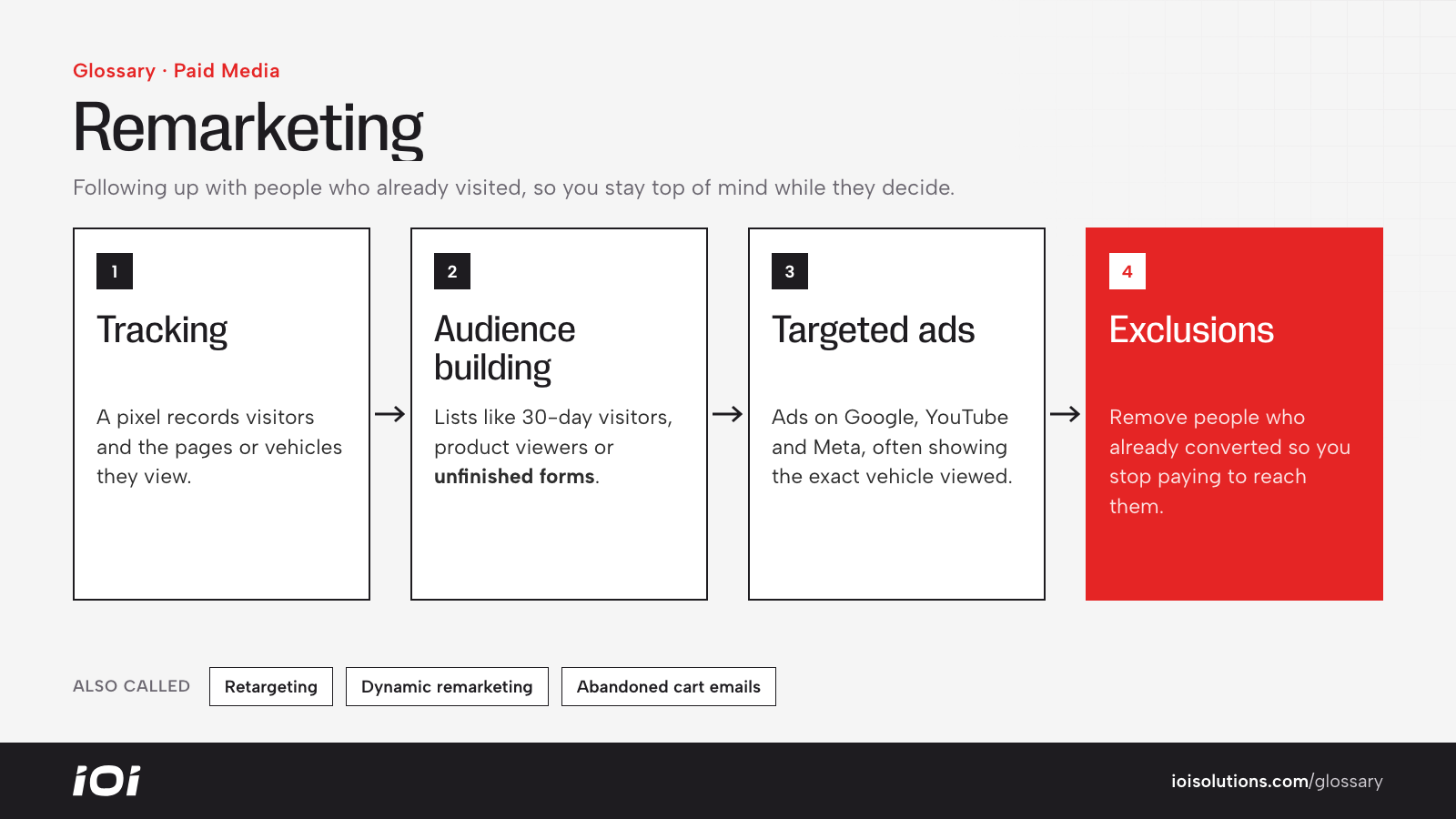
Tracking
A tracking pixel or tag on your website records visitors and the pages or products they view. Customer lists uploaded from your CRM can also be matched to platform users.
Audience Building
You create lists based on behavior, for example: all visitors in the last 30 days, people who viewed a specific product, people who started but did not finish a form, or past customers.
Targeted Ads
Ads are served to those lists on networks such as Google Display, YouTube, Meta, TikTok and others. Dynamic remarketing automatically shows the exact products or vehicles someone viewed, pulled from a feed.
Exclusions
Good remarketing also excludes people who already converted, so you are not paying to show ads for something they just bought.
Remarketing in Automotive Marketing
Vehicle purchases and major repairs involve long research periods, which makes remarketing a strong fit.
- Dealerships: Dynamic inventory ads show shoppers the specific vehicles they viewed on vehicle detail pages, with updated pricing. Separate audiences can target people who used the trade-in tool or started a credit application.
- Collision shops: Remarketing to visitors of estimate pages keeps the shop in mind while the customer waits on an insurance adjuster.
- Repair and tire shops: Visitors to a tire page can be shown seasonal offers and reminders to book.
- Parts and aftermarket brands: Dynamic product ads and abandoned cart emails are often among the most efficient campaigns in an ecommerce account.
- Wrap shops and detailers: Before-and-after video ads to gallery viewers help nudge high-ticket decisions.
For example, a dealer could show a shopper who viewed several used trucks a carousel of those exact units, then switch to a service-department message once that person buys.
Best Practices
- Segment by intent. Treat cart abandoners and high-intent page visitors differently from homepage bouncers.
- Set sensible frequency caps. Repeating the same ad too often annoys people.
- Use membership windows that match the buying cycle. Short windows for parts, longer for vehicles.
- Exclude converters. Remove recent customers or move them to a retention message.
- Refresh creative. Rotate offers and visuals so warm audiences don’t tune out.
- Respect privacy rules. Follow consent requirements and platform policies, including special ad category rules for credit-related ads.