
What Is a Query?
A query, or search query, is the actual text or spoken phrase a person enters into a search engine, app, marketplace or AI assistant to find information. “Brake pads for 2019 F-150,” “body shop near me” and “how long does ceramic coating last” are all queries.
In marketing it is important to separate queries from keywords. A keyword is the term you choose to target in SEO or bid on in an ad campaign. A query is what people really type. One keyword can match thousands of different queries, which is why advertisers review search terms reports to see which real queries triggered their ads.
Why Queries Matter
Queries are one of the clearest signals of customer intent available to marketers. They tell you, in the customer’s own words, what they want, what problem they have and how close they are to buying.
- They reveal the language customers use, which improves ad copy and page content.
- They show intent level, from early research to ready-to-buy.
- They expose wasted ad spend on irrelevant searches.
- They uncover new content and product opportunities.
Types of Queries
Informational
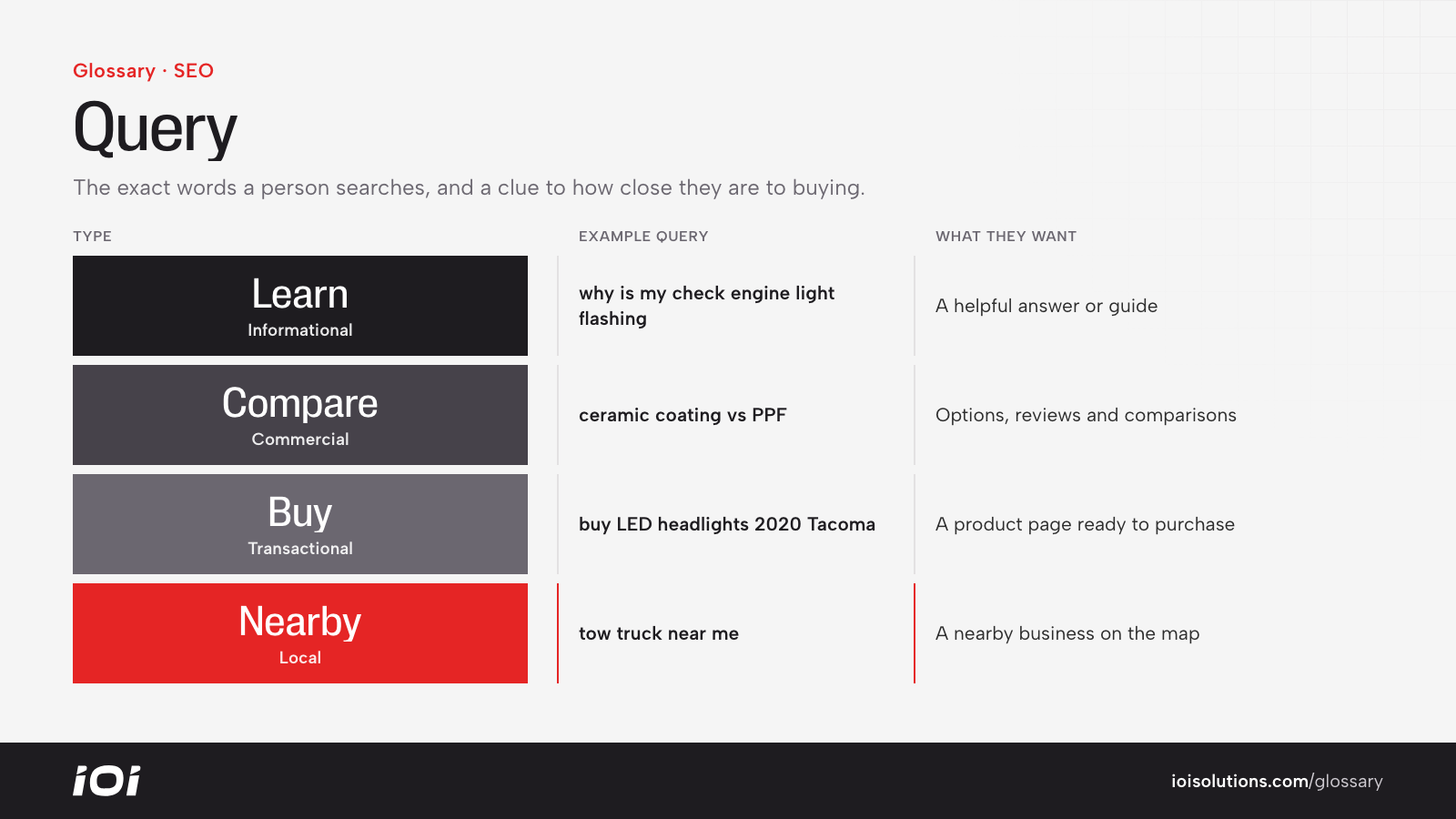
The searcher wants to learn something, such as “why is my check engine light flashing.” These are good opportunities for helpful content.
Navigational
The searcher wants a specific website or business, such as a dealership name or a brand’s login page.
Commercial Investigation
The searcher is comparing options, such as “best all-terrain tires for trucks” or “ceramic coating vs PPF.”
Transactional
The searcher is ready to act, such as “buy LED headlights 2020 Tacoma” or “tow truck near me.”
Local
Queries containing “near me” or a city name signal the person wants a nearby business, and they trigger map results on the SERP.
Queries are also getting longer and more conversational, especially with voice search and AI assistants, which makes long-tail keywords increasingly important.
Queries in Automotive Marketing
- Dealerships see queries ranging from broad research (“best midsize SUV”) to model and trim specific shopping (“2024 RAV4 XLE hybrid for sale”) to service needs (“oil change [dealer name]”). Each calls for a different landing page.
- Collision shops often see urgent, local queries and insurance-related questions, such as whether they can choose their own body shop.
- Repair shops receive symptom-based queries like “grinding noise when braking,” which can be captured with helpful content that leads to an inspection booking.
- Parts and aftermarket brands get year, make and model queries and part-number queries, which demand precise fitment data on product pages.
- Towing companies see highly urgent queries where speed and a visible phone number matter most.
For example, a repair shop reviewing its search terms report might find its ads showing for “auto repair jobs” and add “jobs” as a negative keyword to stop paying for job seekers.
Best Practices
- Review search terms reports regularly. Add negatives for irrelevant queries and new keywords for valuable ones.
- Group queries by intent. Build separate pages and ad groups for research, comparison and purchase queries.
- Use customer language. Borrow wording from real queries for headlines and page copy.
- Analyze patterns at scale. N-gram analysis helps spot recurring words that waste money or convert well.
- Check Search Console. It shows which queries bring organic impressions and clicks.
- Answer questions directly. Clear, concise answers help you show up in featured snippets and AI-generated responses.