
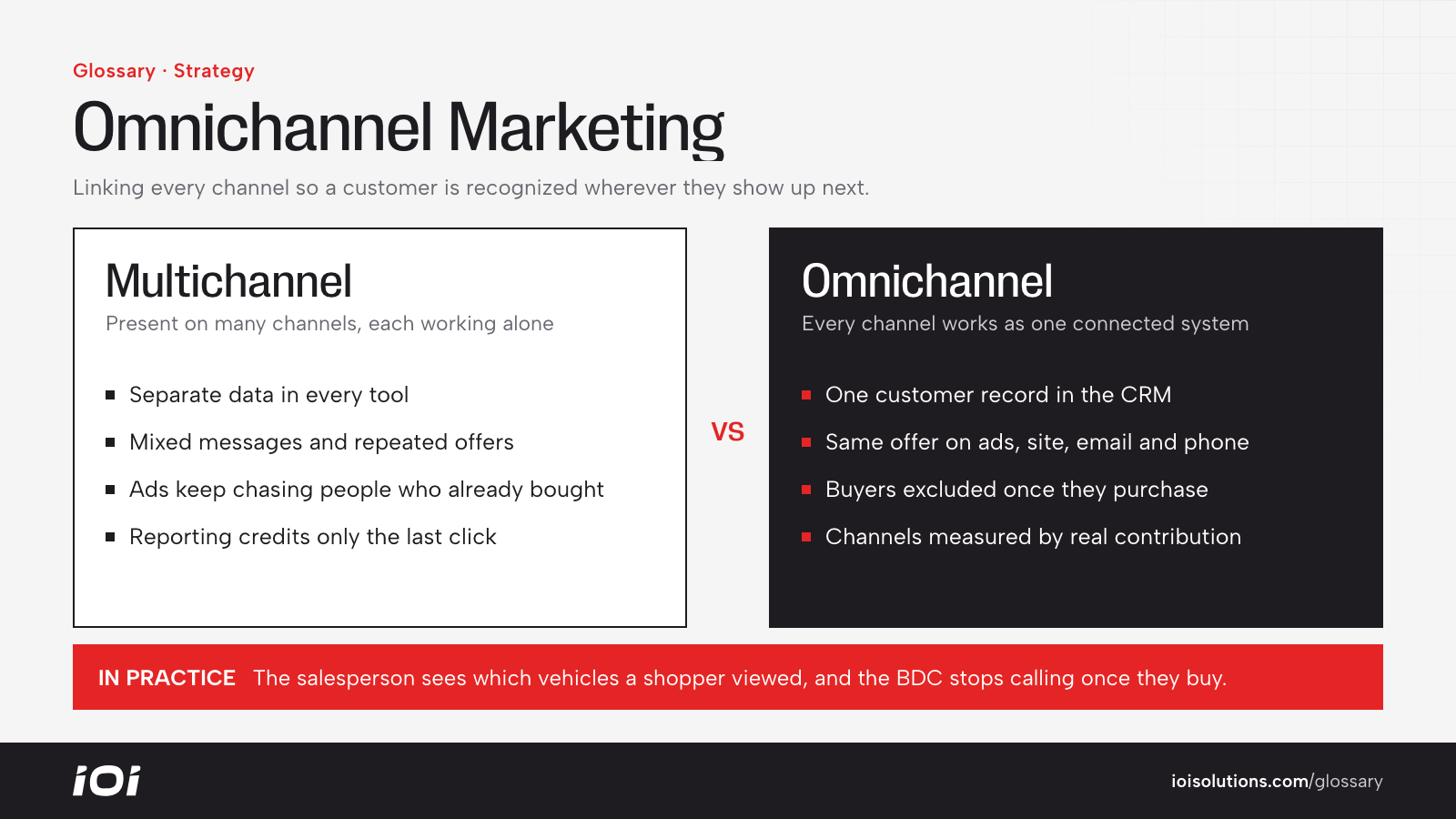
What Is Omnichannel Marketing?
Omnichannel marketing is an approach where every channel you use to reach customers works as one connected system rather than a collection of separate campaigns. Your website, paid search, social ads, email, text messages, phone calls and physical location all share the same customer data and tell a consistent story. When someone moves from one channel to another, the experience picks up where it left off instead of starting over.
It is easy to confuse omnichannel with multichannel. A multichannel business is simply present on several channels. An omnichannel business links those channels together, so a person who browsed a product on mobile, clicked a Facebook ad later, and then called the store is recognized as the same person with the same intent.
Why Omnichannel Marketing Matters
Very few buyers convert on a single visit through a single channel. They research on their phone, compare on a laptop, read reviews, see ads, and often finish offline. If each channel acts alone, you end up with mixed messages, repeated offers, wasted spend on people who already bought, and reporting that undercounts the channels doing the early work.
A connected approach fixes that. It lets you:
- Show messages that match where a person is in the customer journey.
- Stop advertising products or services someone has already purchased.
- Give sales and service staff context about what a customer has already seen.
- Measure channels by their real contribution rather than by last click alone.
How Omnichannel Marketing Works
Omnichannel marketing rests on three building blocks: shared data, consistent messaging and coordinated timing.
Shared Customer Data
Every touchpoint feeds into a central record, usually a CRM or customer data platform. Website behavior, ad clicks, form fills, calls, chats and purchases are tied to a single profile wherever possible. Tracking tools such as pixels, call tracking and UTM parameters make this possible.
Consistent Messaging
Offers, pricing, brand voice and creative should line up across channels. If your ad promises a specific deal, the landing page, the email follow-up and the person answering the phone should all know about it.
Coordinated Timing
Channels hand off to each other based on behavior. A visitor who views a page but does not convert might enter a remarketing audience, receive an email if they gave an address, and then be excluded from ads once they buy. Marketing automation platforms handle much of this orchestration.
Omnichannel Marketing in Automotive Marketing
Automotive purchases are a natural fit for omnichannel thinking because they mix heavy online research with offline completion.
- Dealerships: A shopper views several vehicle detail pages, gets retargeted with those same units on Meta, submits a trade-in form, and then walks into the showroom. In an omnichannel setup, the salesperson can see which vehicles they looked at and the BDC is not still calling them about a car they already bought.
- Collision and repair shops: A driver finds the shop on Google Maps, reads reviews, calls for an estimate, and later receives text updates on the repair. Afterward, a review request and a seasonal maintenance reminder keep the relationship going.
- Parts and aftermarket brands: A buyer searches by year, make and model on the website, abandons the cart, sees a dynamic ad for the exact part, and completes the purchase through an email reminder. Fitment data stays consistent across the site, shopping feeds and marketplaces.
- Detailers and wrap shops: Instagram content builds interest, a quote form captures the lead, and text follow-up books the appointment, with the same pricing language everywhere.
Best Practices
- Start with data plumbing. Connect your CRM, website analytics, call tracking and ad platforms before adding new channels.
- Map the real journey. Look at how your customers actually move between channels and design handoffs around those paths.
- Use suppression lists. Exclude recent buyers and active customers from acquisition ads to save budget and avoid annoyance.
- Keep offers consistent. Maintain a single source of truth for current promotions that every channel and every staff member can check.
- Measure beyond last click. Use an attribution model that credits the channels doing early and middle-funnel work.
- Train the people too. Phone, showroom and counter staff are channels. Give them the context and scripts to continue the conversation.